

The founders of International Working Women’s Day were Communists with das Kapital “C”.
Theresa Malkiel, a member of the Socialist Party of America, organised the first “Woman’s Day” in 1909. A year later, the Second International’s Socialist Women’s Conference took place, and figures such as the German Marxist Clara Zetkin proposed an annual celebration promoting working women’s suffrage. Finally, in 1911, the first International Women’s Day was celebrated, though the “working” adjective was absent.
With regime changes in the Global South back in fashion, it’s imperative to remember that “international” covers more than North America and Europe. Victories for women at the imperial core mean little without the liberation of women everywhere else. Sooner or later, the colonial boomerang returns.
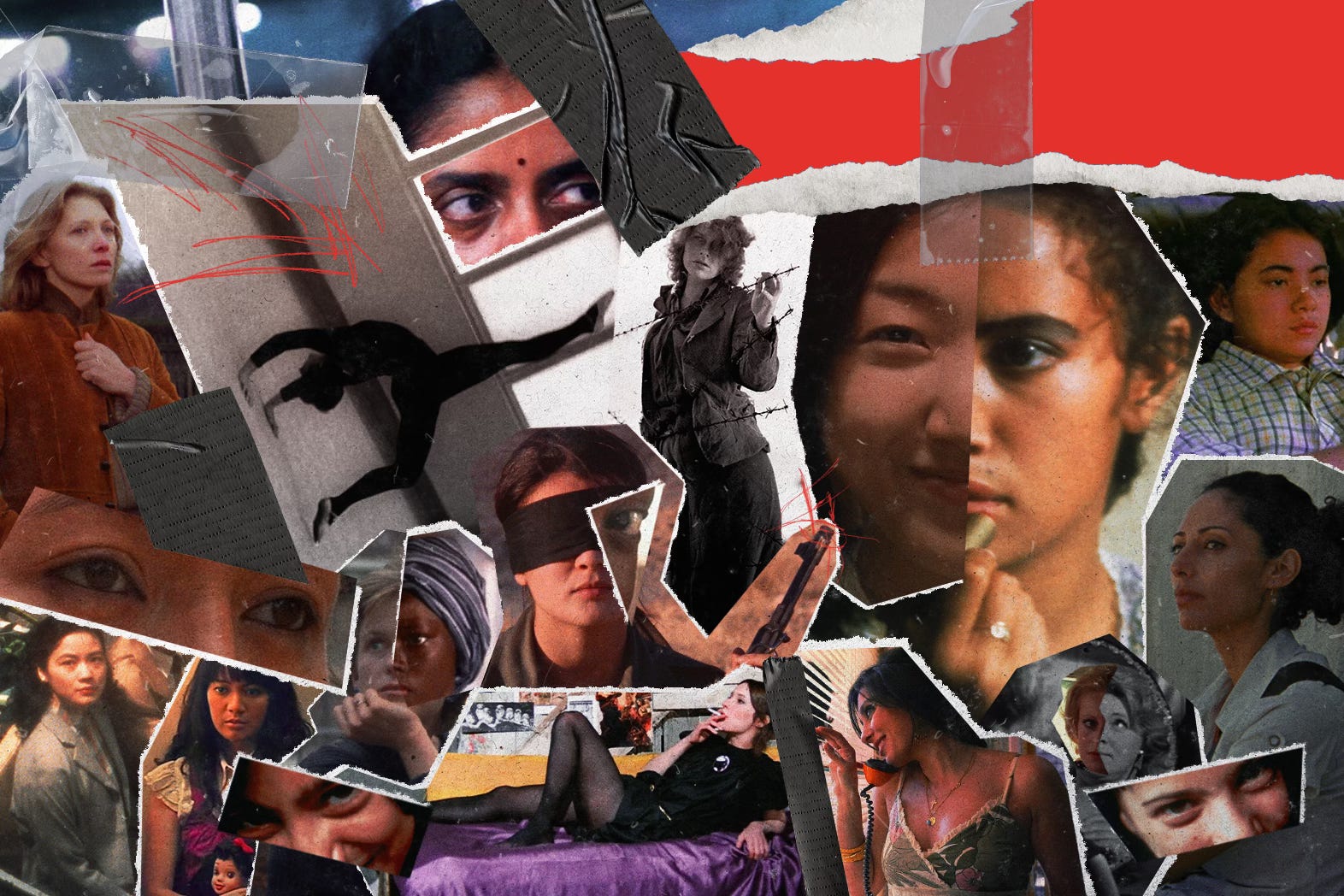
Curated here is a non-anglocentric selection of 20 films directed by women, from Tunisia to Czechoslovakia, Indonesia to Palestine, the Soviet Union to India. More than 18 countries are featured, only a handful appear more than once, and only two inclusions are in English.
These are remarkable films by and about women.
The Last Stage
1948, Wanda Jakubowska, Poland
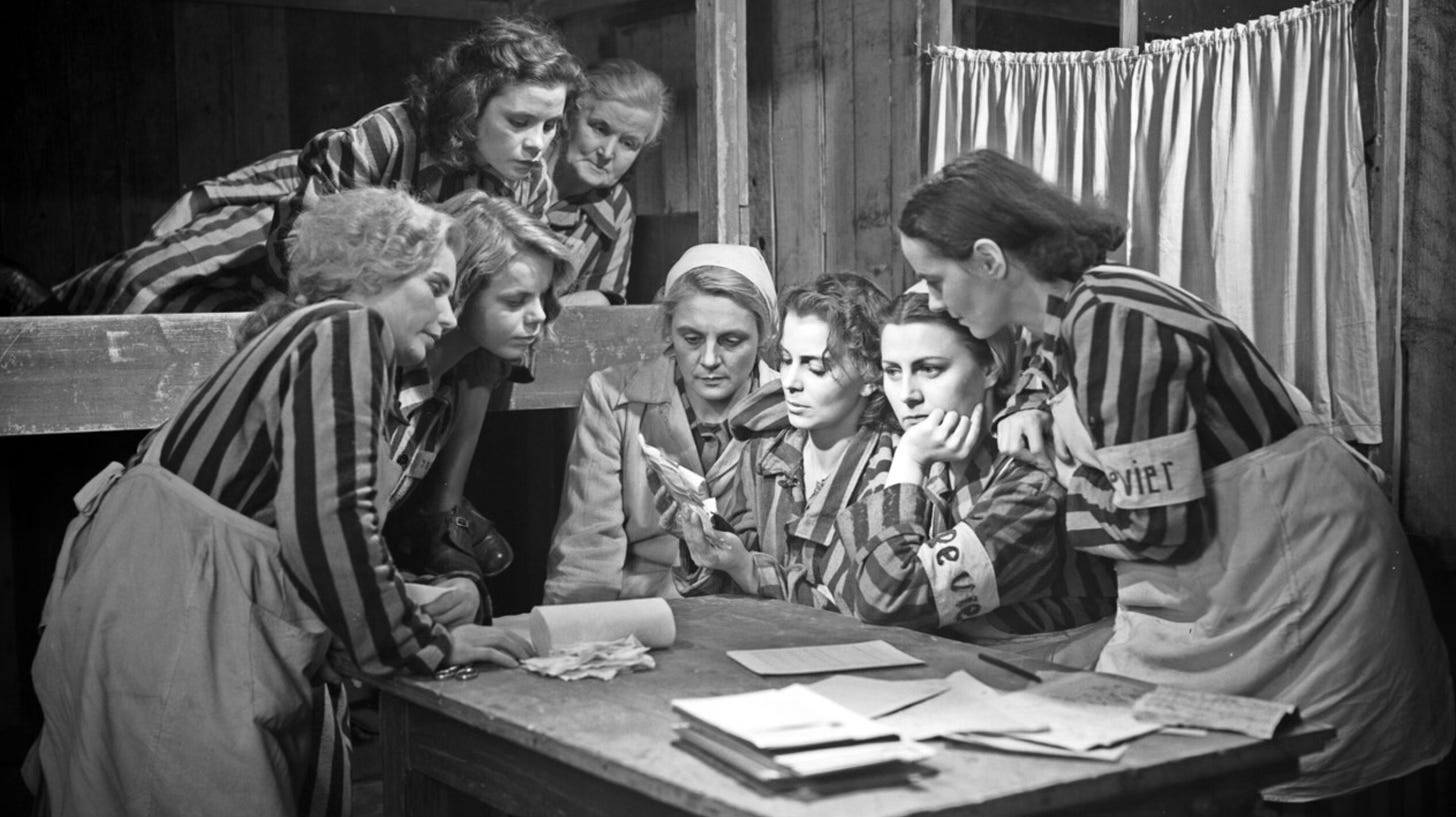
Known as the “mother of all Holocaust movies”, The Last Stage deserves distance from the little rascals it birthed. The ardent Communist and Auschwitz survivor Wanda Jakubowska recreated the camp’s horrors with detail that only someone personally familiar with the logistics of genocide could. The narrative revolves around Marta, a Polish Jewish woman forced to work as a translator in the infamous concentration camp of Nazi-occupied Poland. Hope rises among inmates with each Red Army victory, revealing the film’s pride in its ideological alignment. Decades of Hollywood sensationalist drivel stripped Nazi-fascism of its political specificities while drip-feeding audiences stories of an abnormal tragedy that could never occur again, perpetrated by evil boogeymen who could never regain power. With this depoliticising framework from the entertainment industry, it’s unsurprising that the public is incapable of recognising the resurgence of Nazism. Jakubowska avoided these pitfalls, denouncing the “Final Solution to the Jewish Question” as a political-industrial project of extermination. It’s alarming how many films supposedly inspired by The Last Stage miss the point about what the Holocaust was, how it happened and who ended it.
Something Different
1963, Věra Chytilová, Czechoslovakia
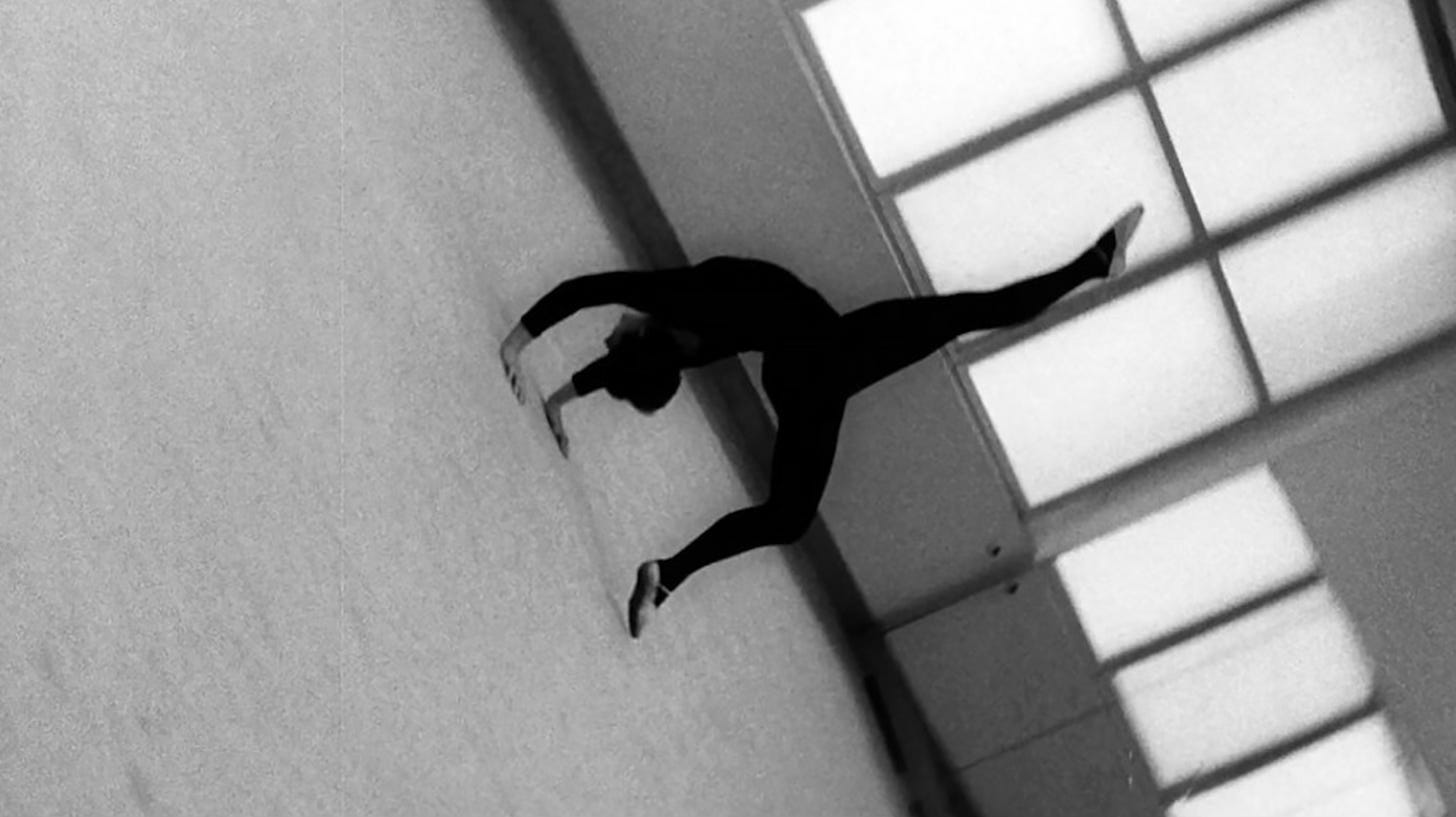
The first feature by Czech New Wave legend Věra Chytilová tells two unconnected stories, juxtaposing different forms of choreography. One shows the routine of a stay-at-home wife and mother, and the other documents the strict regime of an Olympic gymnast preparing for a competition. Both undergo gruelling trials, but patriarchy expresses itself differently in their lives, and the parallels invite reflection. Eva, played by gold medalist Eva Bosáková, is freer in her gymnasium than Věra is in her own home. One’s body is tested in the search for perfection, while the other’s psyche is challenged daily by the apathy of an uninterested husband and the directionless stress of the mundane. There’s a brilliantly executed upside-down shot that flips with Eva, and its elegance lingers for a while. Both tales are tied together in a linear structure that would become uncommon in the director’s later experimental projects such as Daisies. Something Different doesn’t spell things out, but says a lot.
The Apple
1998, Samira Makhmalbaf, Iran
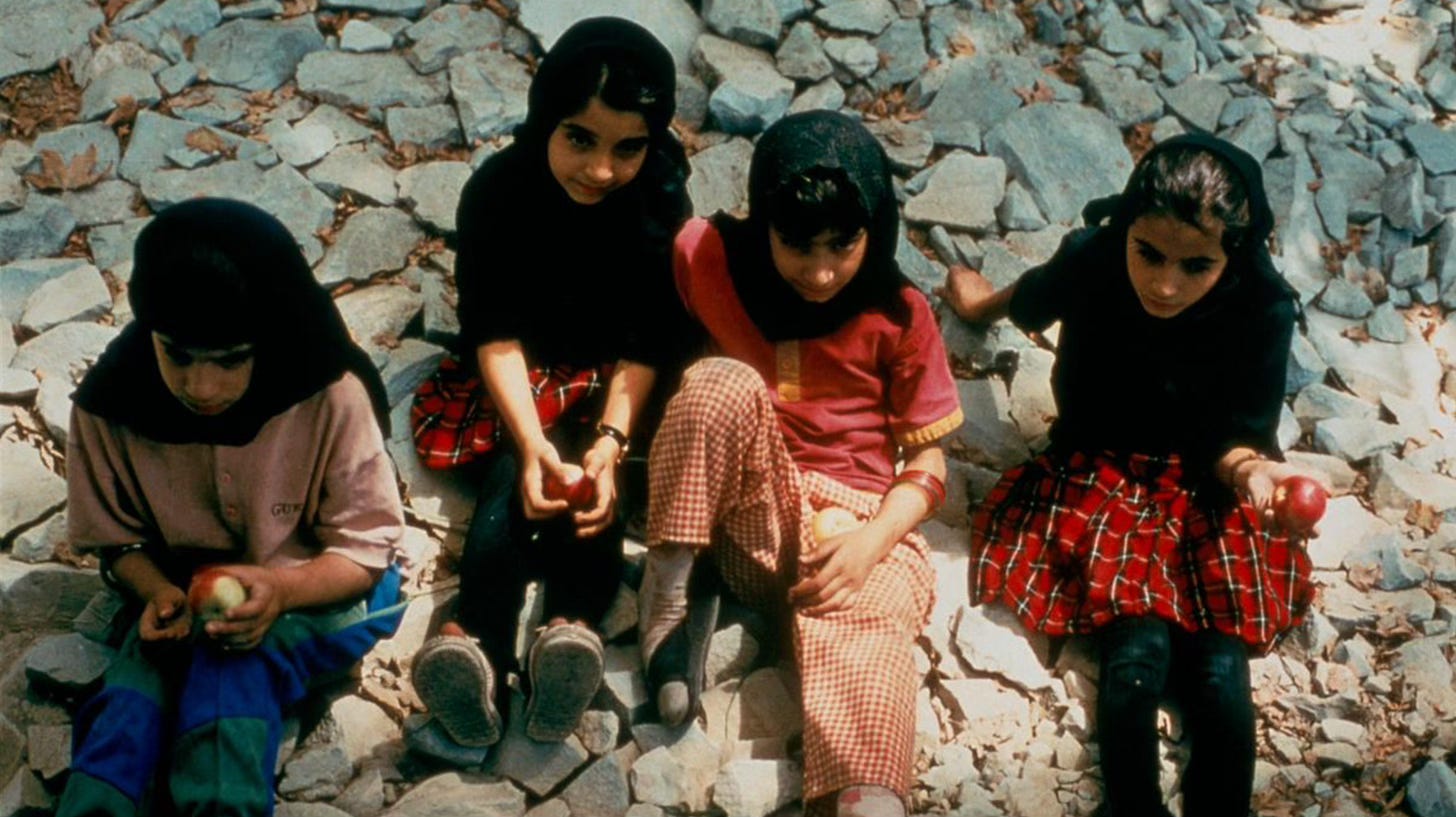
An elderly unemployed father and his blind wife made national headlines in 1990s Iran when it was discovered they had kept their two 12-year-old daughters locked up at home for their entire lives. Samira Makhmalbaf’s bold directorial debut proposes a cinematic recreation of the events starring those who lived them, victimised children and guilty parents alike. As customary in the movement, this Iranian New Wave gem merges fact and fabrication in metafictional humanism. The girls’ decade-long isolation prevented them from learning how to communicate their needs, and their innocent vocalised grunts can be challenging to listen to. Samira Makhmalbaf, who was only 17 at the time of production, portrays flawed people with a blend of empathy and defiance. Her father, acclaimed filmmaker Mohsen Makhmalbaf, is a clear source of inspiration, but Samira develops a voice of her own. Many have questioned the moral integrity of this filmmaking exercise, but the parents’ actions are never justified nor excused. The Apple simply weighs their individual moral shortcomings against broader societal deficiencies.
0.5 mm
2014, Momoko Ando, Japan
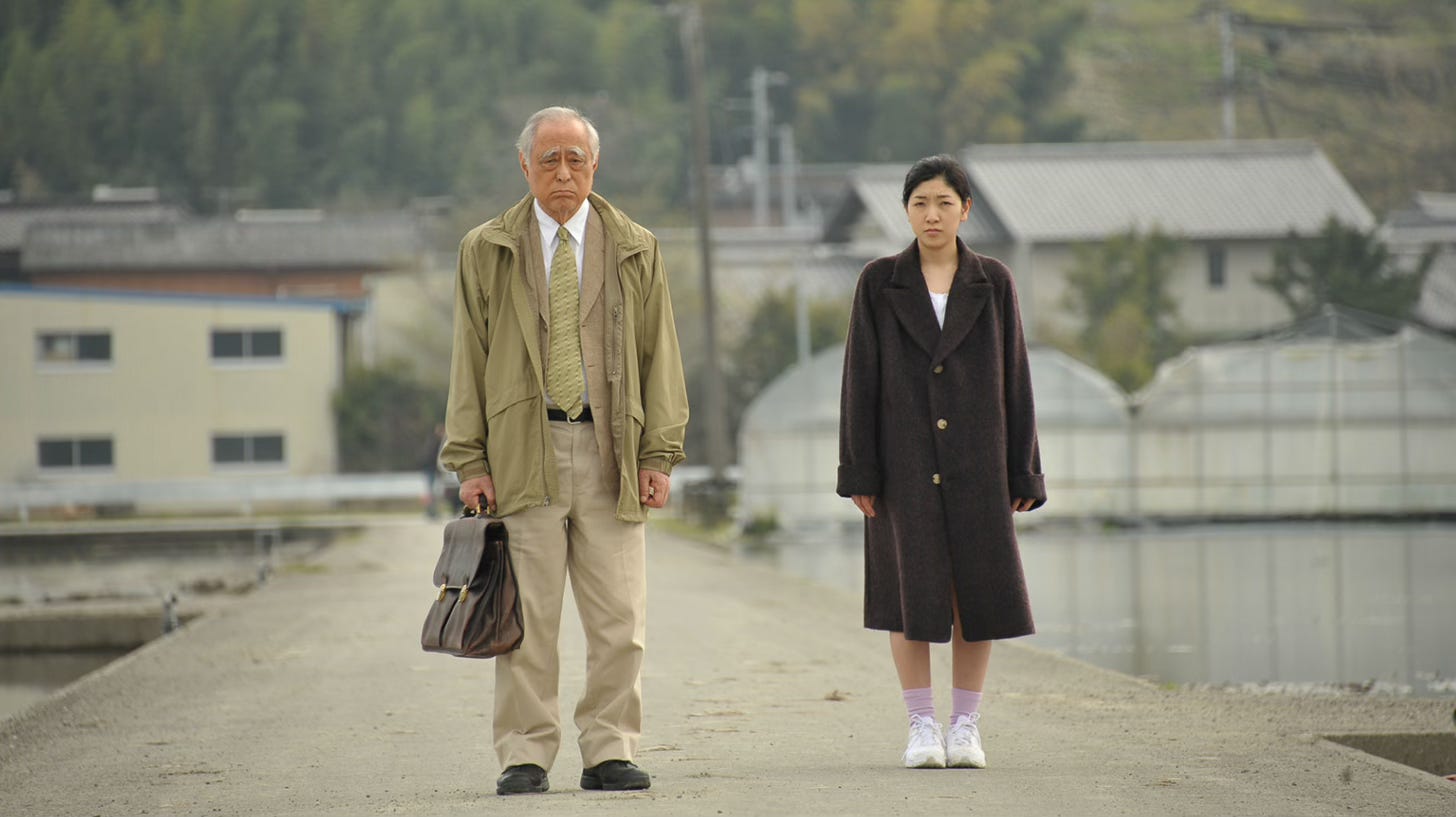
Sakura Ando has, for almost two decades, held her ground as a nigh-unsurmountable mountain of charisma among Japanese actresses. 0.5 mm adapts the eponymous novel by her sister, author and filmmaker Momoko Ando. Sawa Yamagishi, played wonderfully by Sakura, is a penniless elderly care worker who embarks on a bizarre journey: clumsily blackmailing senior citizens into accepting her care. It’s a conceptual oddity, and credit for making it work is shared between the Andos. Sakura brings to the role the humorous eccentricities from comedies like Love, Exposure and the sensitive depth from pictures like Monster. The end product is a striking film illuminating alarming sociocultural afflictions, like widespread loneliness, negligence towards the elderly, archaic gender dynamics, and broken family structures. Some might argue its 198-minute running time is excessive, but raise your hand if, like this writer, you believe there’s no such thing as too much Sakura Ando.
Salt of this Sea
2008, Annemarie Jacir, Palestine
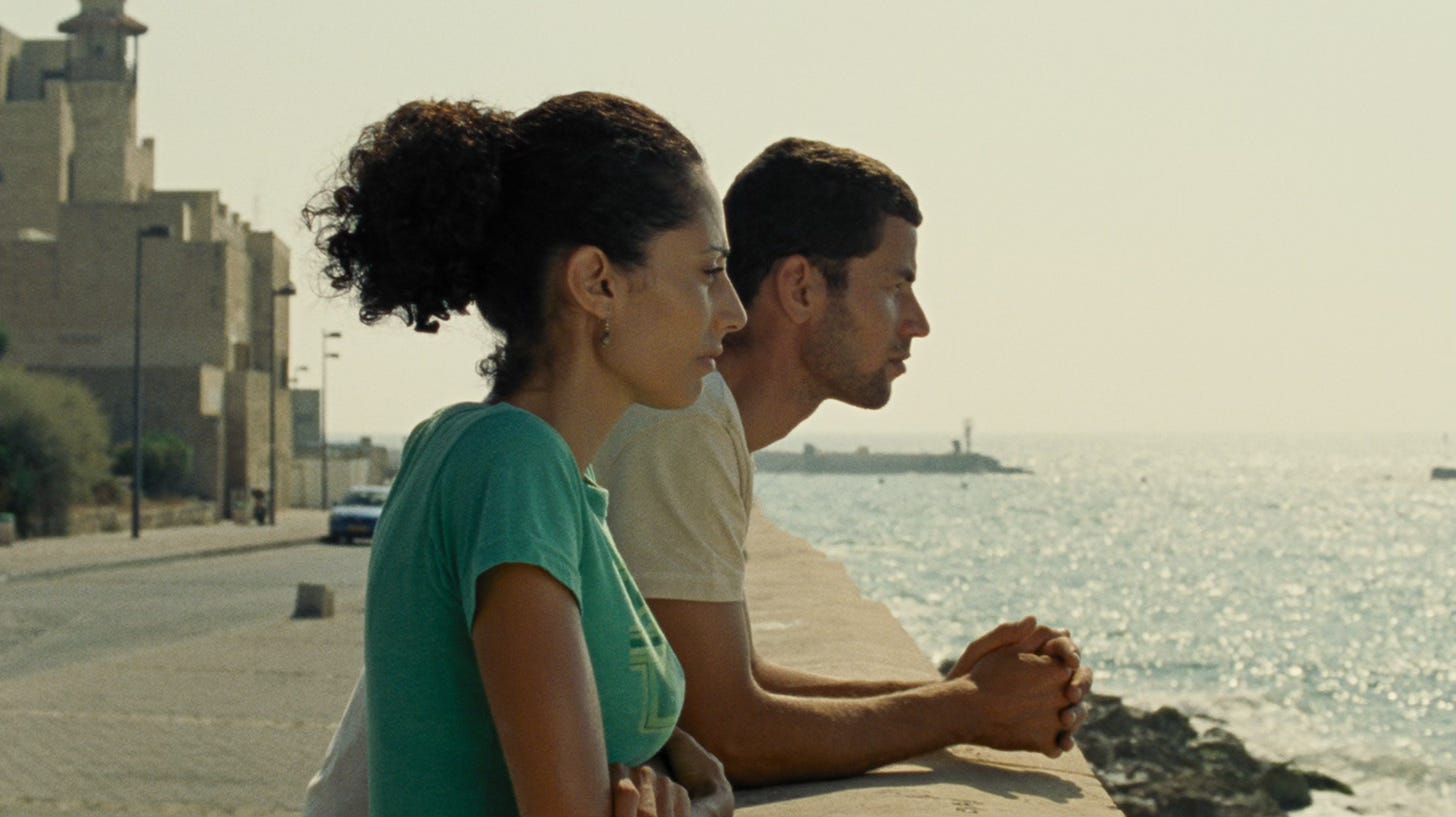
Salt of this Sea is a historic film in more ways than one. Not only did it make history as the first Palestinian feature directed by a woman, it is also a movie about unresolved injustices, as opposed to ancient history curiosities. Characters visit the stages of real-life massacres perpetrated by the IDF, like the ruins of the now-extinct town of Al-Dawayima, where hundreds of Palestinians were slaughtered. Poet and activist Suheir Hammad stars as Soraya, who mirrors the actress’ own biography as a Brooklyn-raised daughter of Palestinian refugees who fights for her Right to Return. Soraya vows to recover her family’s home and savings, all of which were taken away from her grandparents during the Nakba. The depth of moral bankruptcy of the Zionist entity cannot be overstated, and it’s through mundane imagery that the drama makes its point - like the freedom that comes with removing the colour-coded licence plates that Palestinian cars must display in the apartheid state. Annemarie Jacir, who also directed last year’s terrific Palestine 36, always excels at two things: 1) showing how vicious even the most “benign” of settlers is and 2) framing the silent fury of the colonised.
The Meetings of Anna
1978, Chantal Akerman, Belgium
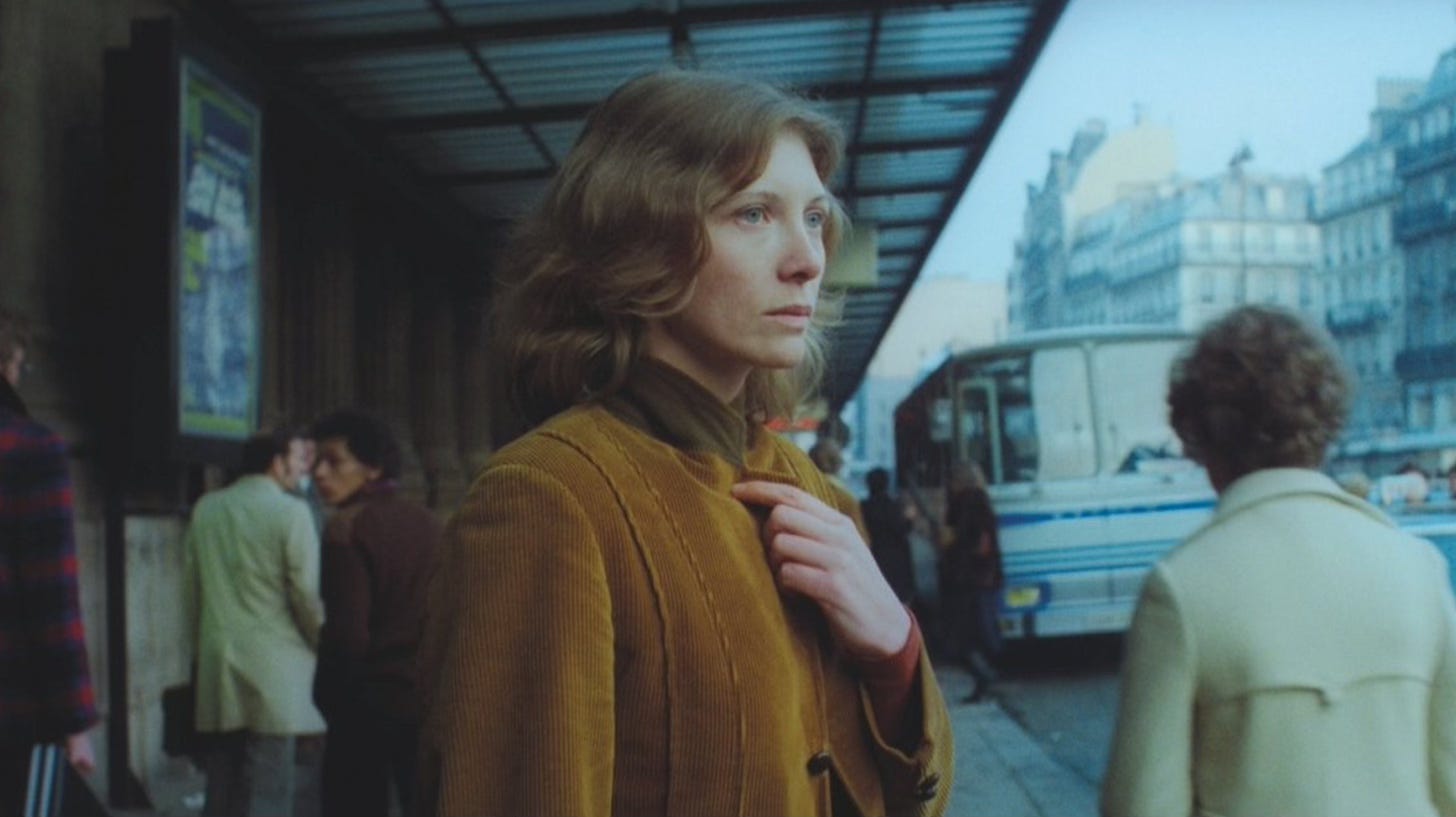
There’s a quiet lethargy to Chantal Akerman’s film that is symptomatic of the protagonist’s solitary journey. Anna is a successful filmmaker traveling Europe to promote her latest project. In each stop, Anna meets someone who has plenty to tell her, but no interest in listening to what she has to say (with one exception). This is the visual culmination of Akerman’s ‘70s works - the cold shots of European cities feel similar to her frames of New York in her documentary News from Home, and actors are blocked in spaces with the same detachment as Jeanne Dielman, 23 Commerce Quay, 1080 Brussels. Aurore Clément’s Bressonian performance as Anna is both distant and sensitive. Her interactions are unilateral transactions, and she has no arms in which to seek solace of her own, so even the slightest smile feels enormous. Akerman’s camera oversees these displays of human narcissism with the unsentimental look typical of her filmography, counting on the viewer to become more outraged about these egocentric one-sided conversations than Anna herself.
Atlantics
2019, Mati Diop, Senegal, France
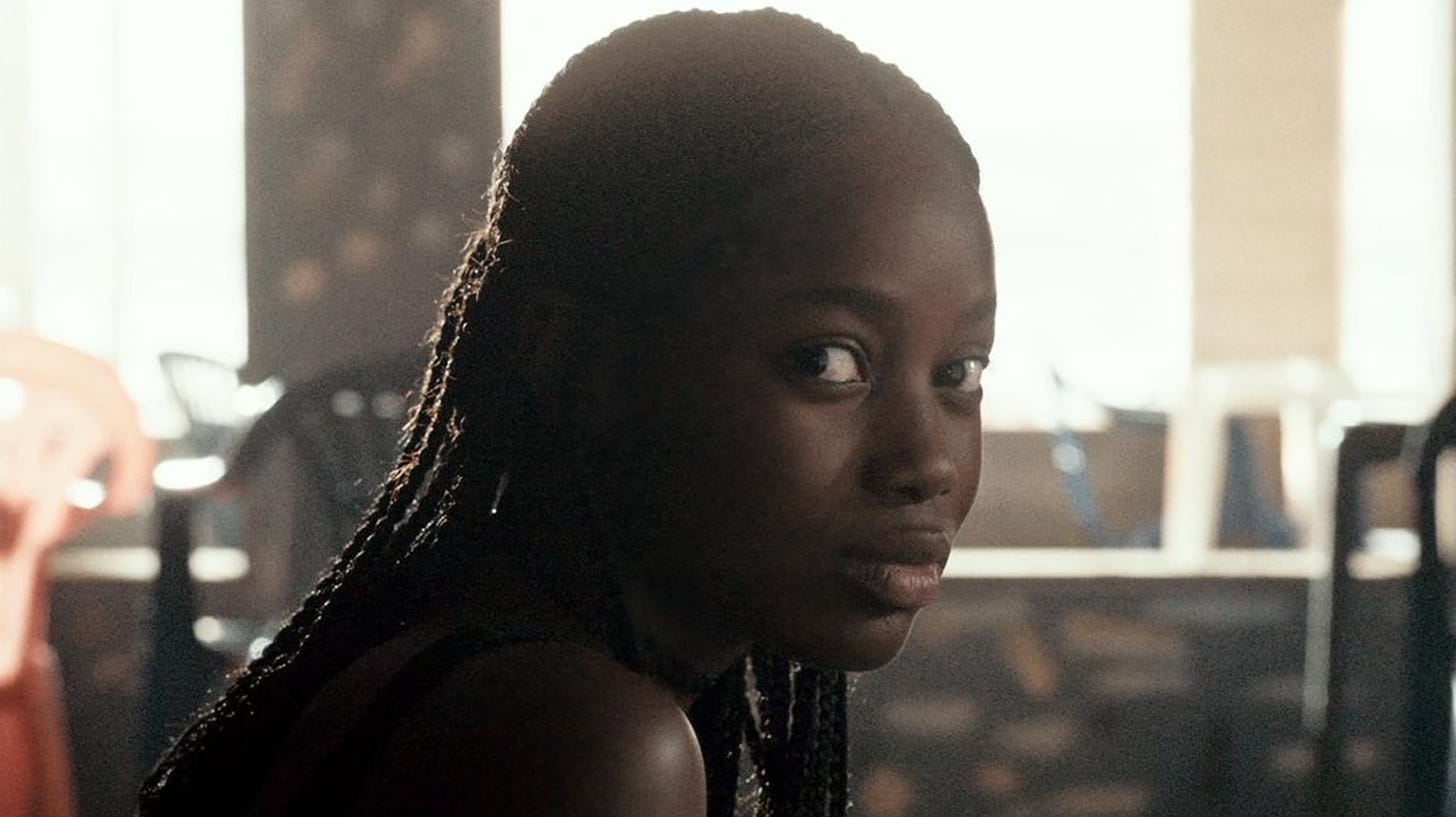
The phrase “military-age men” is religiously regurgitated by Europeans to “describe” the men who risk their lives crossing the ocean in hopes of a bare minimum of dignity. A blatant dehumanising tactic to mislabel refugees as sleeper agents of an ongoing “invasion”. Atlantics, the first picture directed by a Black woman to compete for the Palme d’Or in Cannes, is a film that examines why those men leave, and the women who are left behind when their oceanic crossing ends in tragedy. Ada is a young Senegalese woman who is betrothed to a wealthy man, but whose love is reserved for a construction worker who disappears at sea. Mati Diop treats the premise with the respect it demands while introducing bold twists. Actress Mame Bineta Sane, who stars as Ada, brings a lot of credibility to this touching romance, and her minimalist performance sells the character’s grief and confusion. Ada’s longing for Souleiman, a dispossessed worker, transgresses the financial preoccupations that others expect her to have. Whether in Africa or Europe, the weight of a black man’s soul is still measured economically. Thousands of migrant men can drown in the Atlantic, but society doesn’t mourn them - only women like Ada do.
The Long Farewell
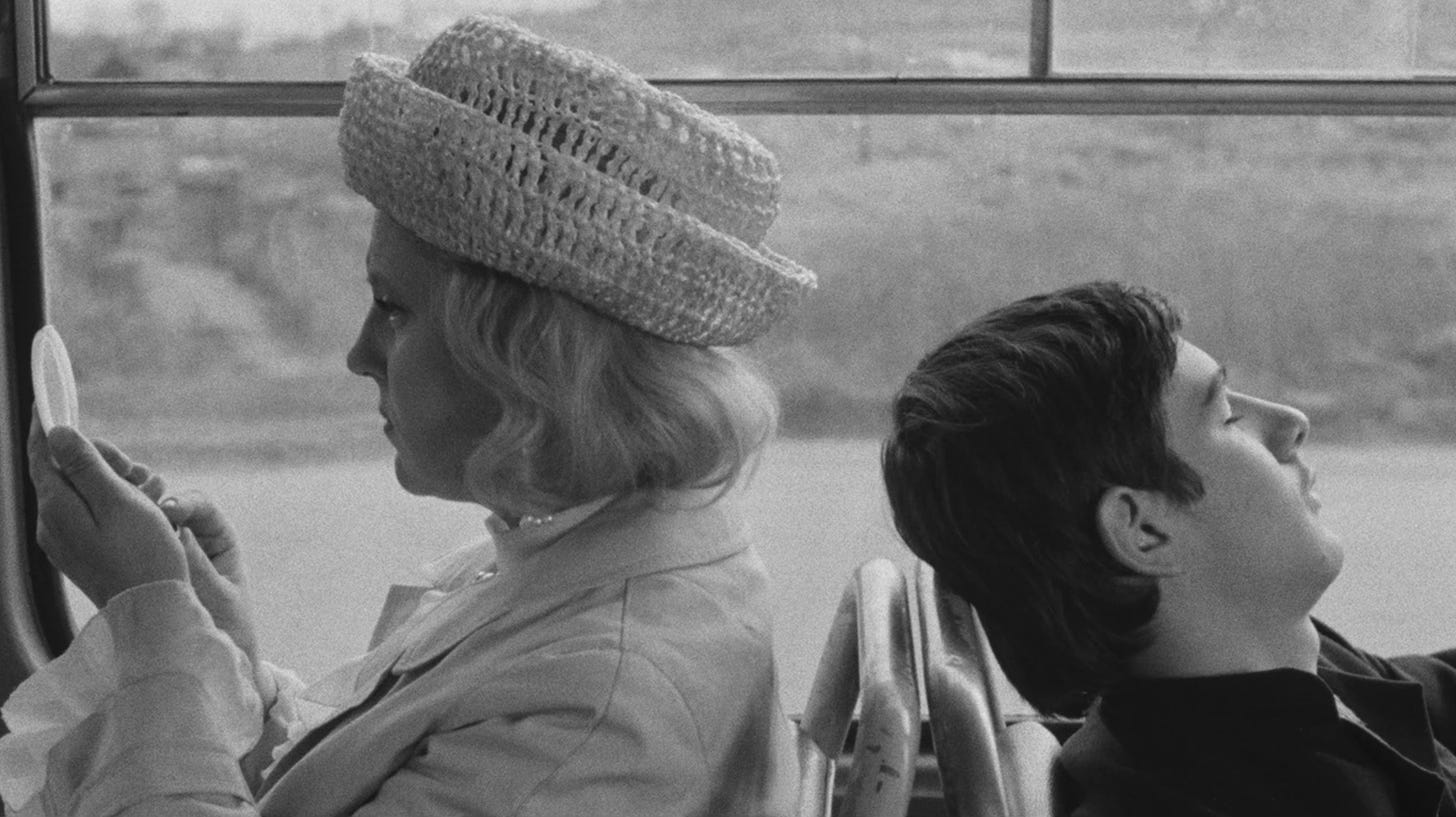
1971, Kira Muratova, Soviet Union
Kira Muratova was one of the most adventurous Soviet directors of the ‘70s. From the racial commentary in Change of Fate to the unusual optimism of her romantic comedy Getting to Know the Big, Wide World, Muratova showed many facets of Soviet life across her filmography. In The Long Farewell, a divorced mother, Yevgenia, begins to feel a rupture in her relationship with her 18-year-old son, Sasha. A painfully familiar story for anyone who’s ever been on either side of it. Actress Zinaida Sharko imbues Yevgenia’s character with warmth and heartbreak, and doesn’t portray her solely as a dedicated mother, but as a competent translator who is full of charm. Sasha’s sudden detachment feels all the more disheartening because the audience learns how genuinely charismatic his mother is. The director’s eccentric style, still not fully formed in this picture, did not respect the tenets of Soviet realism, and her quirks consistently put her career under strain. While the découpage here is far less experimental than some of Muratova’s later works, it was unorthodox enough to be shoved aside. But it’s Muratova’s peculiarities that grant the film its rebellious flair, both on and off screen.
The Men I’ve Had
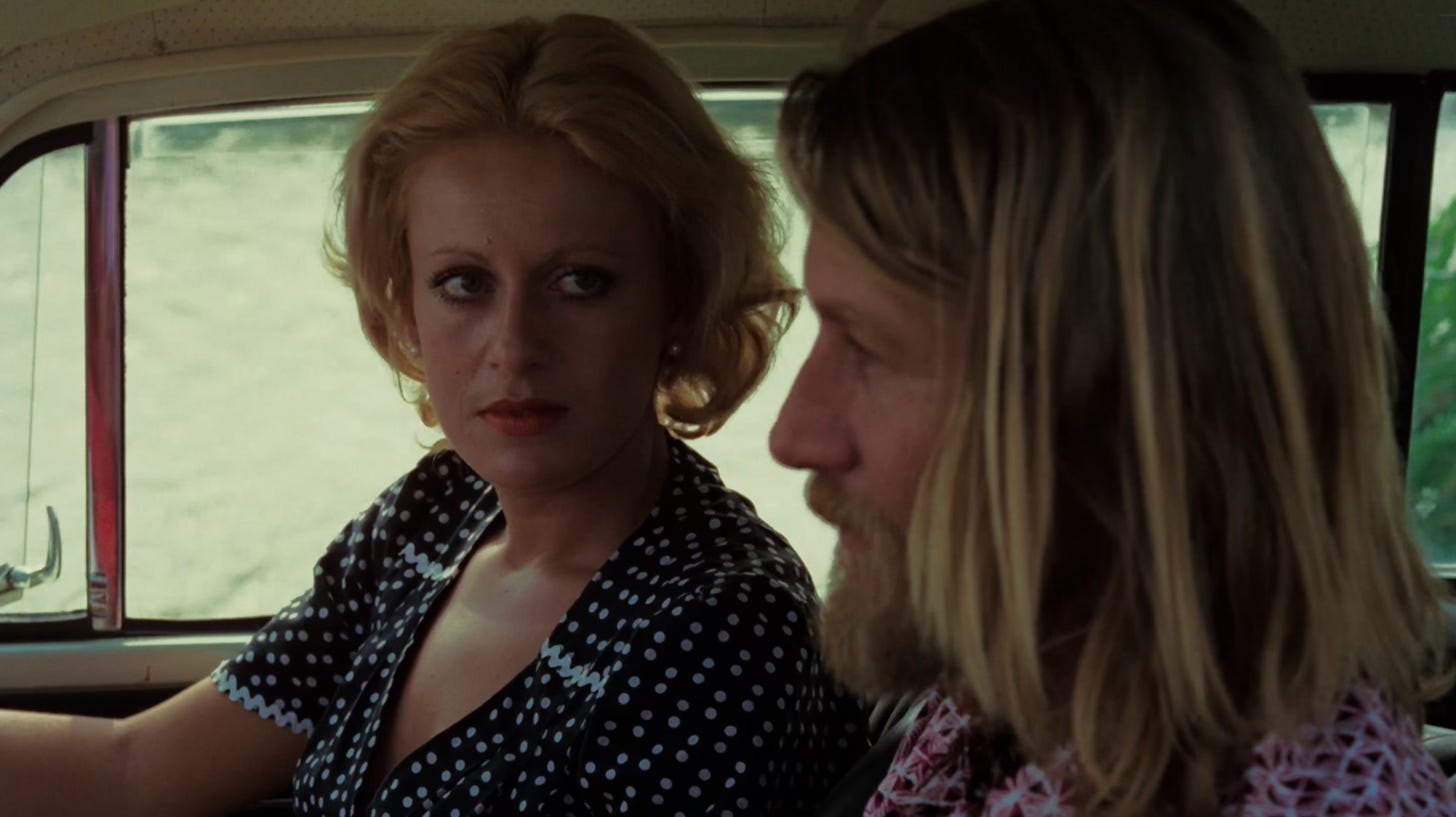
1973, Teresa Trautman, Brasil
When it appears in cinema, polyamory is frequently assessed with the same puritan moral evaluation that it receives in real life. It’s more acceptable than ever to mock non-monogamous relationships and even question the consent exchanged by the parties involved. The Men I’ve Had shows what polyamory looks like when a married woman, Pity, is the one behind the wheel, cultivating hedonistic ties with several men. Beyond sexual liberty, Pity also enjoys economic freedom, since she’s financially independent from her husband. There’s plenty of amusing scenarios free of jealousy, like when Pity and her men all get together to enjoy some ice-cold beer. Naturally, this movie was censored by the Brazilian civil-military dictatorship, since it challenged patriarchal properties that are still just as rigid five decades later. It echoes the pornochanchada genre, an unruly type of Brazilian comedies that leaned heavily into sexual themes and imagery. Beneath their vulgarity, pornochanchadas often slipped political commentary past government censors. The Men I’ve Had doesn’t even bother to conceal its defiant feminist intentions - it wears them on its sleeve.
Mossane
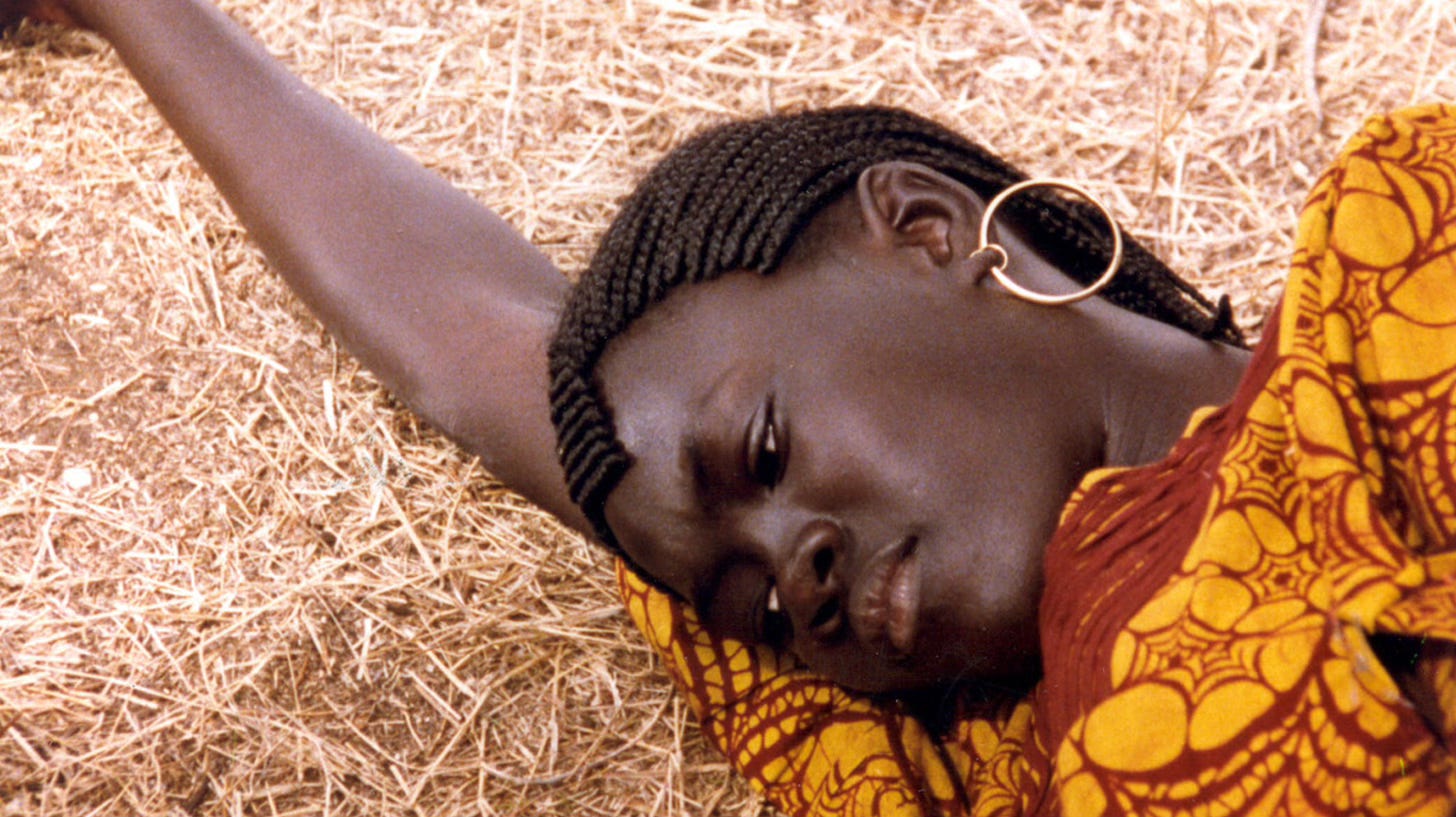
1996, Safi Faye, Senegal
Senegalese director Safi Faye was a pioneer whose 1975 picture Kaddu Beykat was the first commercially distributed feature by an African woman. Her most well-known film, Mossane, follows a 14-year-old girl whose physical beauty becomes the inappropriate obsession of an entire village of adults. Faye’s academic background in ethnology guides her directorial style, and this fictional drama gains a verisimilitude that makes the experience more emotionally strenuous for the viewer. From elderly men sexually objectifying the teenager to her parents seeing her as a channel for financial advantage, everyone around Mossane seems exclusively interested in her body, and her own thoughts and agency carry no weight. Despite her people’s acceptance of child marriage, the young Mossane understands that it must be wrong for adults to promise her in marriage for profit, and rebels against the prison that her culture and family built for her. Cultural peculiarities must be always acknowledged, but one can never become desensitised to the inherent horror of forced child marriage, regardless of when and where it takes place.
Lingua Franca
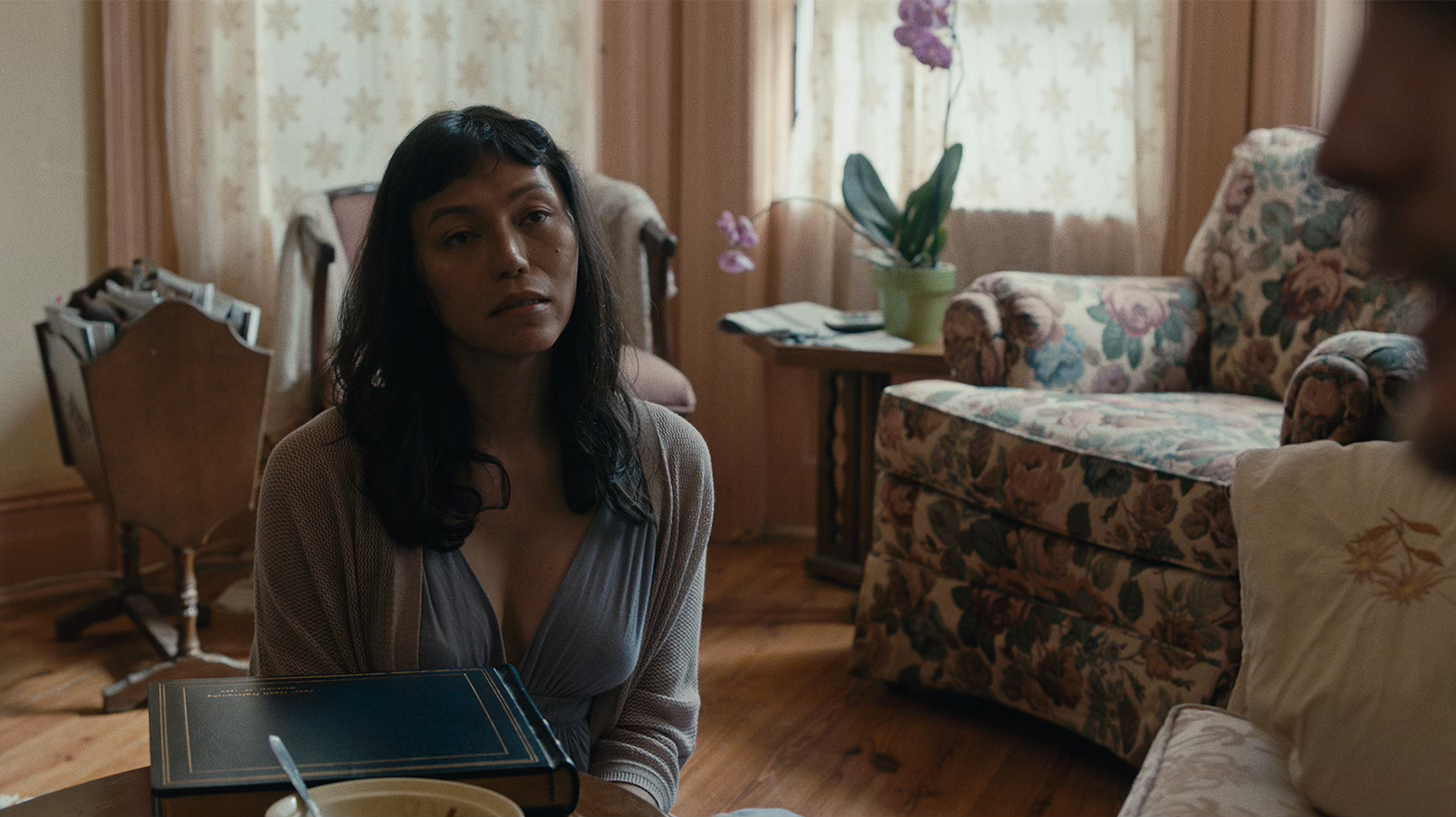
2019, Isabel Sandoval, Philippines, USA
A lingua franca is a common bridging language between those who don’t share the same native tongue. This Filipino-American drama raises by tenfold the significance of what can’t be communicated between people with fundamentally different places in the world. It stars writer and director Isabel Sandoval as Olivia, an undocumented Filipino trans woman who works as a caregiver for an elderly woman with dementia, Olga. Each paycheck has to not only financially support her family back in the Philippines, but also fund her desperate attempts at securing a green card. She becomes romantically involved with Olga’s grandson, Alex, and though both speak English under a shared roof, there is much that an undocumented trans woman of colour can’t communicate to a white cisgender male citizen. As bestial ICE agents throw immigrants into black vans, Alex’s empathy, although genuine, isn’t enough. Olivia can’t opt out of her daily paranoia, and political awareness isn’t optional. No verbal description can accurately translate the constant fear of imprisonment and violence following Olivia’s every step in Trump’s AmeriKKKa. Lingua franca is a film about things that can get lost in translation even when two people speak the same language.
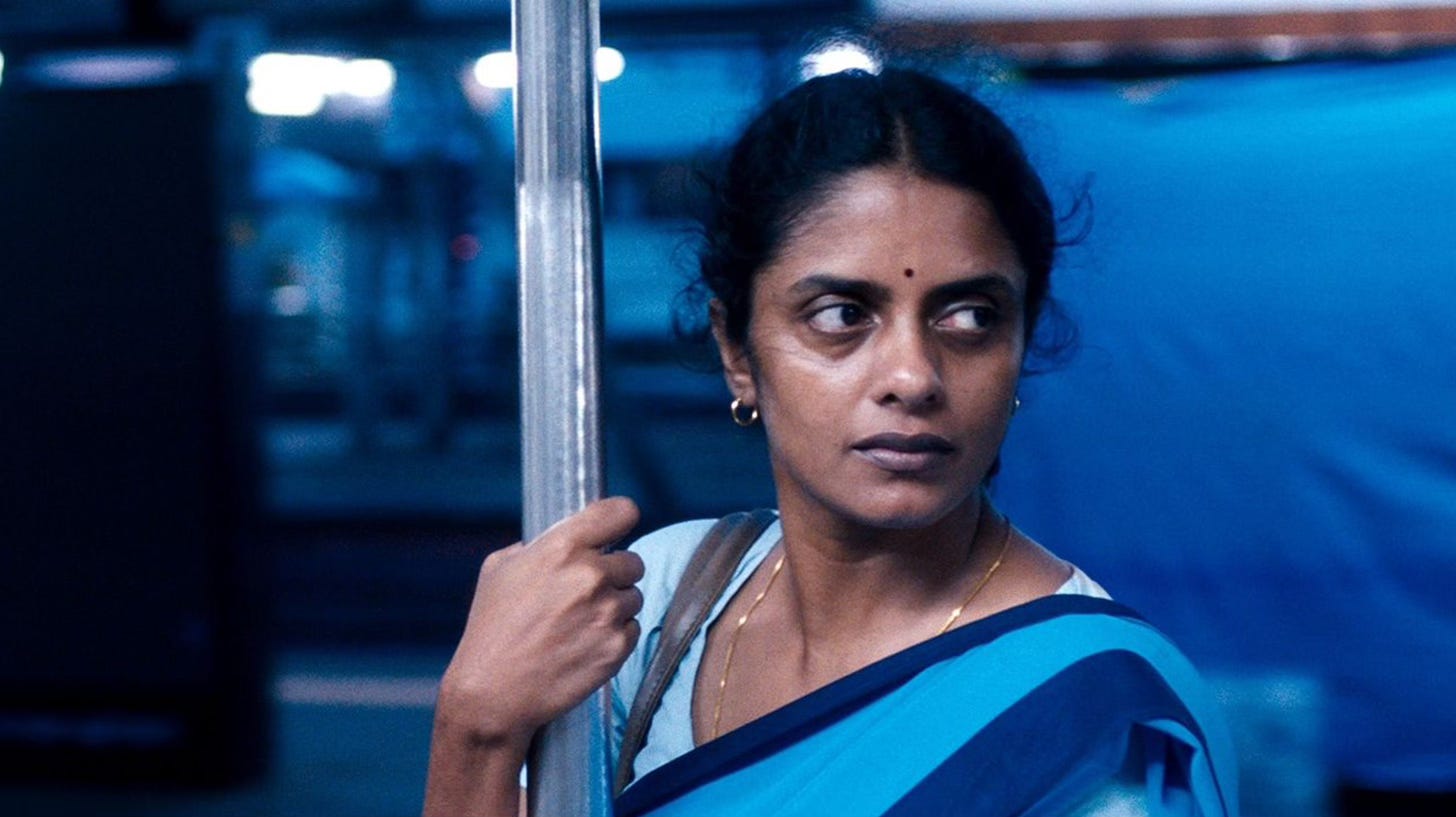
All We Imagine as Light
2024, Payal Kapadia, India
Ill-intentioned social media algorithms developed by racist technocrats have hijacked the public imagination of what India looks like. Payal Kapadia’s film views Bhārat differently, and captures the country’s vibrant soul like a child chasing fireflies with a glass bottle - from the colourful lights in the streets of Mumbai to the quiet of a desolate village by the coast. At the centre of it all are Prabha and Anu, two nurses sharing a flat in the city. Their personalities often clash: Prabha is rather self-restrained and romantically frustrated, while Anu wishes to act upon her desires, but struggles to find a refuge for intimacy in a conservative society. Kani Kusruti’s moving performance as Prabha is even more impressive when considered alongside her role in Girls Will Be Girls, also released in 2024. Broad sociopolitical interrogation isn’t paramount to the story, but Kapadia does probe into the widespread demolition of low-income housing - which is, sadly, not exclusive to India. All We Imagine as Light is filled with yearning, and its introspective nature makes for delicate moments. It doesn’t shy away from the country’s challenges, but revels in its ordinary beauty; be it through a young couple riding crowded public transportation or a friend falling asleep on another’s shoulder.
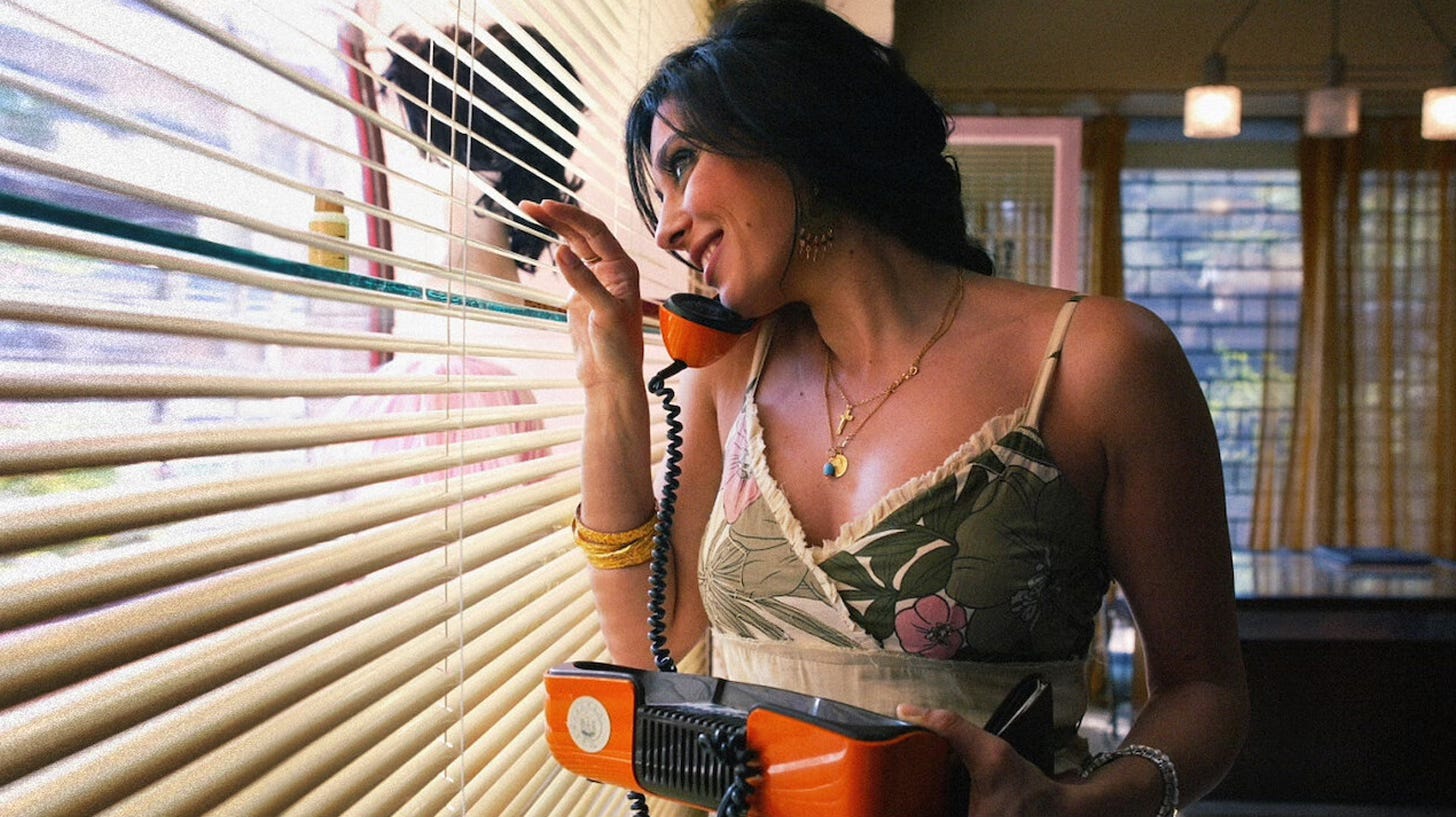
Caramel
2007, Nadine Labaki, Lebanon
A common misconception about the cinema produced and set in West Asian countries is that its works are always mournful representations of war-ravaged nations. Not that it’d be an unreasonable artistic pillar, if it were the case. After all, the West has invested trillions of dollars into the decimation of the Middle East. But that’s not the case in Nadine Labaki’s directorial debut. Here, Beirut is a city like any other, teeming with life, where the broad sociocultural questions certainly haven’t disappeared, but there’s no tragedy to exemplify the moral of the story. Labaki stars as Layale, one of the five Lebanese women spotlighted by the story, all of which either work at or frequent a beauty salon. Each of the women battles cultural impositions of some kind, from repressed homosexuality to the anxiety of growing old in a society that equates beauty with youth. What’s most impressive about Caramel is just how lighthearted its presentation is - it’s a film that could be mistaken for a standard feel-good comedy. Its optimistic tone is in itself taunting the cynical Western gaze. Caramel resists politically by introducing Beirut not as a doomed geographic site somewhere on the map where happiness was never possible, but as a real place, with real people, seeking real happiness.
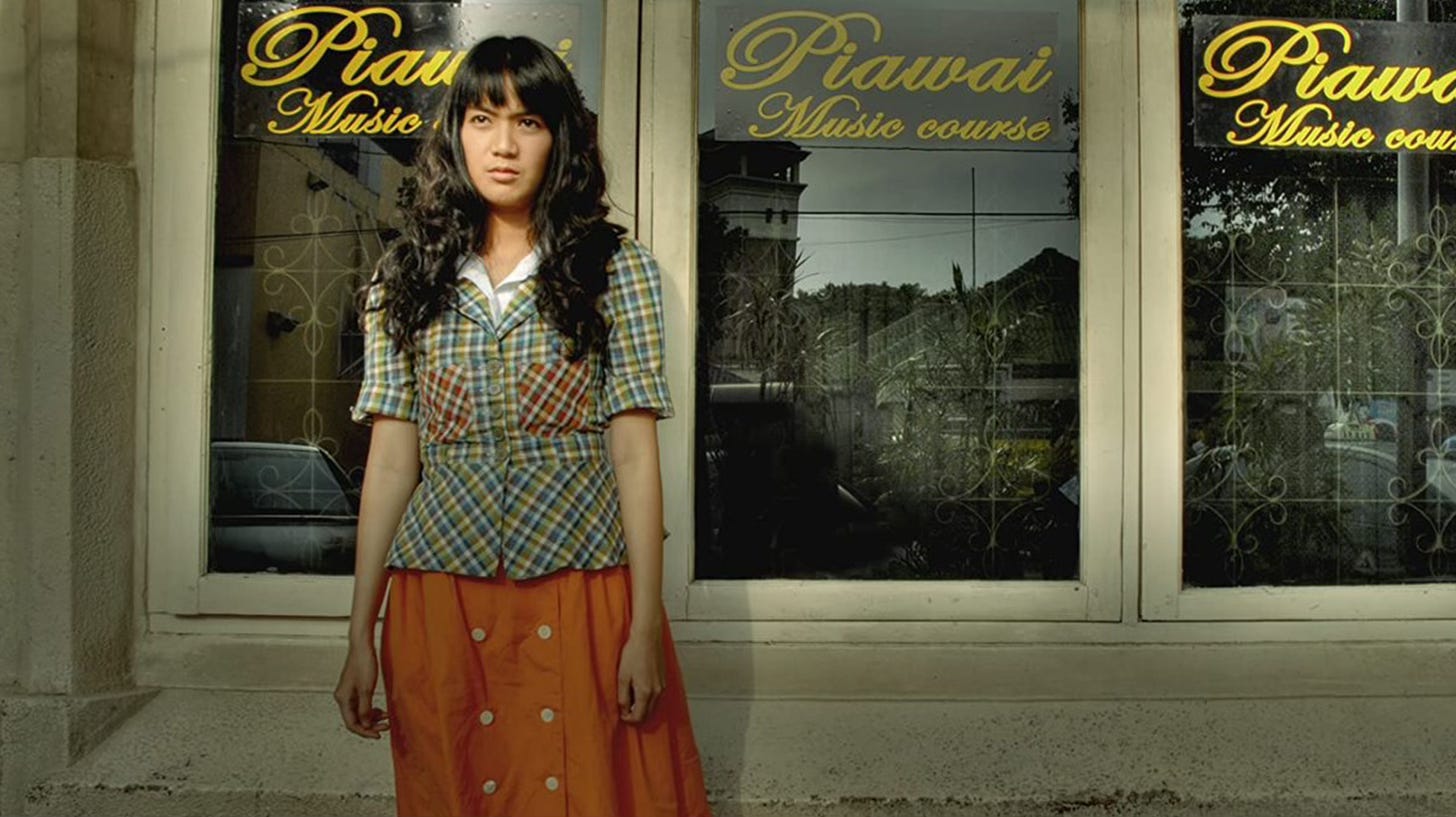
Fiction.
2008, Mouly Surya, Indonesia
As far as pathologies go, antisocial personality disorder is by and large the most commonly depicted in media. Filmmakers and audiences alike are obsessed with sociopaths. It makes statistical sense that most of these stories are focused on remorseless men committing heinous acts, but it’s always riveting to see female storytellers showcase the crimes of psychopathic women without any sour tinge of misogyny. In this unsettling thriller with light class commentary, director Mouly Surya chronicles the dangerous infatuation of a rich young woman with a working-class writer struggling with a creative block. Surya is one of Indonesia’s most renowned filmmakers, having directed inventive genre movies like the 2017 feminist Western Marlina the Murderer in Four Acts. Ladya Cheryl’s incredible performance as the detached Alisha here peels back layers of childhood trauma, social entitlement and obsession, elevating the already strong script. Fiction. is already an Indonesian classic, and highlights one of cinema’s most fascinating female psychopaths.
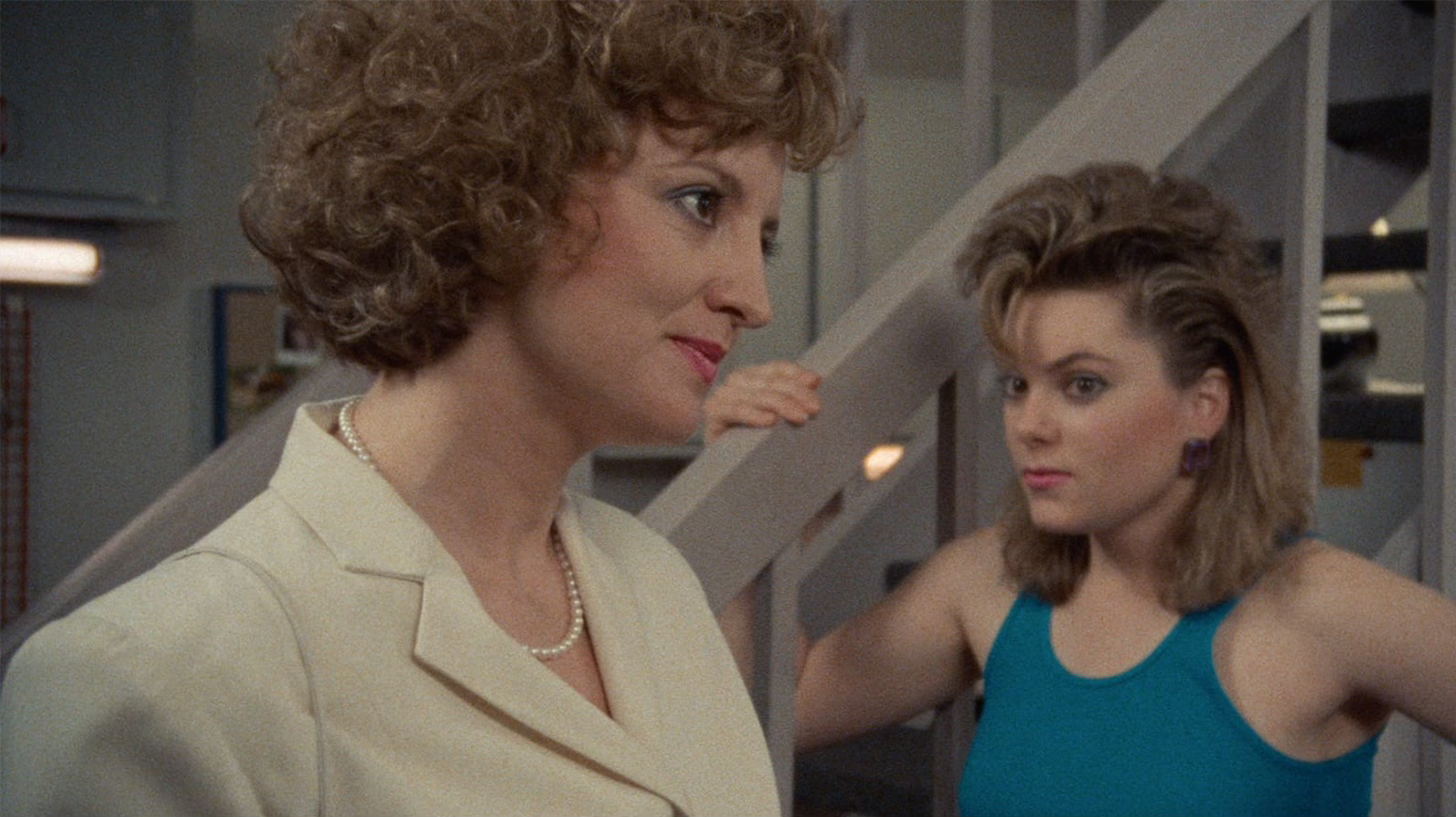
Working Girls
1986, Lizzie Borden, USA
Work is, more often than not, a boring and repetitive cycle of operations that require little thought once muscle memory kicks in. It makes sense that, for many sex workers, the same principle applies. Working Girls registers the day in the life of a group of sex workers at a Manhattan brothel. Contrary to expectation, there’s no ingrained sense of anguish in their working environment. No sex trafficking, no soul-crushing speeches - only a dull job and trivial chit-chat with customers. That’s not to say the film overlooks the nature of the industry uncritically. There are uncomfortable interactions, most traceable to simple chauvinism, and the women do their best to respond with professionalism to situations probably best answered with a punch. Similar to her 1983 classic Born in Flames, director Lizzie Borden acknowledges the class (and even racial) disparities between characters, and how it determines their particular material circumstances and perspectives. For the protagonist Molly, a Yale graduate, the job is a temporary nuisance to navigate the gig economy, but her condescending “university girl” tone is reprimanded by an older coworker for whom sex work is a long-term commitment. Working Girls is a splendid feminist discussion of sex work, free from the commonplace moralism that often accompanies it uninvited.
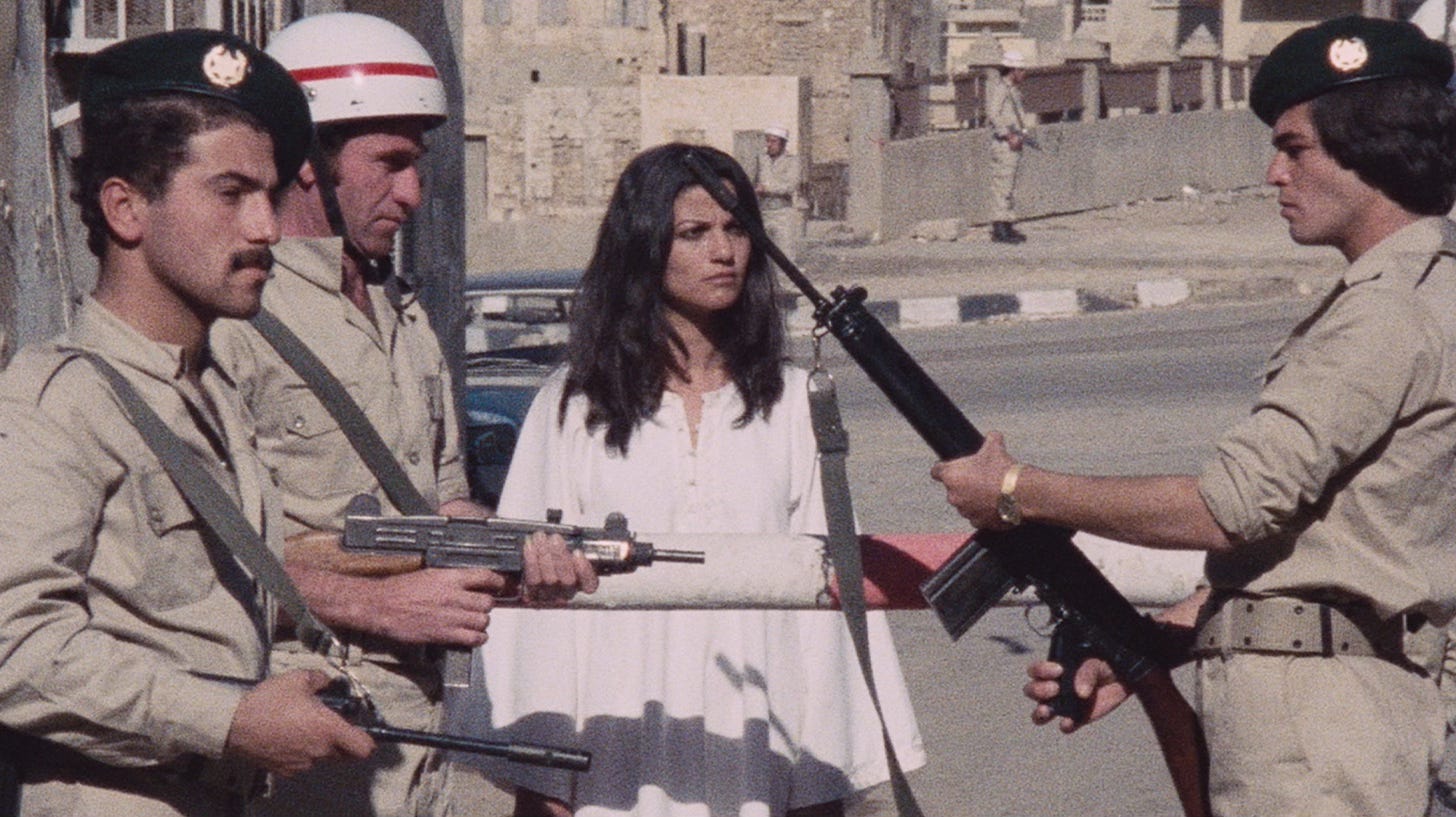
Leila and the Wolves
1984, Heiny Srour, Lebanon
In 1974, Lebanese director Heiny Srour became the first Arab woman to have a film selected for the Cannes Film Festival - the excellent documentary on the Dhofar rebellion, The Hour of Liberation Has Arrived. Her next feature, Laila and the Wolves, took seven years to film and would only be released a decade later. In this idiosyncratic picture, archival footage, reenactments and fiction are combined to tell a tale that no one but Heiny Srour could have envisioned. Leila is a Lebanese woman curating a Palestinian photography exhibition in London. While staring at the photos, her male partner claims that “in those days, women had nothing to do with politics”. His casual chauvinism goads Leila into time-travelling back to the 20th century, where she bears witness to women’s contributions across decades of political resistance in the Levant. There are countless sociological threads being pulled at once, and duality is everywhere. Women sacrifice their own children for the advances of the national struggle, while husbands assault their wives with impunity for banal reasons. Gender dynamics are dissected from every angle, making Leila and the Wolves a multifaceted investigation of patriarchy, theology and colonialism.
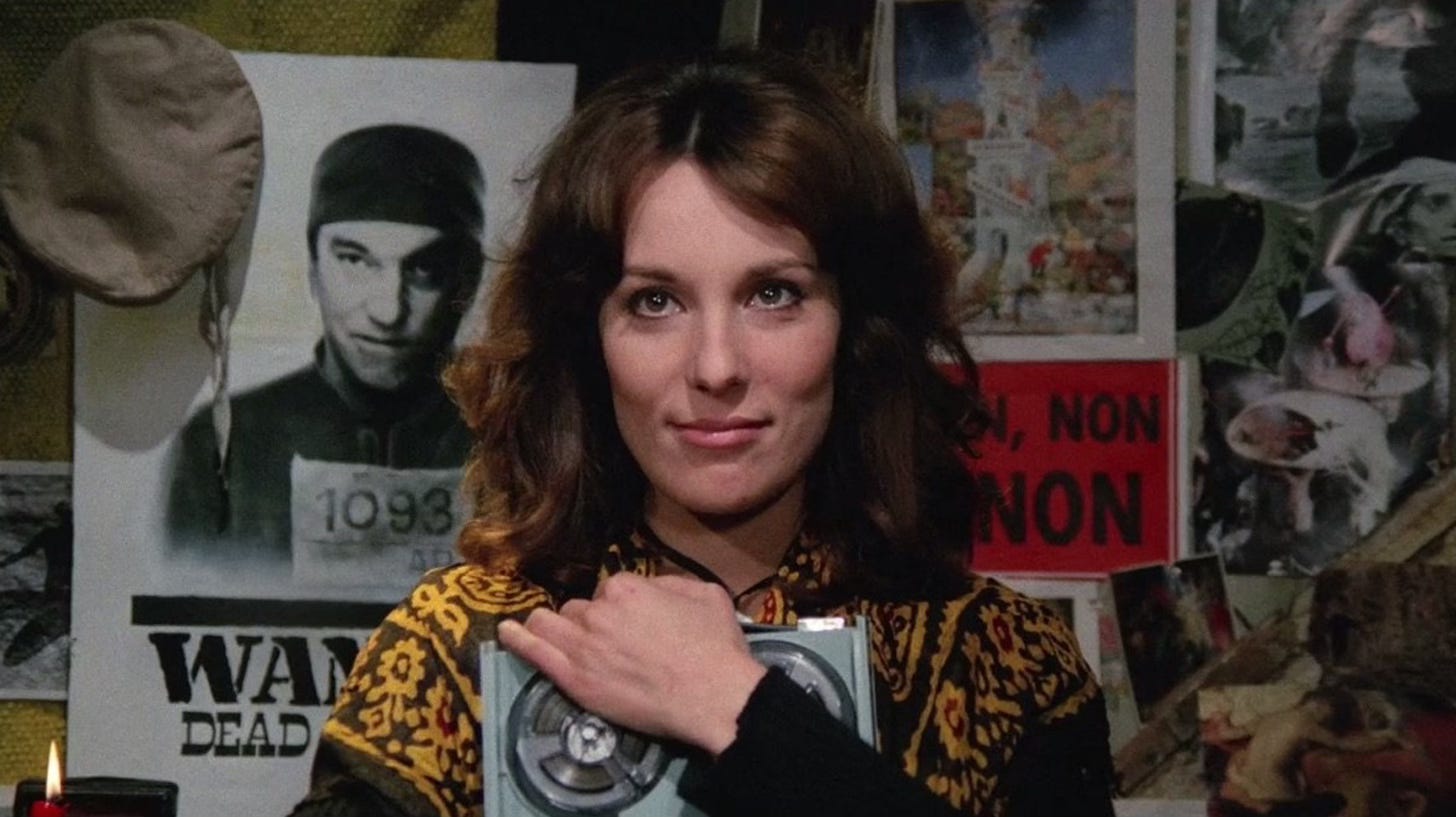
A Very Curious Girl
1969, Nelly Kaplan, France
Surrealism is remembered for its formal attacks against cinematic structure, yet the movement’s political ambitions often go unmentioned. Surrealists instigated cinema to devour both itself and the wider bourgeois social order and its hypocrisies. So the compact pool of female Surrealist filmmakers is a shame, and likely the side-effect of unresolved chauvinistic inklings - Germaine Dulac and Nelly Kaplan are the only celebrated Surrealist women. While the dream-like quality of Surrealism isn’t central to A Very Curious Girl, the movement’s underapreciated political critique is. The protagonist, Marie, consolidates social capital in her tiny rural community through sex work. By sleeping with the village’s gullible men, Marie acquires the funds to live a more comfortable life - until things start to get heated, and the local wives direct their anger at Marie, not their unfaithful husbands. The men themselves are not keen on the rules that Marie stipulates, and each sequence becomes more preposterous than the last - like when the men attempt to impose a price-control policy on Marie’s services. Kaplan’s vision in A Very Curious Girl feels incredibly fresh, and comparisons are insufficient, but viewers can expect an absurdist tone à la Luis Buñuel with a sharp feminist sarcasm reminiscent of Agnès Varda.
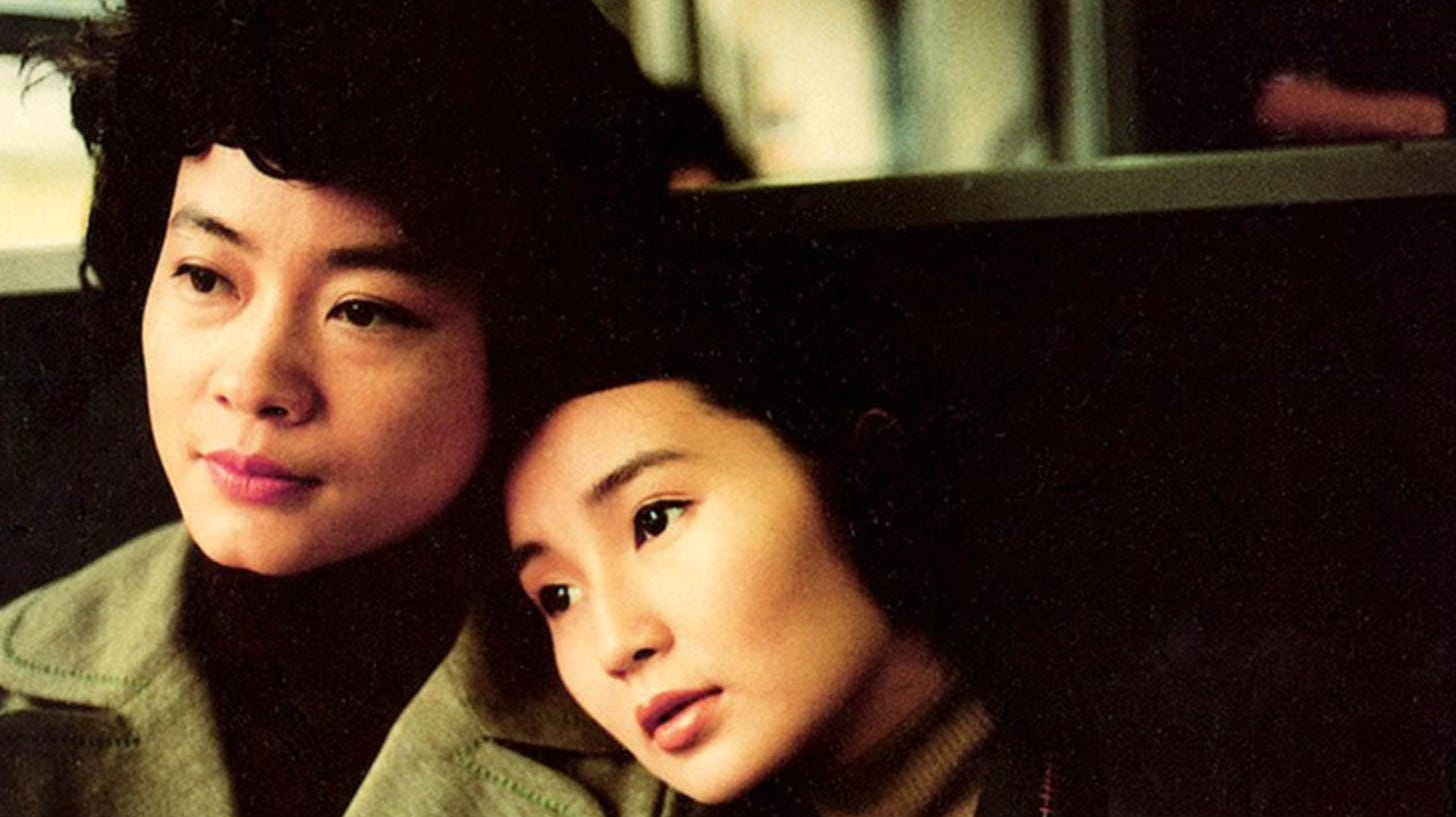
Song of the Exile
1990, Ann Hui, Hong Kong, Taiwan
Not many fears can eclipse the anxiety of not knowing anything about your mother and only realising it when it’s too late. Thankfully, that’s not the case for the protagonist Hueyin, a young woman from Hong Kong who returns home after graduating in London and reunites with her mother, Aiko. After many quarrels, the daughter begins to understand how little she knows about the woman who brought her into the world. Even the wise mothers who seem to know everything are only people who had entire lives before giving birth or adopting their children. This family drama shines a light on a mother who still isn’t sure who she is, nor that she made the best choices. Slowly the duo, remarkably played by Lu Hsiao-Fen and Maggie Cheung, come to mutual understanding and appreciation, and it’s incredibly moving. Also central to the narrative are the tensions of Sino-Japanese relations, since Hueyin’s mother was a Japanese civilian living in Japan-occupied Manchuria during WWII, and her father a Chinese army officer. Aiko’s life as an immigrant in Chinese territory was marked by linguistic alienation and the social grievances stemming from the atrocities committed by the Empire of Japan. As a semi-biographical work for director Ann Hui, both emotional and cultural conflicts are explored with a masterful touch. Here’s to hoping that this magnificent film prompts viewers to cherish their mothers and learn about who they actually are while they still have the chance.
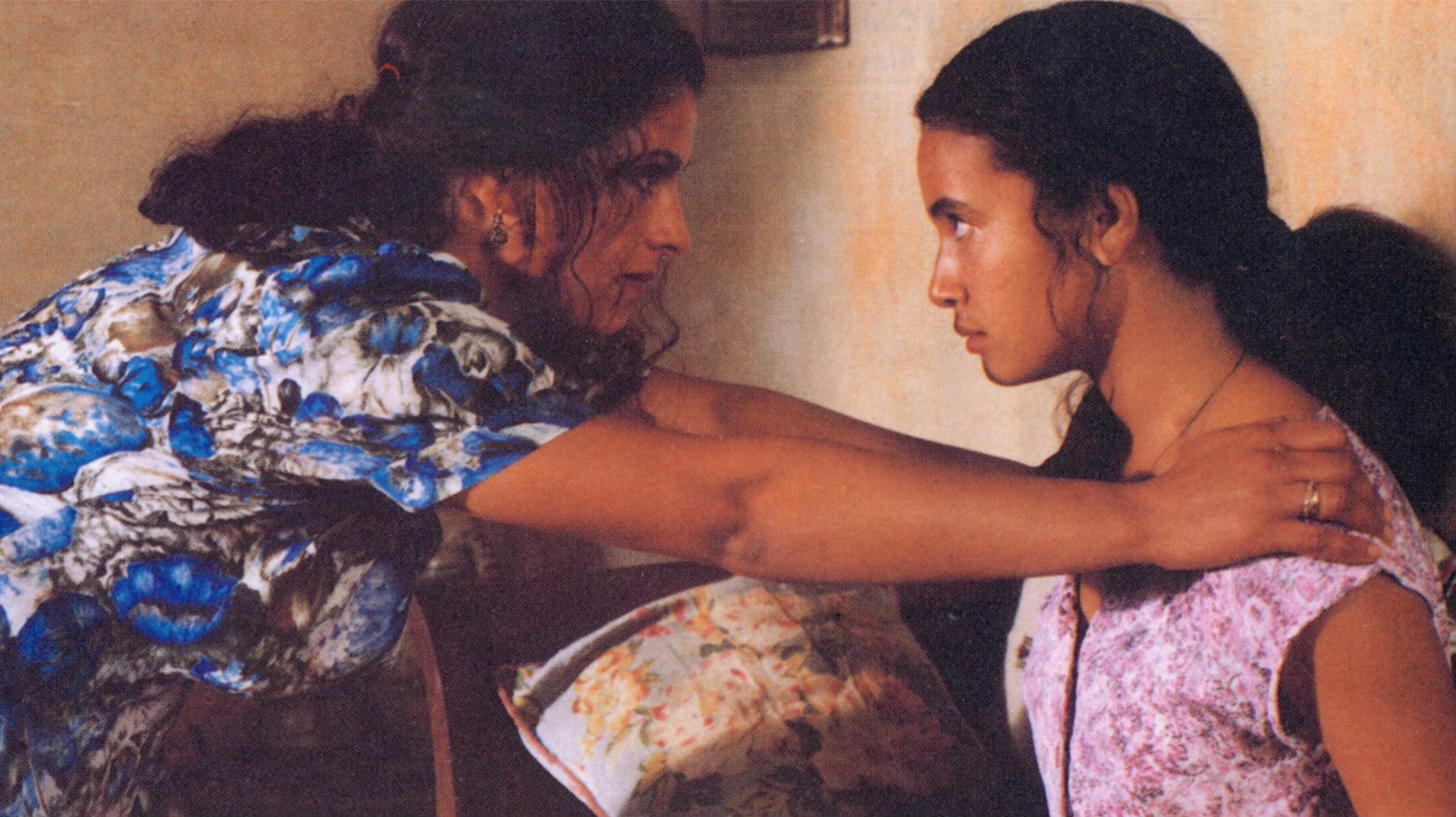
The Silences of the Palace
1994, Moufida Tlatli, Tunisia
You can count on one hand the number of films that meditate on labour and gender exploitation with this much finesse. Upon returning to the royal palace where she was born into servitude, Alia, the protagonist, relives her childhood memories. Her late mother, Khedija, was one of the many female servants sexually and economically exploited within the palace walls. For Khedija, the irrevocability of her child’s destiny was suffocating, and each day demanded another desperate attempt to postpone her young daughter’s sexual subjugation. Inescapable emotions dominate the screen, and neither the audience nor the characters find relief from their burden. Patriarchal intimidation manifests itself whenever one of the princes walks into a room and the women’s laughter fades. This astonishing feminist drama examines the ignition of anti-imperialist sentiment, making the women’s plight all the more urgent. While their country fights for sovereignty, the women attempt to regain their bodily autonomy. Where one battle is loud and its warriors warmly embraced, the other is overlooked, and its fighters silenced. But true liberation begins with the emancipation of women, and Moufida Tlatli’s magnum opus serves as a monumental reminder of it. The Silences of the Palace is one of the greatest works in the history of cinema.
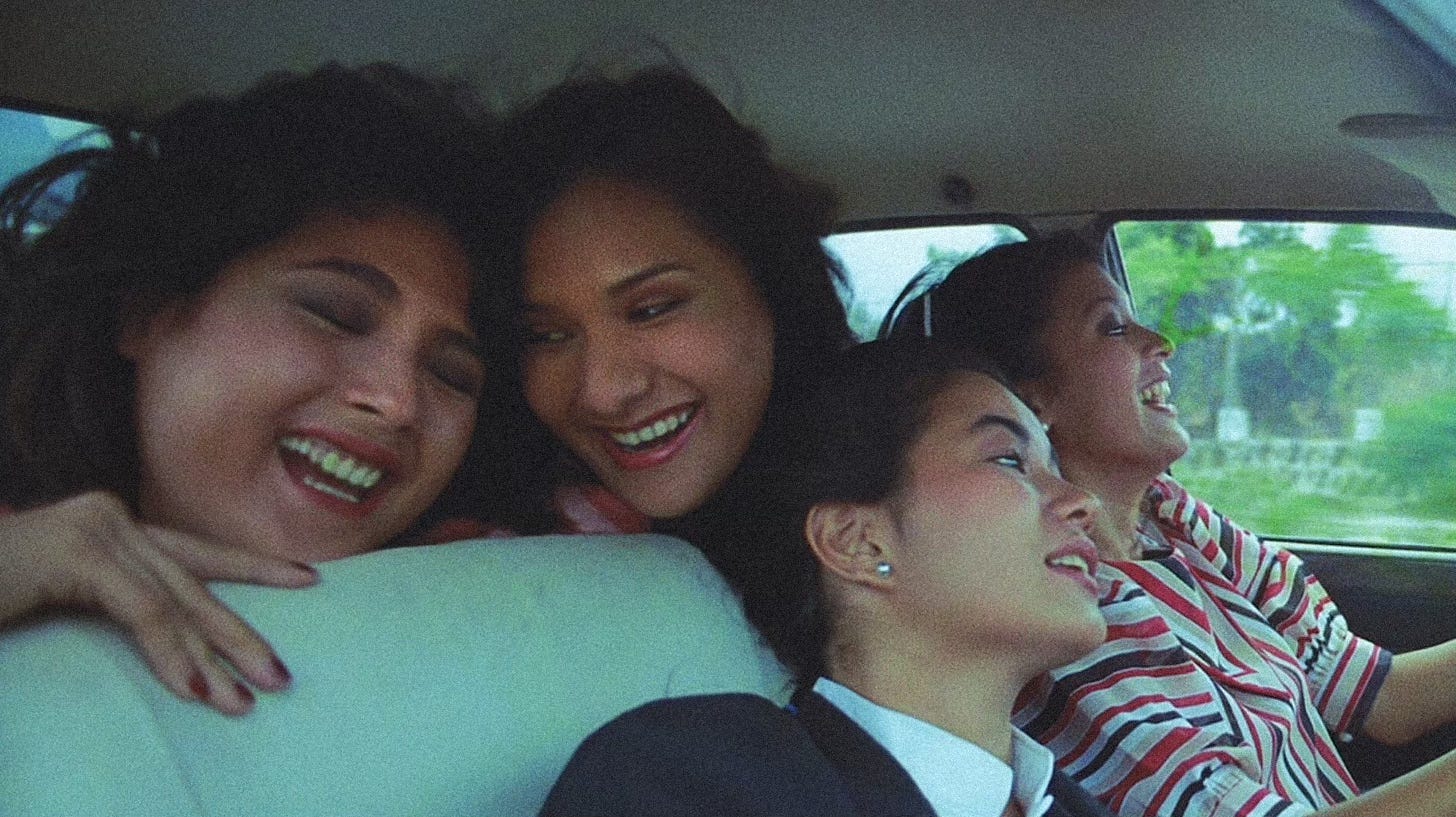
Moral
1982, Marilou Diaz-Abaya, Philippines
There’s one question that every cinephile lucky enough to have seen this has surely asked themselves: “How was this made in 1980s Philippines?”. With each scene, it becomes harder to reconcile its intersectional feminist valour with the historical period. Director Diaz-Abaya tackles just about every sensitive topic imaginable: abortion, homosexuality, marital rape, slut-shaming, labour rights, state repression - and the list goes on. Moral is a kaleidoscopic study of patriarchy and womanhood, exceptionally forward-thinking even by today’s standards. Set during the ‘70s-‘80s Martial Law era in the Philippines, this coming-of-age story follows four university students: Joey, Kathy, Sylvia and Maritess. Their friendship has a burgeoning effect, and everything seems okay when they’re together, despite their many differences. But apart, they drift aimlessly in a male-dominated world indifferent to their potential to flourish. Moral features audacious sociopolitical imagery, from a divorced woman developing a healthy friendship with her gay husband’s boyfriend to a favourable depiction of the armed left-wing guerrilla activities. Joey, flawlessly performed by Lorna Tolentino, is the cast’s most complex figure, and the waxing and waning of her growth demonstrates the picture’s awe-inspiring writing. Marilou Diaz-Abaya doesn’t provide neat resolutions to issues that society itself hasn’t yet solved. Instead, she asks the audience to stay for the good, the bad and the uneventful. The simplicity of this slice-of-life drama is deceiving. But by the time the credits roll, this collage of ordinary moments reveals itself as one of the most phenomenal films of the 1980s. This is an unsung masterpiece of Southeast Asian cinema.
Full List
The Last Stage, 1948, Wanda Jakubowska, Poland
Something Different, 1963, Věra Chytilová, Czechoslovakia
The Apple, 1998, Samira Makhmalbaf, Iran
0.5 mm, 2014, Momoko Ando, Japan
Salt of this Sea, 2008, Annemarie Jacir, Palestine
The Meetings of Anna, 1978, Chantal Akerman, Belgium
Atlantics, 2019, Mati Diop, Senegal, France
The Long Farewell, 1971, Kira Muratova, Soviet Union
The Men I’ve Had, 1973, Teresa Trautman, Brasil
Mossane, 1996, Safi Faye, Senegal
Lingua Franca, 2019, Isabel Sandoval, Philippines, USA
All We Imagine as Light, 2024, Payal Kapadia, India
Caramel, 2007, Nadine Labaki, Lebanon
Fiction., 2008, Mouly Surya, Indonesia
Working Girls, 1986, Lizzie Borden, USA
Leila and the Wolves, 1984, Heiny Srour, Lebanon
A Very Curious Girl, 1969, Nelly Kaplan, France
Song of the Exile, 1990, Ann Hui, Hong Kong, Taiwan
The Silences of the Palace, 1994, Moufida Tlatli, Tunisia
Moral, 1982, Marilou Diaz-Abaya, Philippines