

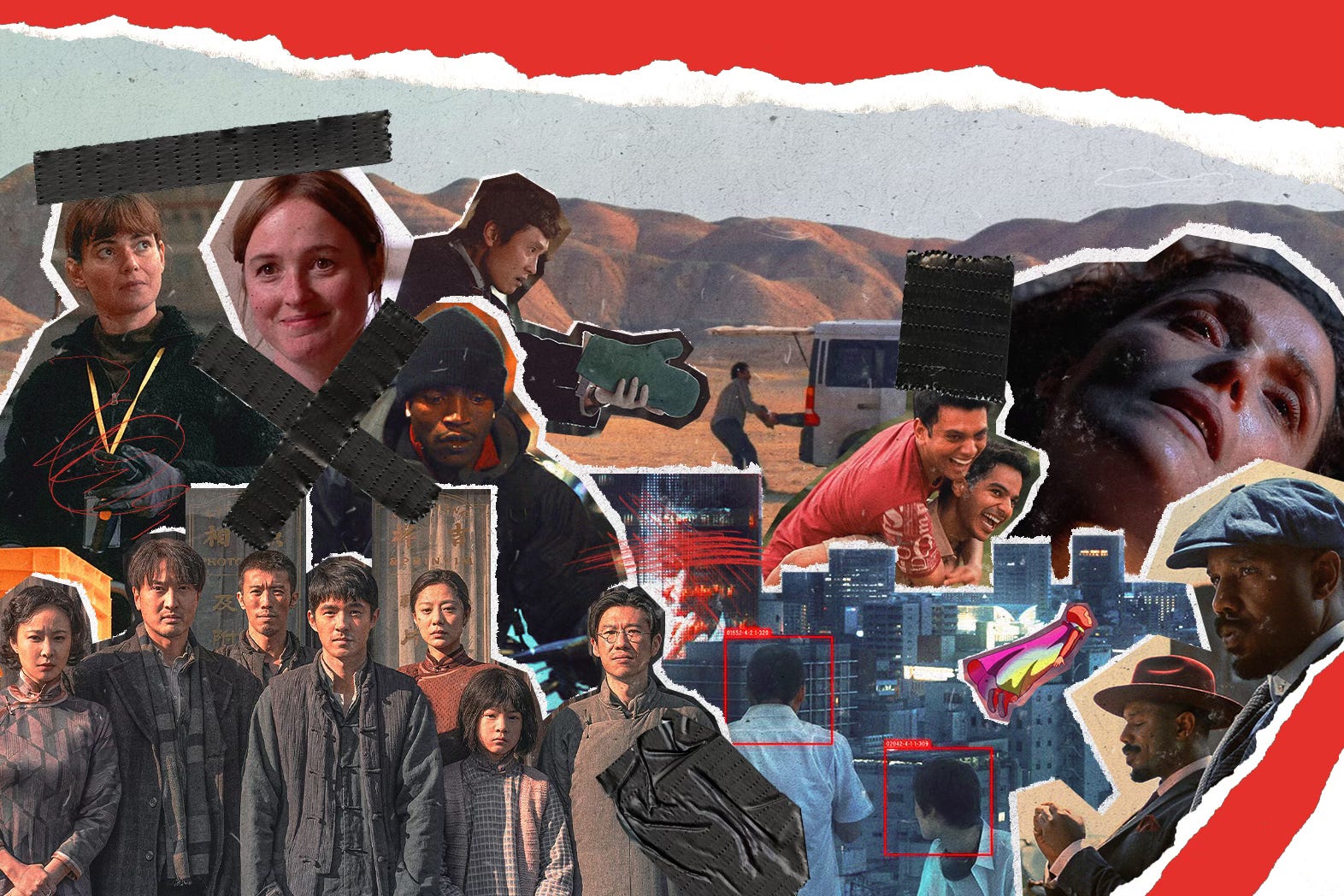
This year was a movie, but the tear-jerker kind that makes you slowly put your popcorn away. From music apps investing in AI military technology to posthumous Messianic rebrands of fascistic media personalities, 2025 did not pull any punches. To add salt to an already infected wound, political cynicism has found its yearly ambassador in One Battle After Another, a work that stands for so little, yet fooled so many liberal humanists, all so suspiciously moved by a white American’s mockery of direct action.
It’s understandably difficult not to be seduced by anguish and despair. While the need for distraction often feels like a narcissistic luxury, joy is in itself an exercise in rebellion that requires much more courage than pessimism. In an apparatus meticulously engineered to keep workers alive in a strictly biological sense, it’s important to remember to live.
Thankfully, this year had no shortage of works of art that act as a reminder of the many beautiful things that humans have to offer one another. Although the author hasn’t had the chance to watch some of the year’s most beloved titles, such as Resurrection or The Secret Agent (yes, Brazilian card revoked), thus making this list imperfect, it is one shared with sincerity.
So, to lift up the mood, here are 30 of 2025’s most wonderful films.*
*A few titles might be catalogued as 2024 releases, but since their UK theatrical premiere took place in 2025, they qualify for this list.
Honourable Mentions:
Mirrors No. 3, Christian Petzold, Germany
The Old Woman with the Knife, Min Kyu-dong, South Korea
Same Old West, Erico Rassi, Brasil
We Shall Not Be Moved, Pierre Saint-Martin, Mexico
Final Destination Bloodlines, Adam B. Stein & Zach Lipovsky, USA
April, Dea Kulumbegashvili, Georgia
30. The Mastermind
Kelly Reichardt, United Kingdom, USA
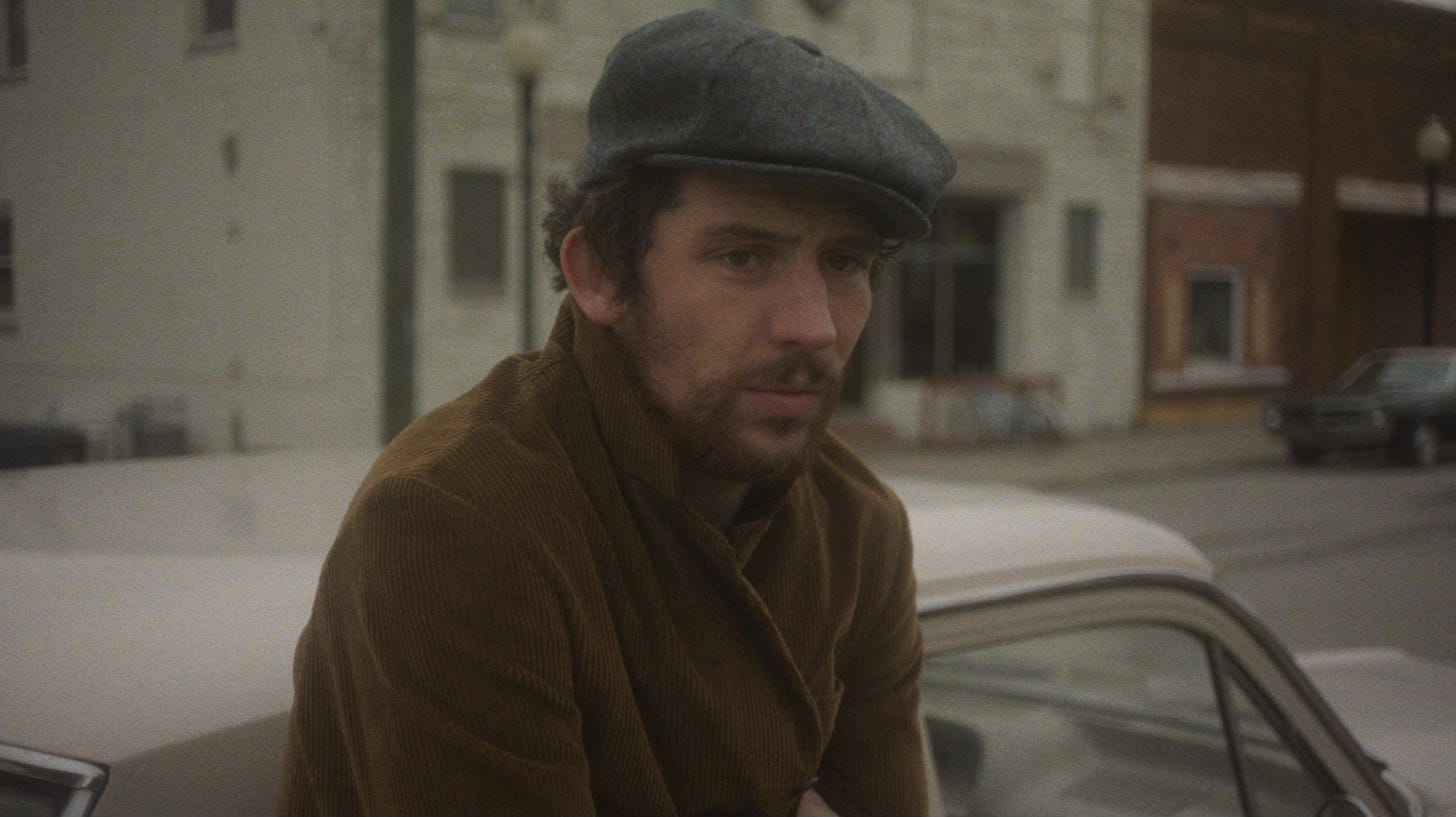
A film that scrutinises the suburban male mind with embarrassing precision: the thrill-seeking, the paternal imprudence, and even the rejection of popular (or “lower”) art. Reichardt casts a blank mould into which she pours very few ingredients, but just enough to concoct a protagonist that succinctly condenses the white privilege and vapid indiscretions of apolitical individualists. The director’s fondness for Bresson seeps through each anticlimactic and frustrating frame of The Mastermind.
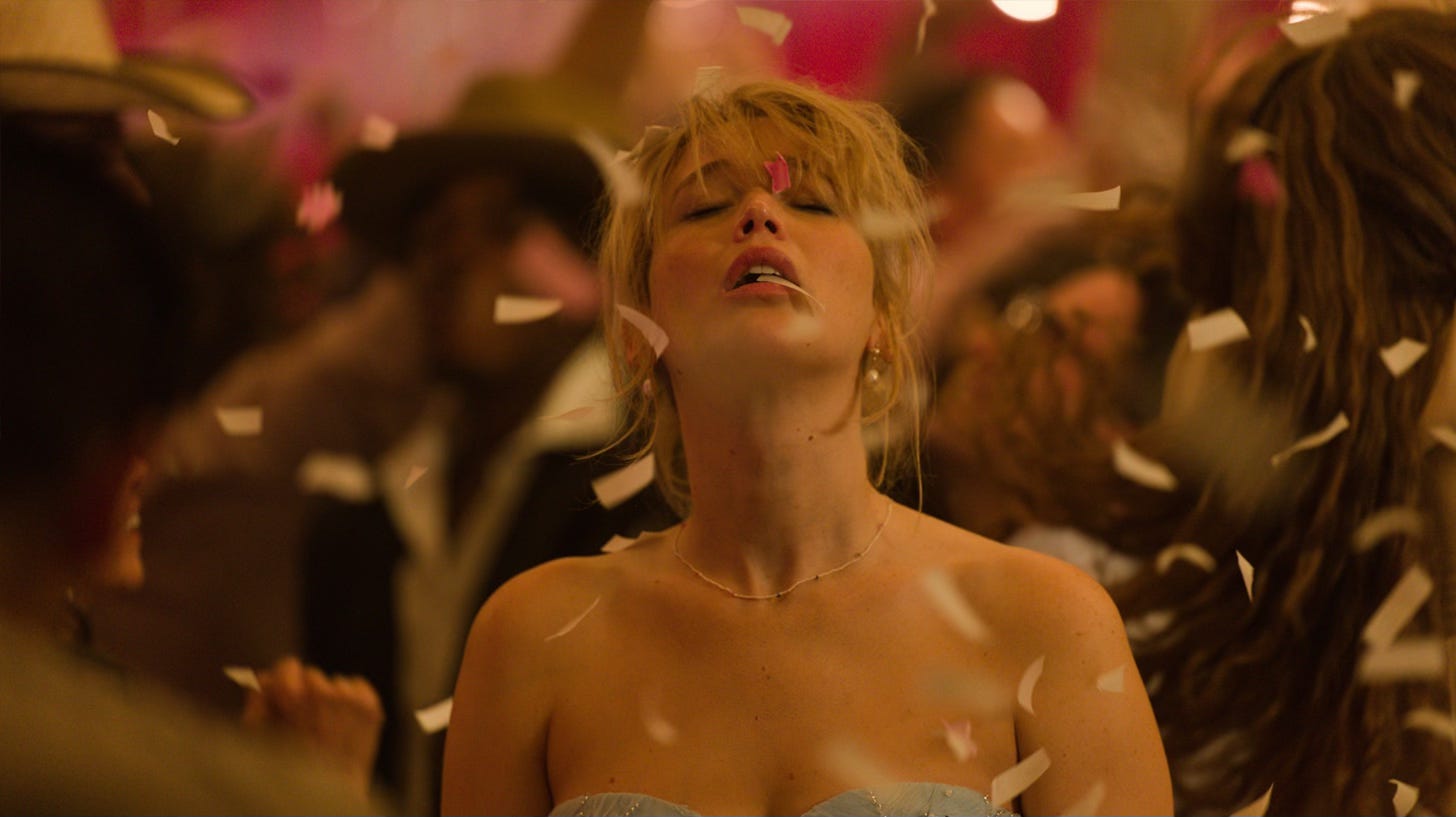
29. Die My Love
Lynne Ramsay, USA
Ramsay continues to extend empathy towards the ‘inadequate’, those whose very existence becomes ‘inconvenient’ and challenges the confines of the socially comfortable. Here, a young mother struggling with postpartum psychosis. Jennifer Lawrence’s performance is her best since Mother!, and her character lies on the outskirts of society not only psychologically, but physically, cast away in a desolate rural home that feels as suffocating as the expectations of her getting better. Die My Love exposes the unseen and terrifying potential aftermath of giving birth, a biological event so monumental and reality-warping, yet so shockingly disregarded by cisgender men… who, rather predictably, seem to be having a hard time “relating” to this protagonist.
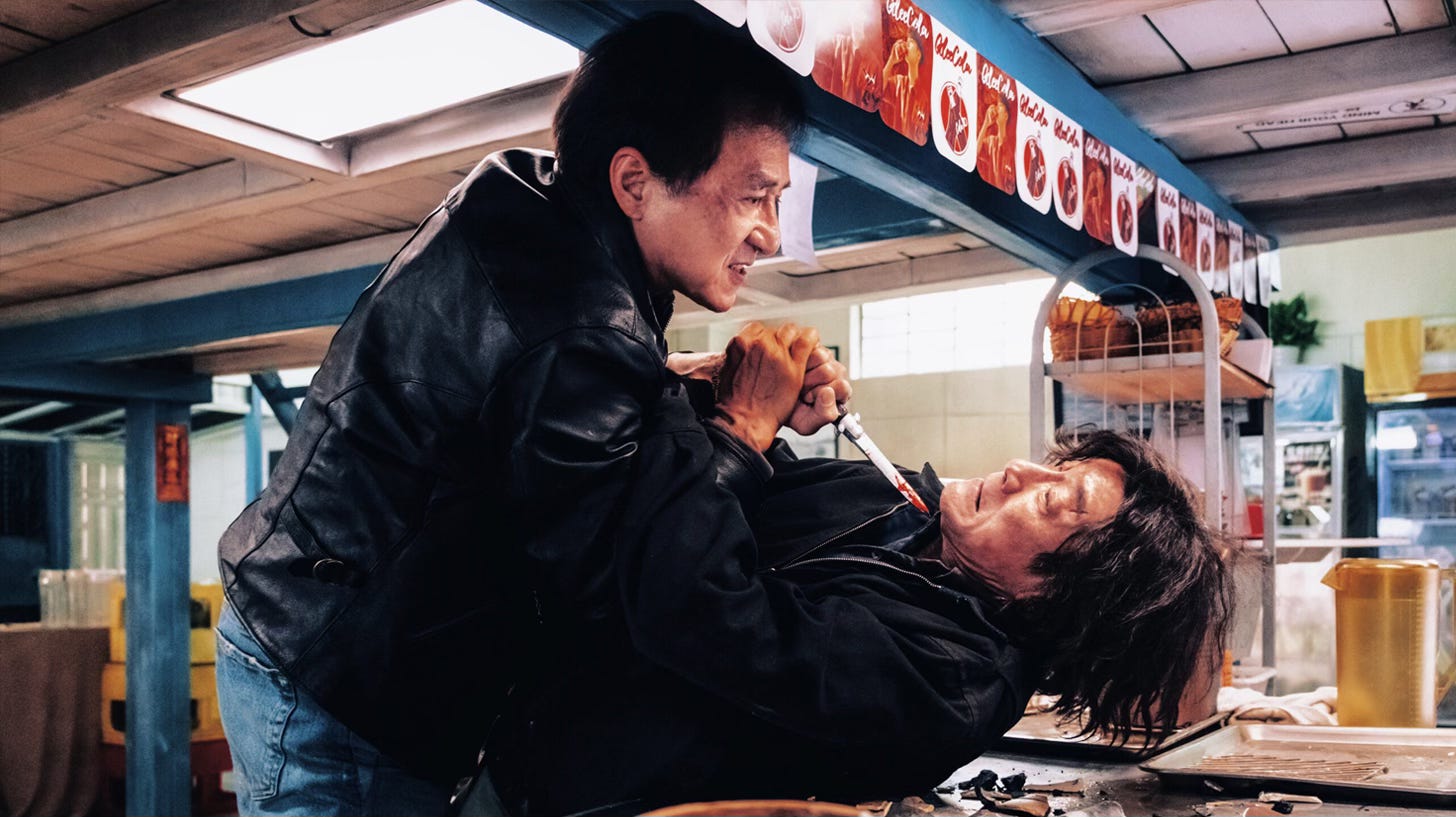
28. The Shadow’s Edge
Larry Yang, Hong Kong, China
Proof that even at 71, Jackie Chan somehow still got it. This action police thriller follows the framework of copaganda that Chan has always thrived at, but much bloodier than usual, and Tony Leung Ka-Fai feels like a menacing and deadly match for Chan here. Yang’s film is a hearty meal for those that enjoy good choreography and quick-witted characters. Though nowhere near as good as last year’s Twilight of the Warriors: Walled In, The Shadow’s Edge shows signs of a Hong Kong martial arts movie scene that is waking up again. Over 2 hours of senior citizens brutalising each other with punches and knives, which is to say: quite fun to watch.
27. What Does That Nature Say to You
Hong Sang-soo, South Korea
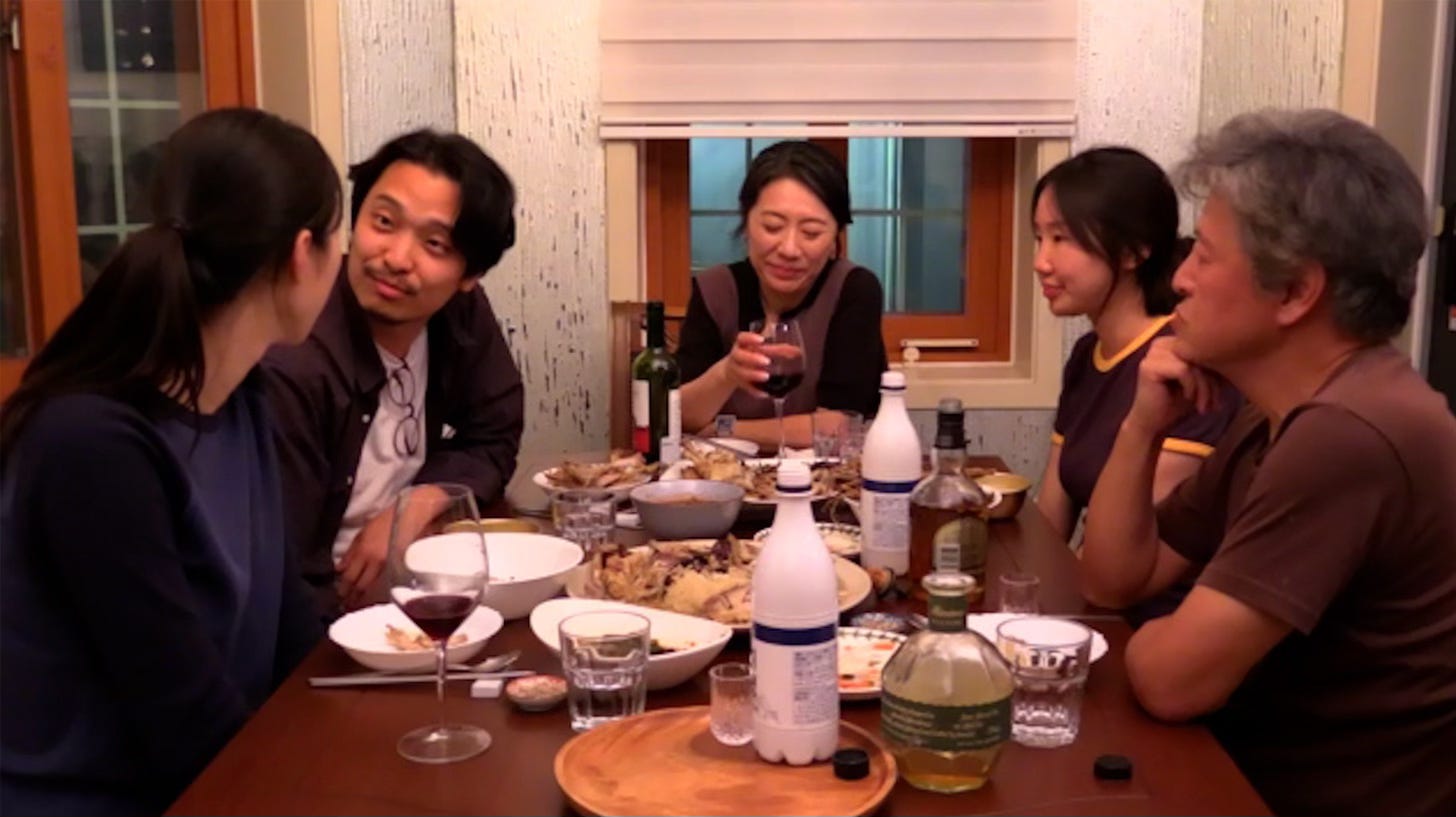
Sang-soo’s latest widens his array of self-insert characters - an undistinguished poet with a candid appreciation for nature, which often comes across as overly romantic. The trademark dinner table eruptive conversations are at their best here, and this time accentuate class dynamics. The habitual verisimilitude of Sang-soo’s dialogues momentarily obscures the fence between reality and fiction, only for sporadic digital zooms to purposefully break the audience’s immersion - like a tap in the shoulder that says “hey, it’s just a movie”. Shot in low resolution, the film is adorned with overexposed skies and objects that aren’t perfectly sharp, mirroring the protagonist’s embrace of organic imperfections.
26. Cloud
Kiyoshi Kurosawa, Japan
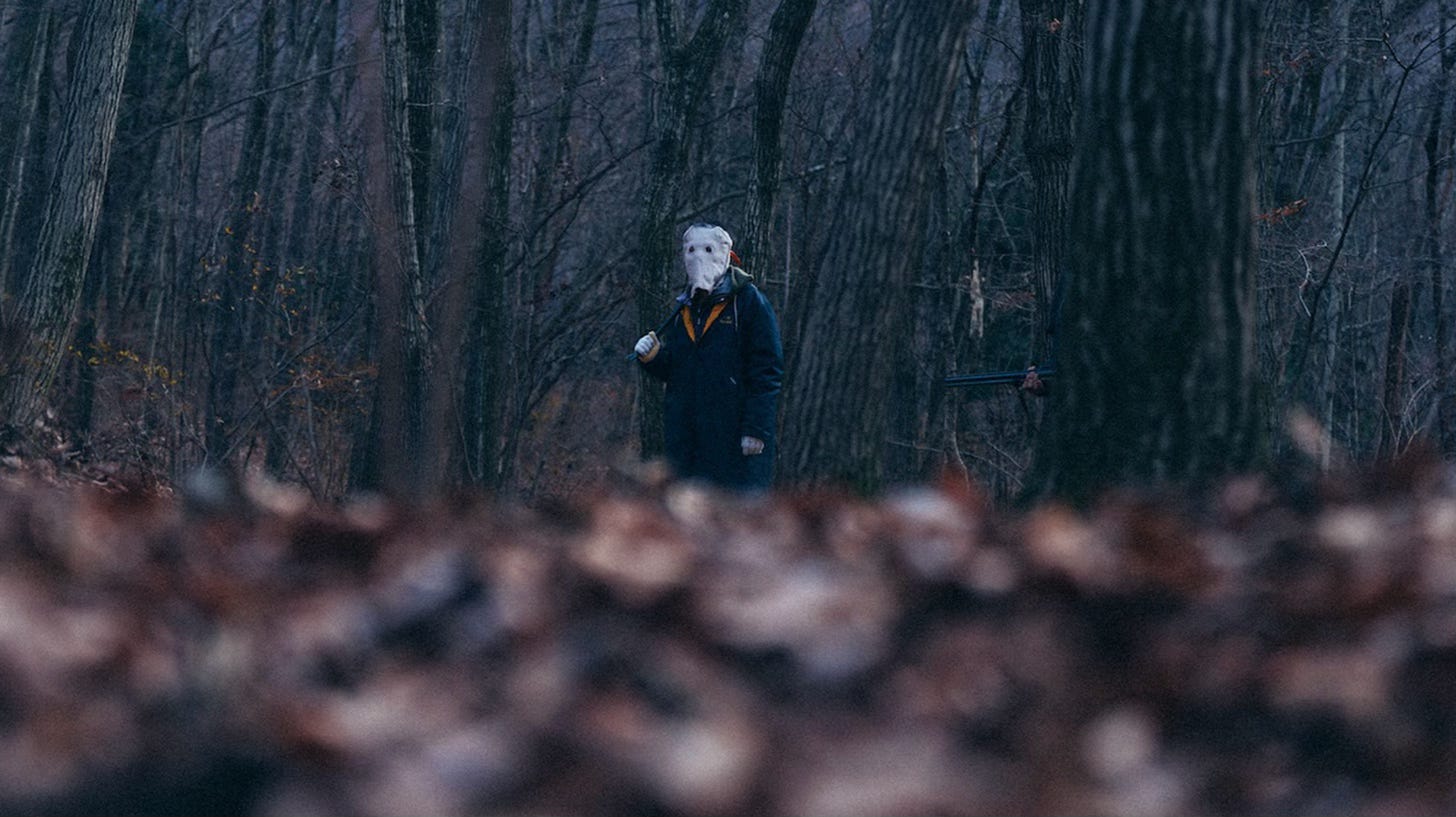
A unique crime thriller that no one but the director of Cure and Pulse could have envisioned. Cloud makes accusatory remarks about financial self-interest through the story of an online scalper being hunted by resentful buyers. The bloodbath feels absurd, but carries the Japanese filmmaker’s morbid sentimental detachment. A great film that inspects, under a microscope, the deteriorating tissue of social relations under capitalism.
25. Black Bag
Steven Soderbergh, USA
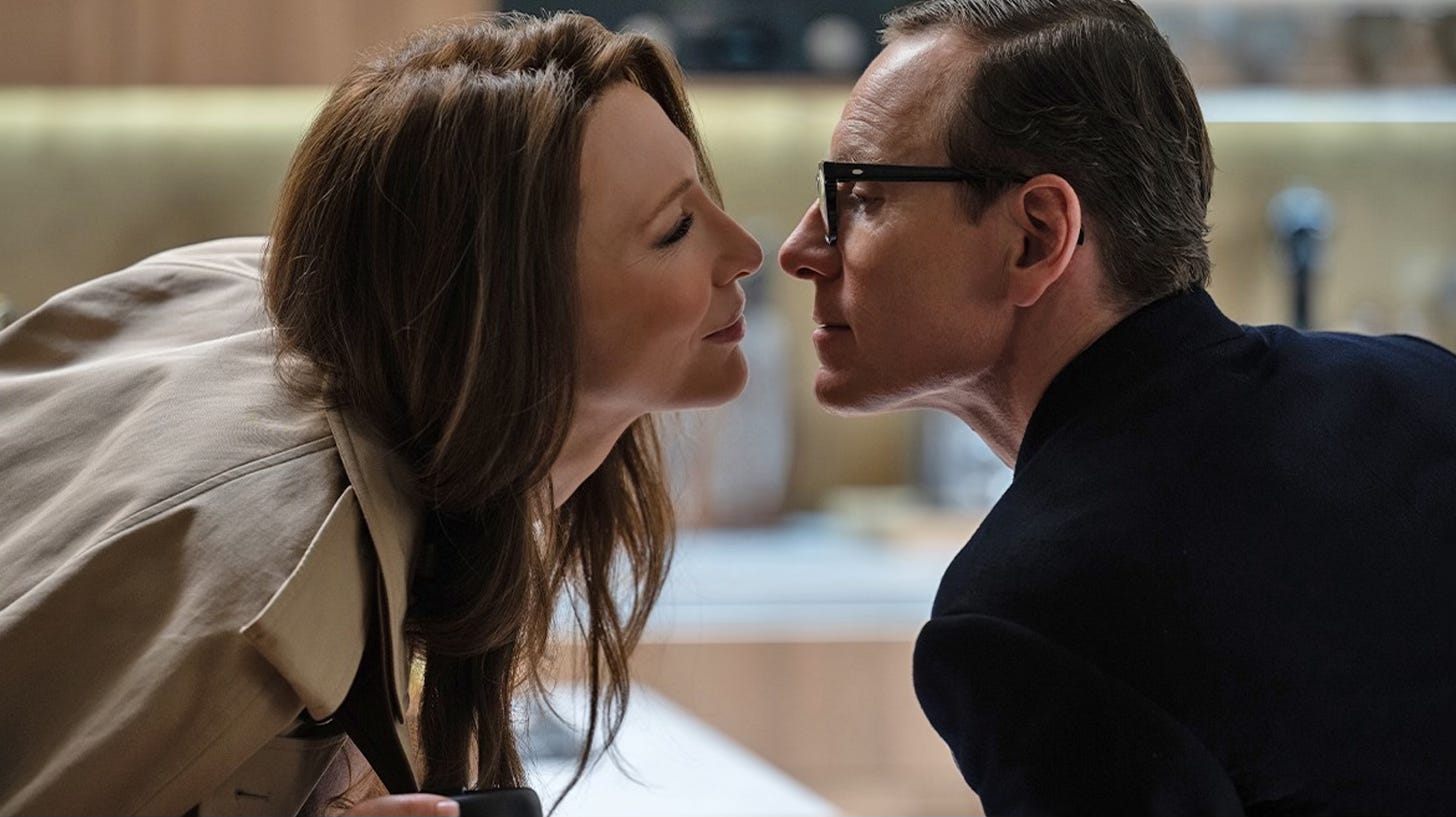
A spy romance that best exemplifies the director’s brand of slick thrillers, with scheming and double-crossing abound. Black Bag features a captivating group of amoral British intelligence officers for whom the only body count worth discussing is the sexual kind. The film’s propaganda potential is undermined by its comically self-obsessed characters. Despite a plot involving nuclear meltdowns and international drone strikes, it keeps things intimate and always returns to snarky exchanges about monogamy, trust and secrecy. Zero sex, but surprisingly sexy.
24. Ne Zha 2
Jiao Zi, China
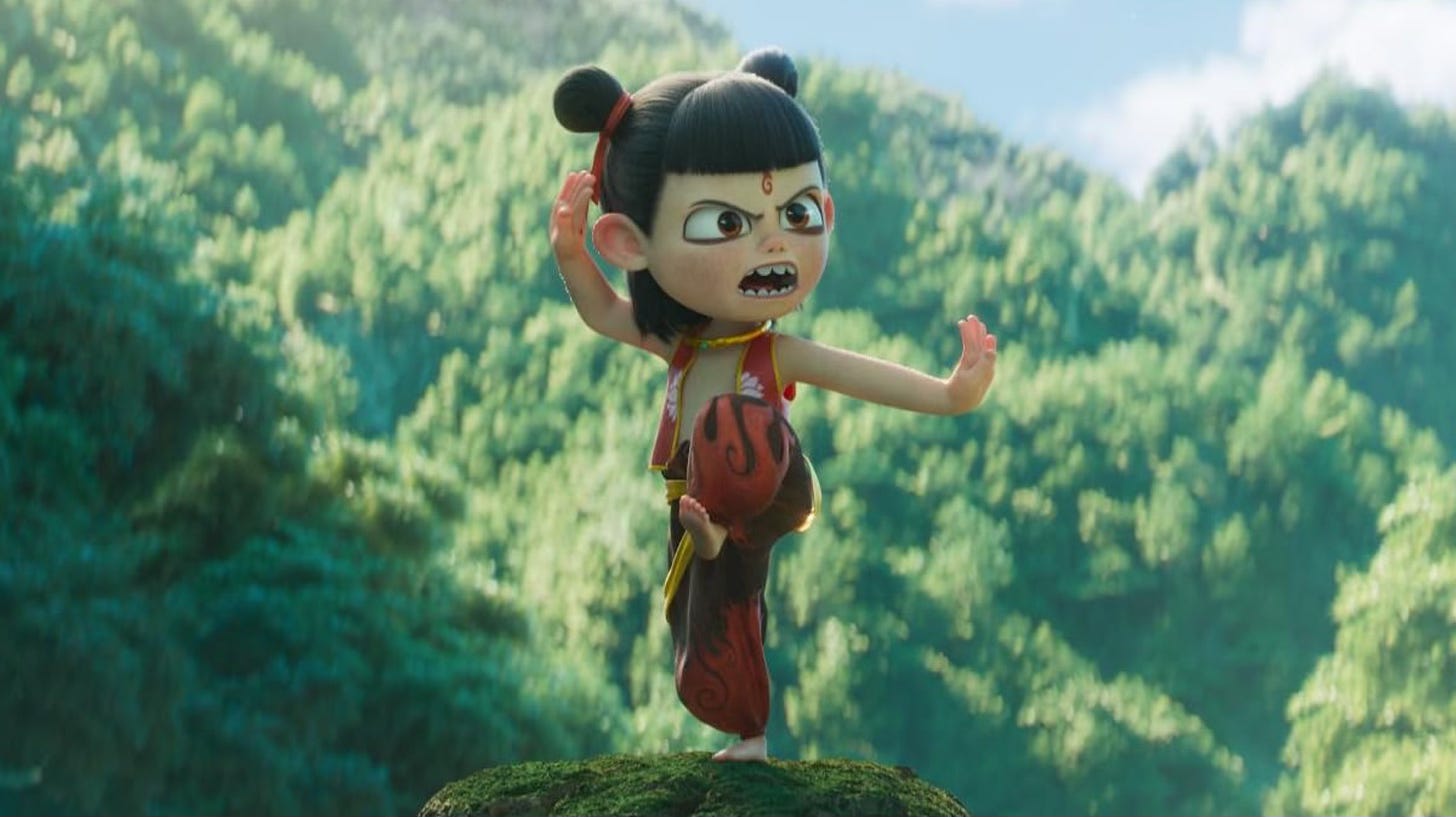
This Chinese mythology-inspired sequel delivers some of the most breathtaking animated imagery of the decade. The film depicts events analogous to the American Empire’s blood-soaked foreign policy, with a critical tone that is never concerned with making itself subtle. Ne Zha 2 is a maximalist visual spectacle with a scale that can at times feel outrageous, and an already sky-high sense of momentum that never stops elevating itself.
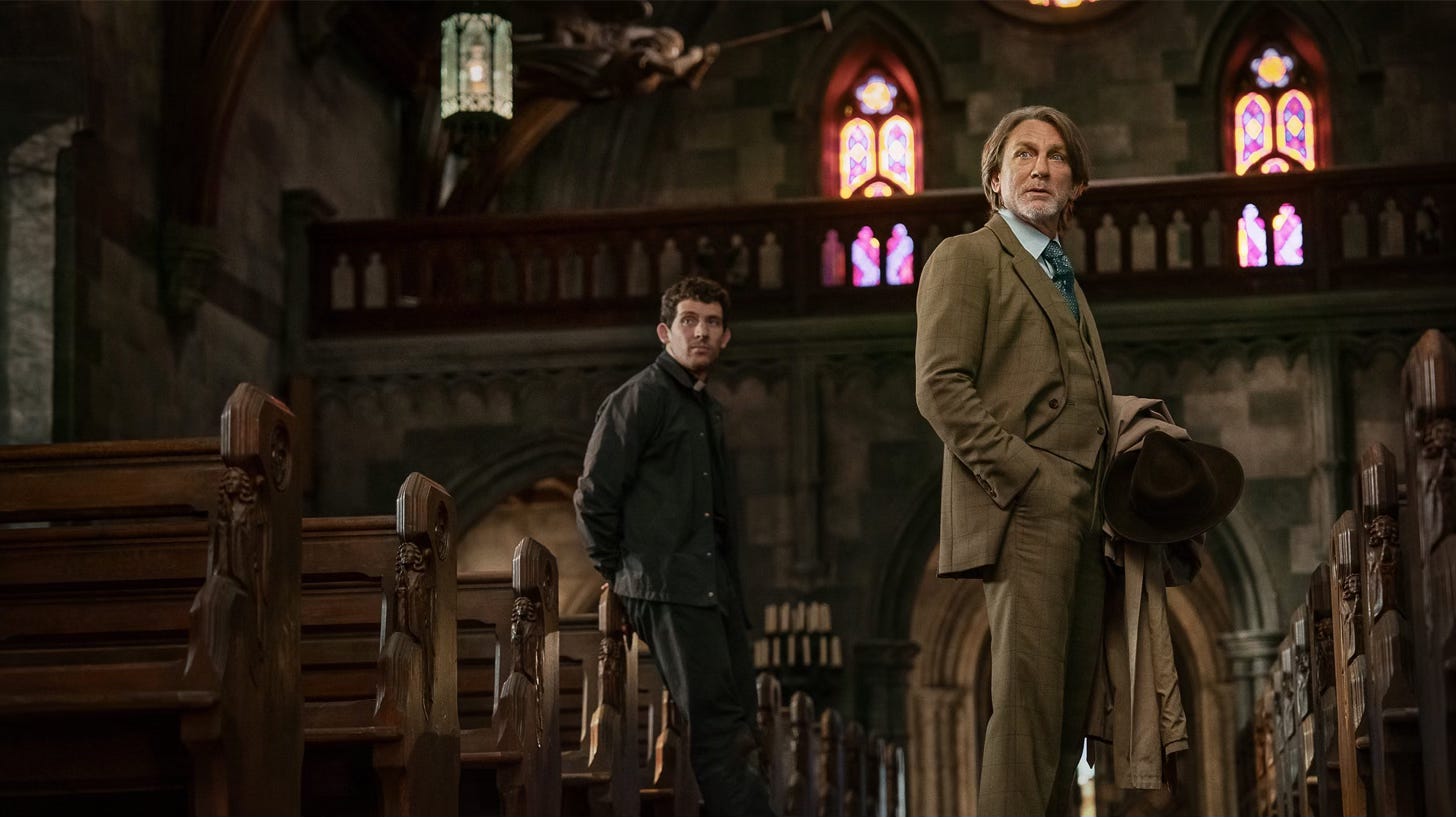
23. Wake Up Dead Man
Rian Johnson, USA
The latest addition to the Knives Out franchise might well be its highest point so far. This murder mystery traverses familiar ground, but the religious commentary keeps the journey refreshingly captivating, addressing the exploitation of faith by contemporary right-wing grifters. Josh O’Connor’s priest is one of his most endearing characters yet, and ensures the film’s approach to theology is more of a conversation than a pubescent monologue on Reddit. Whodunit movies hardly get more enjoyable than this.
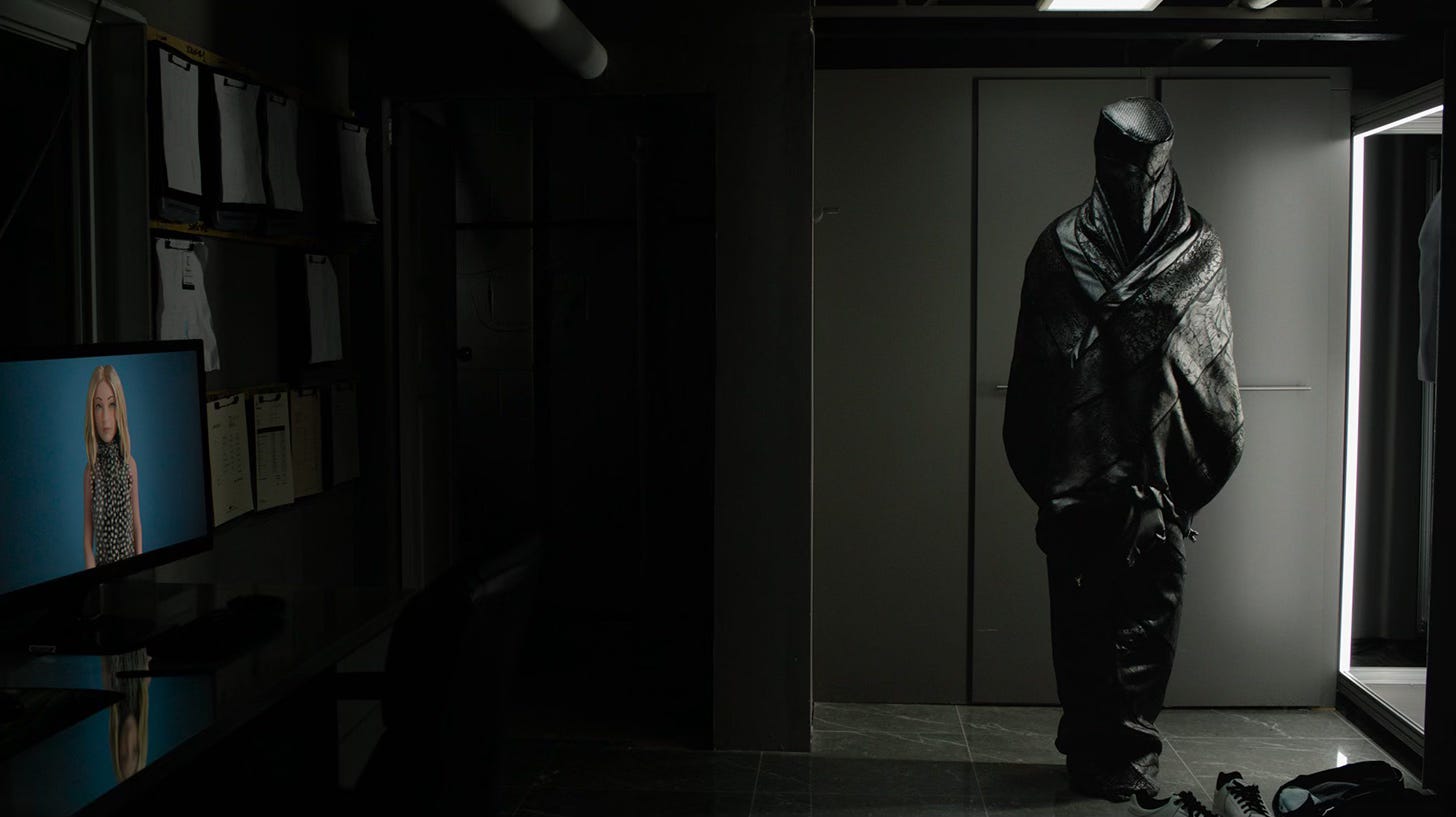
22. The Shrouds
David Cronenberg, Canada, France
The Canadian director describes his own grieving process through a fictional character who similarly lost his wife, but ethical boundaries are stretched to the point of almost ripping. The Shrouds uniquely grapples with grief by directing its focus to the loss of sexual and physical intimacy that comes with the death of a partner. In good Cronenberg fashion, the film has sparked some moral outrage, and is perhaps his most masochistic and bleak project to date.
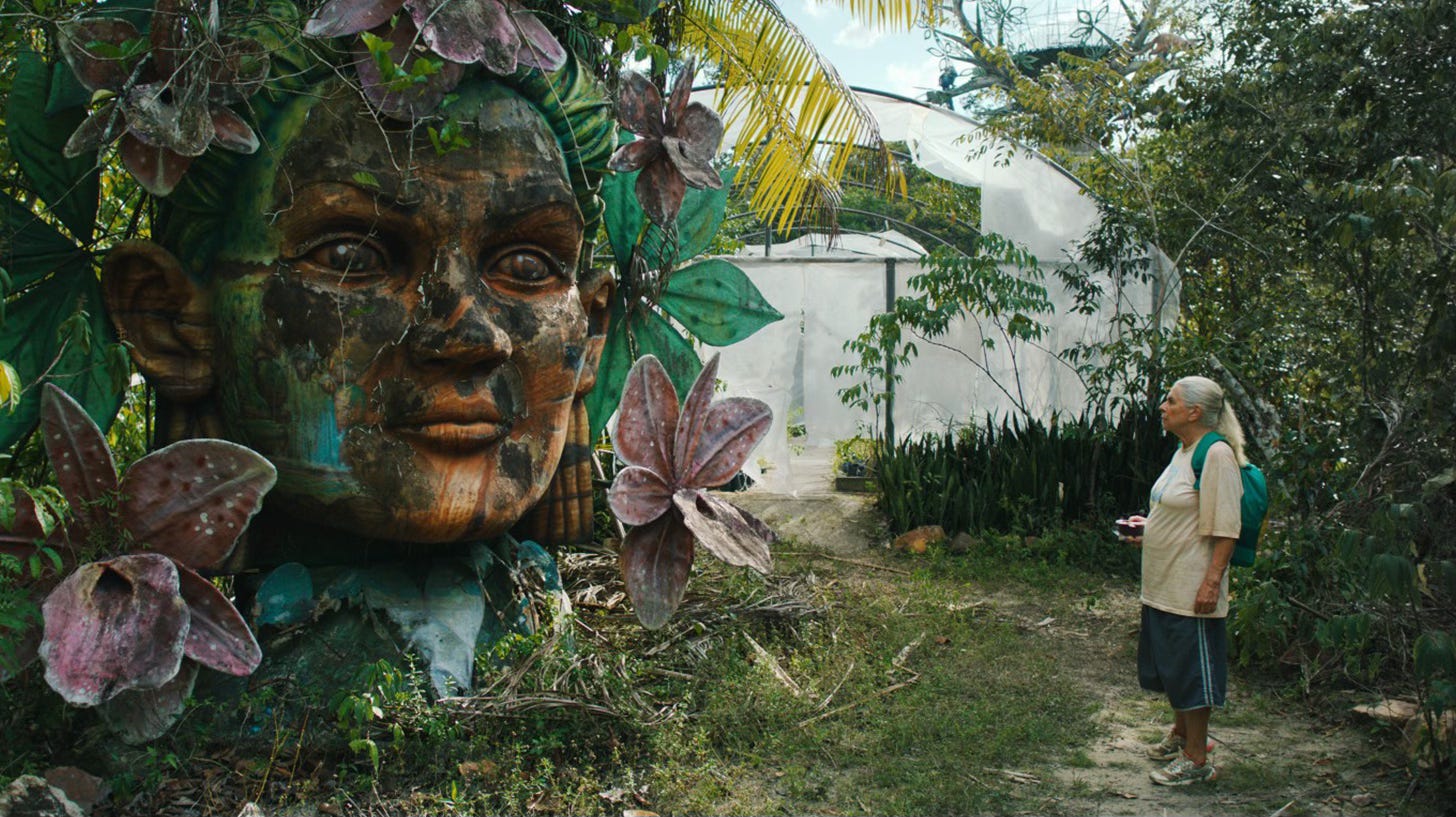
21. The Blue Trail
Gabriel Mascaro, Brasil
In the not-so-distant future, young bodies are commended for their productivity, while the elderly are sent to retirement colonies as a “reward” for their contributions. Mascaro’s film underlines the societal scorn that already exists for the old, and is reminiscent of Chie Hayakawa’s Plan 75, as it too needs to inflate very little about reality to produce a dystopian setting. A manifesto for elderly people’s right to dream until the very end.

20. Superman
James Gunn, USA
It’s shockingly refreshing to see this character smile again. After years of enduring Zack Snyder’s obsession with Greco-Roman aesthetics that reek of microwave-reheated fascism (or at best moral anaemia), a Superman that saves squirrels feels very punk. The self-inflicted and tortured cynicism that infected post-9/11 American blockbusters is nowhere to be found here. Superman is hilariously wacky, proud of its trunks-over-pants colourfulness and, even if accidentally, hits Netanyahu in the mouth with a stream of piss.
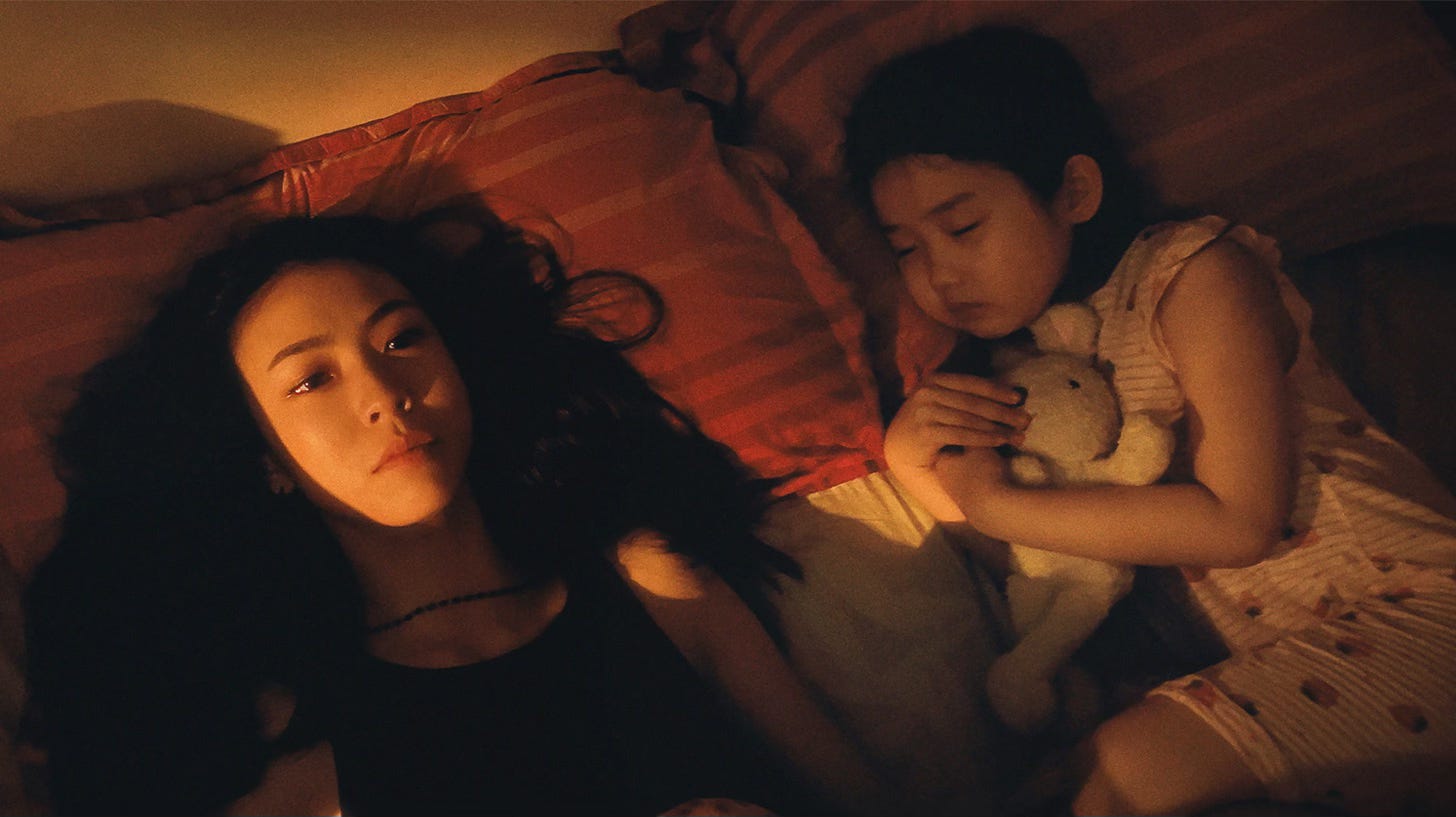
19. Left-Handed Girl
Shih-Ching Tsou, Taiwan, USA
For those who have seen Tsou’s solo directorial debut, the phrase “Look, mom!” instantly envelopes the heart with warmth. The cast is fantastic, and a cinematography that relies entirely on iPhones only helps mimic an even more natural sense of intimacy. Though Sean Baker co-wrote the script, perhaps a little less of the discussion should be dedicated to his self-evident influence, and more to Tsou’s incredible direction. In under 2 hours, filmmaker Shih-Ching Tsou conjures as many emotional fluctuations as a child I-Jing’s age probably feels in the span of a day. Delightful film.
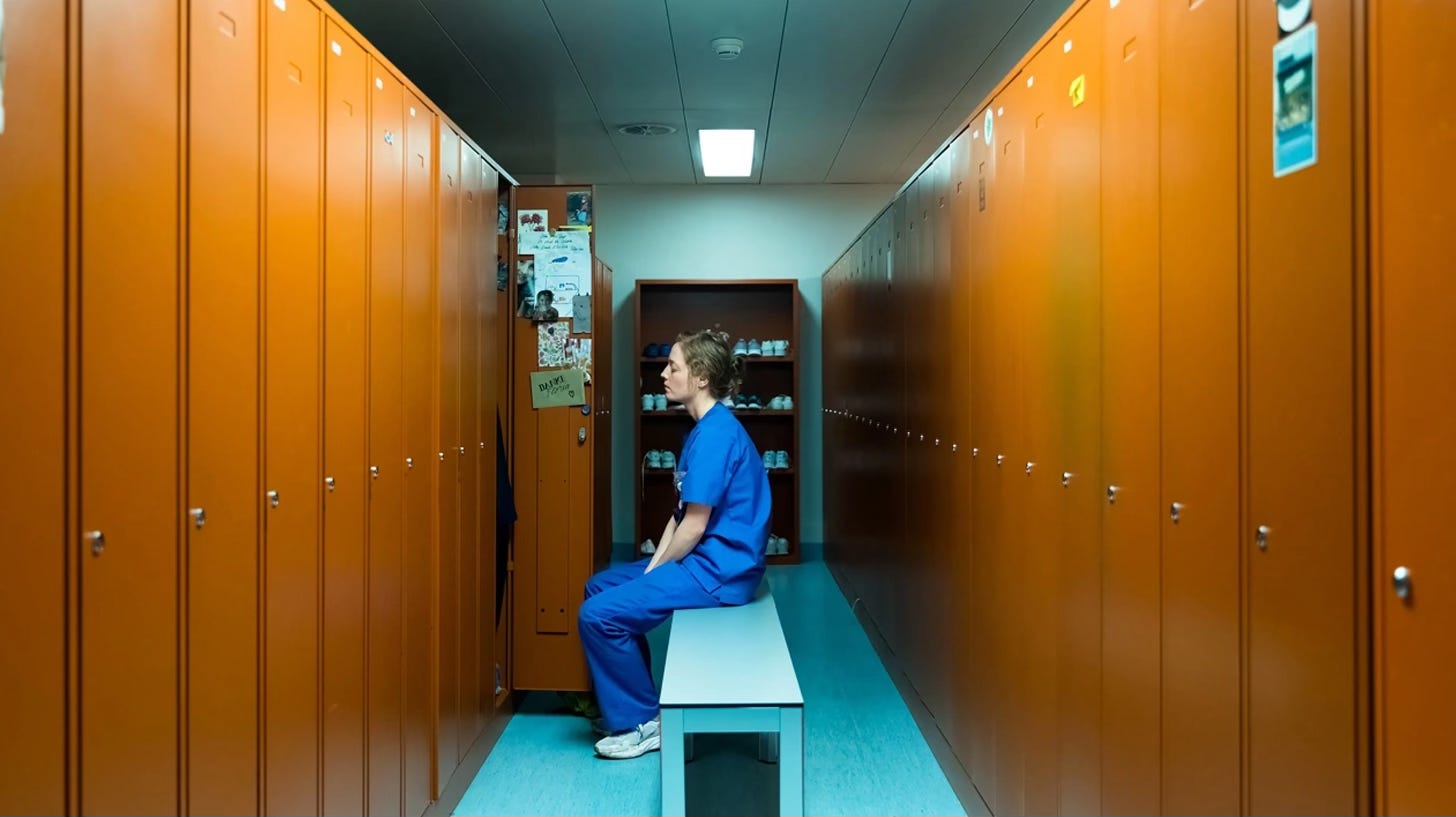
18. Late Shift
Petra Volpe, Switzerland, Germany
Volpe’s contribution to the crippling-anxiety-inducing social realist genre feels far greater than the sum of its parts - none of which are particularly original, but assembled with the best of underlying principles. The talented Leonie Benesch plays a nurse in an understaffed hospital, working with complete devotion to her patients, and instilling in the viewer a sense of adamant empathy within mere minutes. Late Shift trusts its unembellished long takes to tell a story enticing enough to inspire the much warranted admiration that nursing professionals deserve.
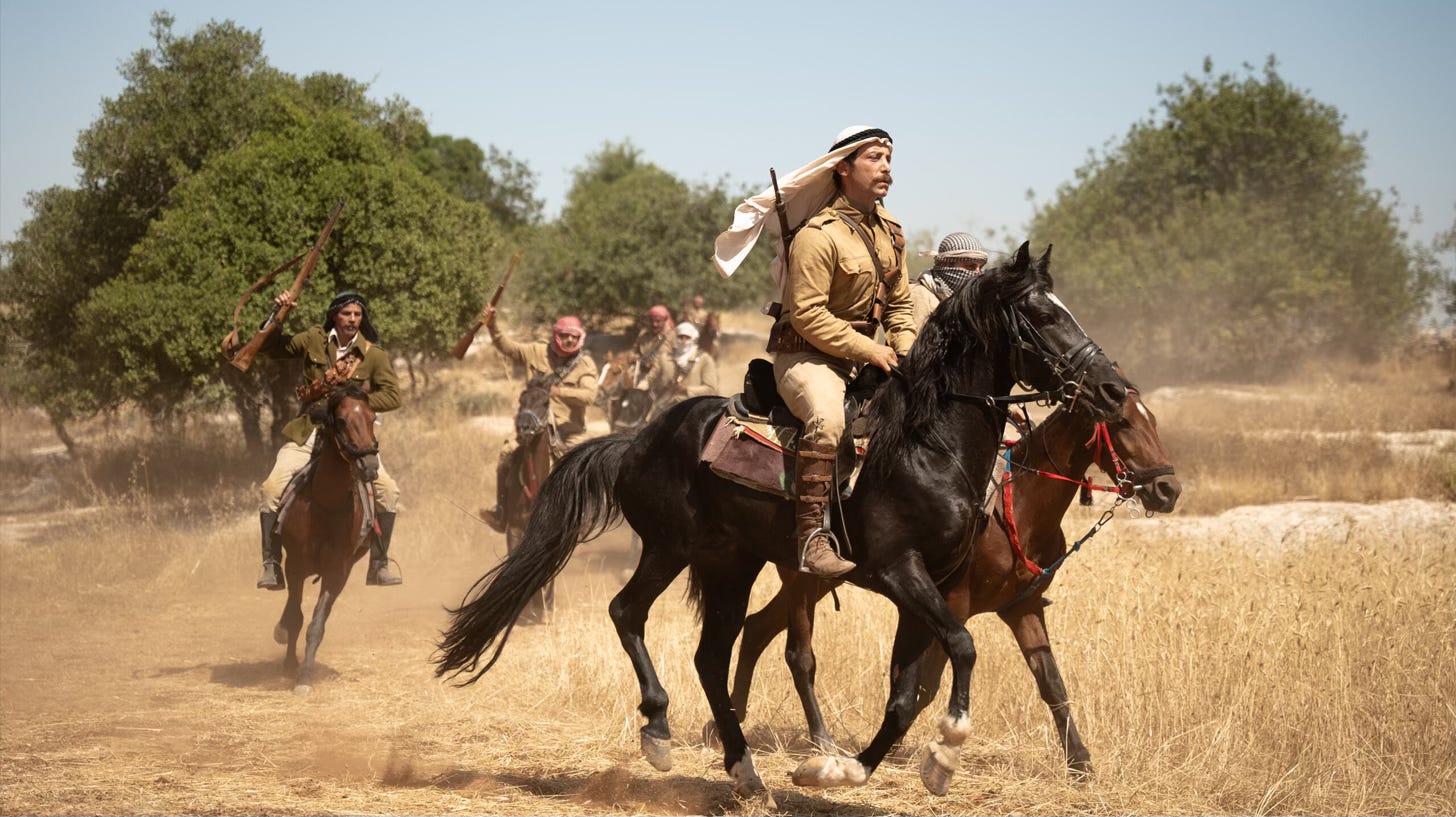
17. Palestine 36
Annemarie Jacir, Palestine, United Kingdom
This historical epic dramatises the 1936 Palestinian uprising against British colonial rule, and keeps the viewer’s fist tightly closed throughout, as it’s nearly impossible to contain the anger it instills. By using an ensemble cast, Jacir is able to explore Palestinian resistance on multiple fronts - from peasants working the fields to upper-class members of the press. British colonisers and Zionist terrorists are as sadistic as their historic counterparts, and the film even points fingers to the Palestinian bourgeoisie’s complicity in the early advances of Zionism. The restored, colorised archival footage asserts the film as a comprehensive historical object that is much appreciated.
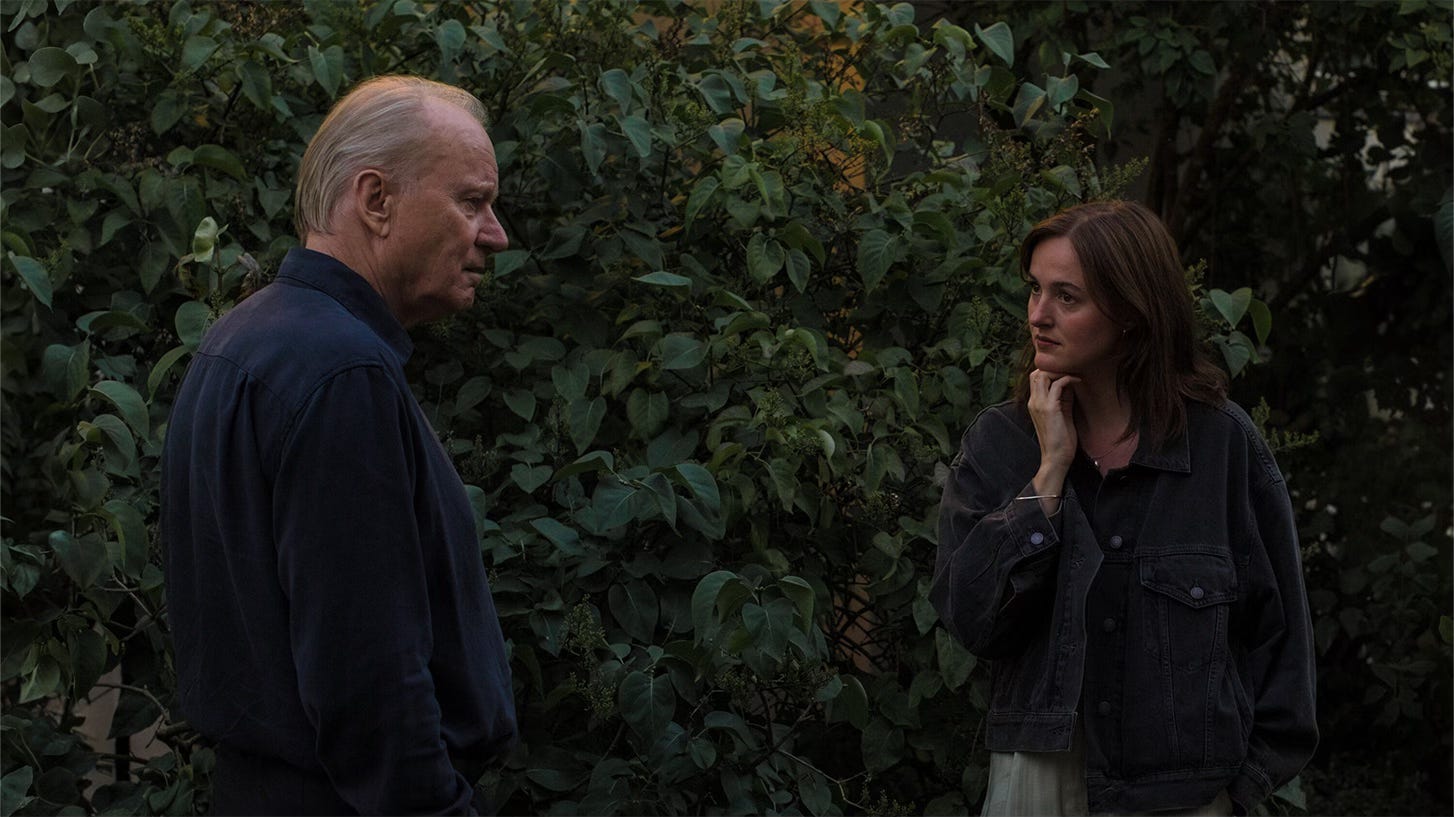
16. Sentimental Value
Joachim Trier, Norway
The Danish-Norwegian director’s collaborations with screenwriter Eskil Vogt always demonstrate great thematic versatility. Sentimental Value is the duo’s most emotionally dense project to date, and the complex subjects it tackles can’t exactly fit in a tidy logline. It’s a film about the distances between people - physical, generational, emotional - and the difficulties of establishing bridges through vulnerability and understanding. Beautiful work.
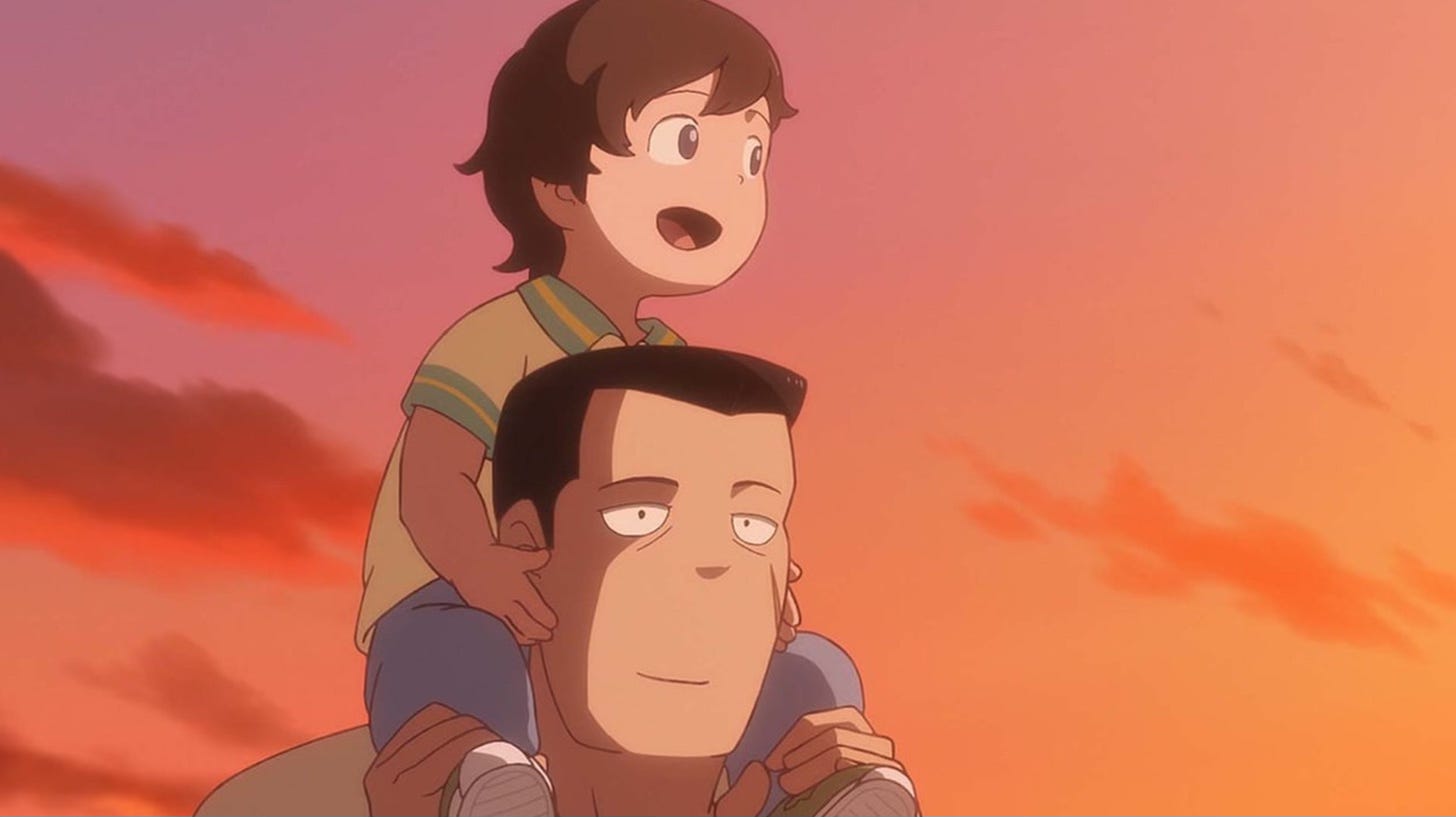
15. The Last Blossom
Baku Kinoshita, Japan
The most heartwarming film to ever feature a talking plant. Kinoshita is remarkably qualified at narrative shifts, blending the initial slice-of-life family story into a thrilling Yakuza crime drama that never loses tenderness. This is partially thanks to the subtle but marvellous character design, which hints there’s more to its characters from the very start. A touching animation that confirms it’s never too late to turn things around and make others feel loved.
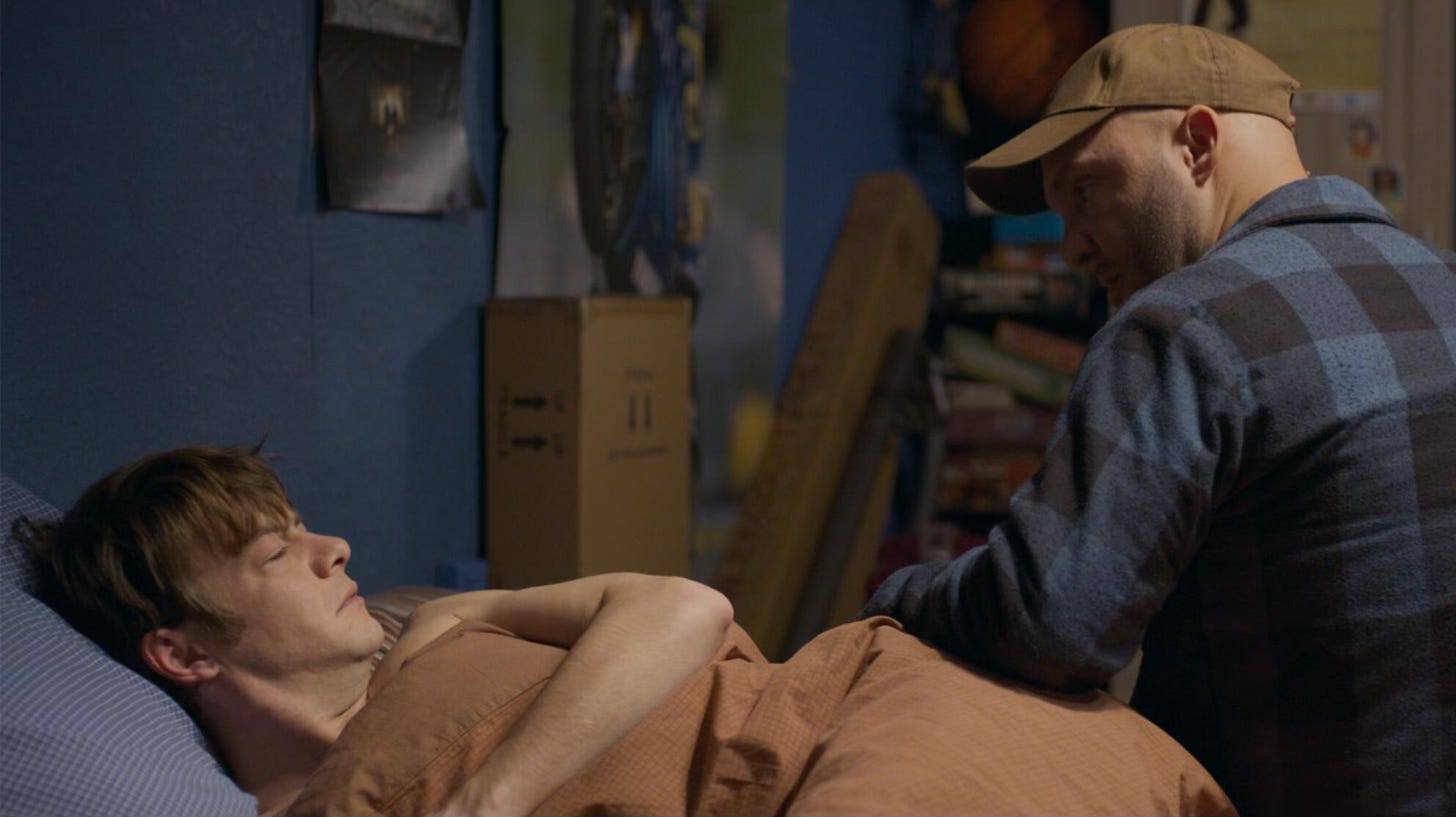
14. Misericordia
Alain Guiraudie, France
This French black comedy is highly peculiar, shaping a commonplace small town murder plot into a snowball of tone-deaf sexual tension. That snowball rolls down the mountain quickly and only becomes more ridiculous by the minute. The laughter earned is proof of the directing quality, since the film never relies on particularly exorbitant deliveries. Instead, the absurdity comes from watching an average group of people get stuck in a web of lies, grief and guilt, when all they can think about are sexual fantasies that never take place.
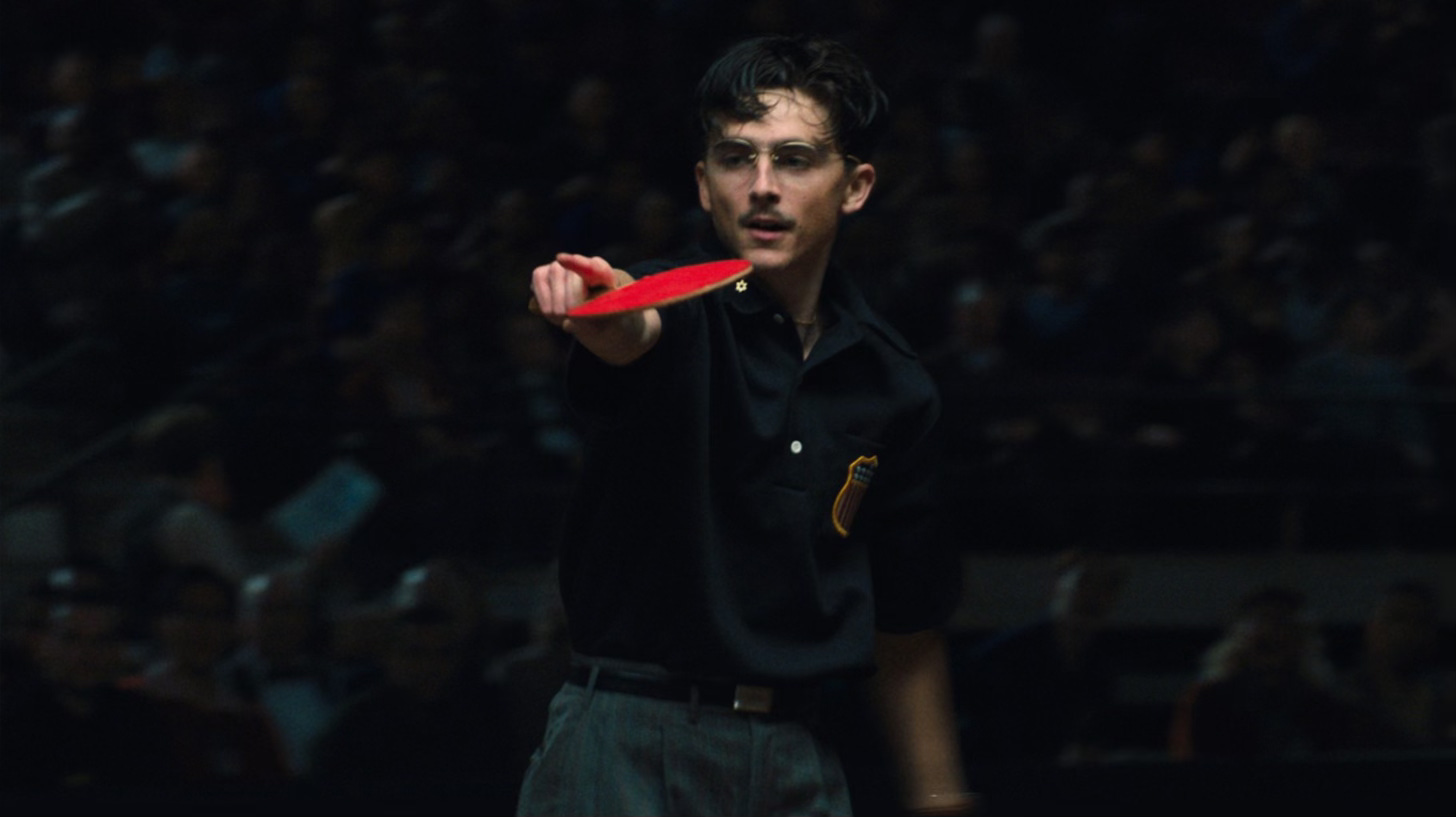
13. Marty Supreme
Josh Safdie, USA
Exactly the ping-pong movie that you’d imagine a Safdie making - the drama replicates the back-and-forth tension of the ball, and a morally reprehensible protagonist drives momentum forward out of sheer stubbornness. Timothée Chalamet’s performance is mesmerising, but Odessa A’zion is equally electrifying, and it’s hard to look away from their fascinating toxic relationship. Marty Supreme feels circular - a small world in which characters run into one another frequently, and conflicts linger rather than being resolved, making the titular character’s schemes all the more dangerous, as consequences are due to bounce back.
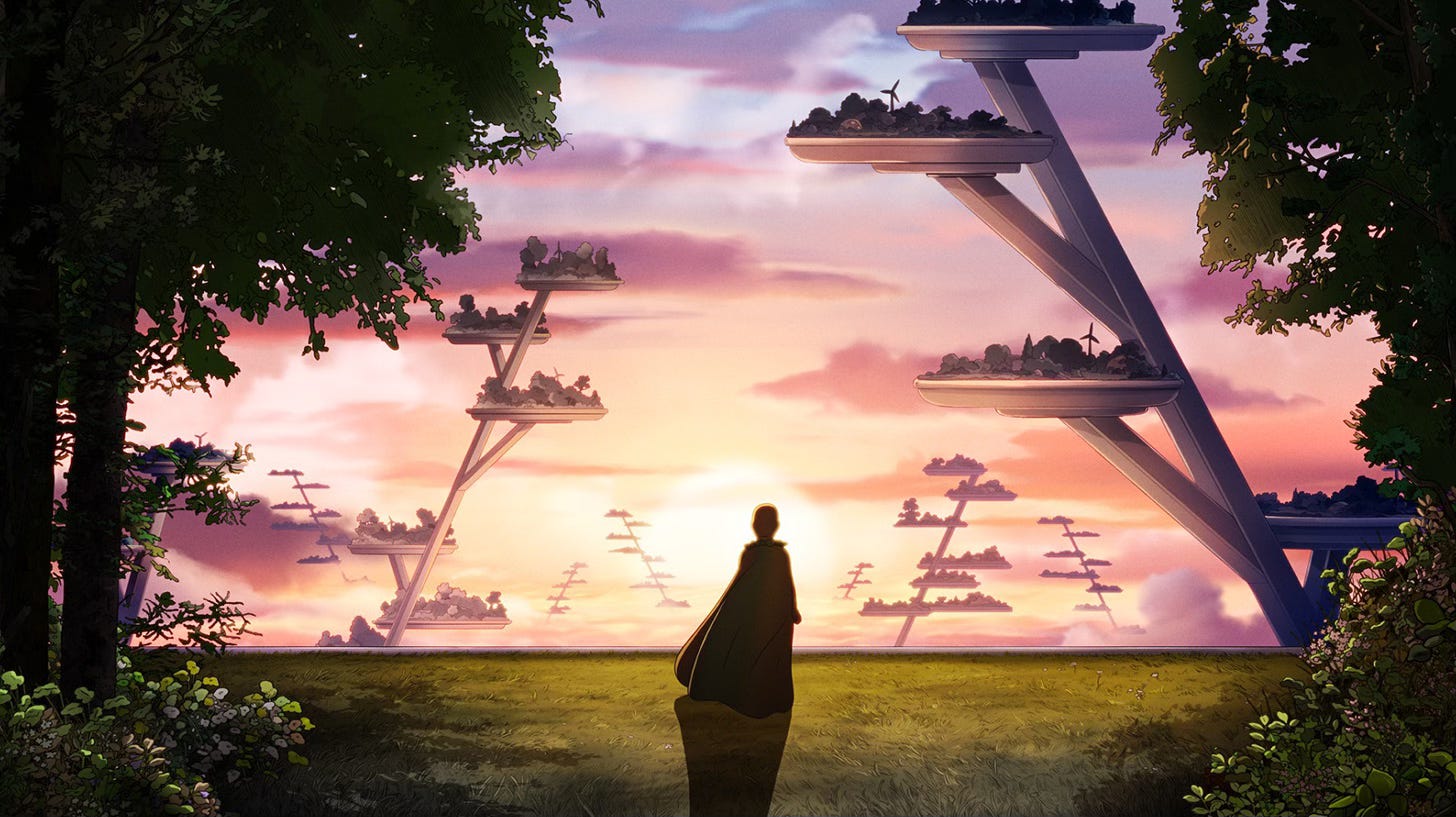
12. Arco
Ugo Bienvenu, France, USA
This sci-fi animation introduces a world that is gorgeous to look at, but not without alarming similarities to reality. Arco is full of big ideas, like the ubiquitous use of AI babysitters and the terrifying advance of climate change, but its true appeal lies in watching a girl from the year 2075 and a boy from 2932 with a rainbow time-travelling cape share a sandwich. The atmosphere becomes bittersweet and melancholic as soon as they meet, as the audience knows their lovely friendship is bound to be ephemeral. Charming film.
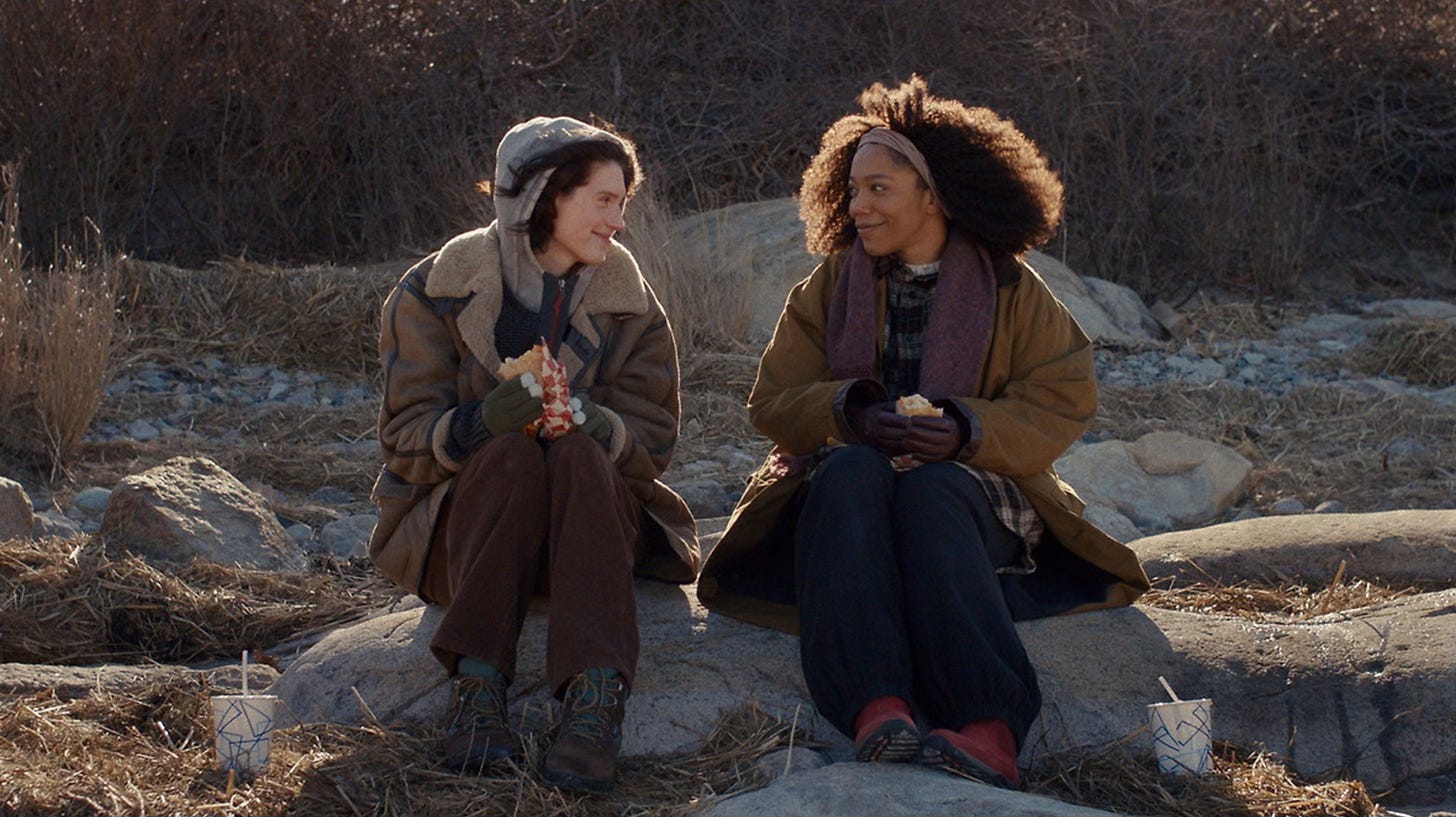
11. Sorry, Baby
Eva Victor, USA
There’s a quirky awkwardness in each dialogue that makes this initially easy to watch - until pure dread invades the screen, and the experience becomes disconcerting. Victor’s images exist in the intersection between distressing and funny, and the number of emotions they can juggle at once without fumbling is quite impressive, as a single tonal slip could damage the entire story. A fantastic directorial debut that paves the way for a promising career.
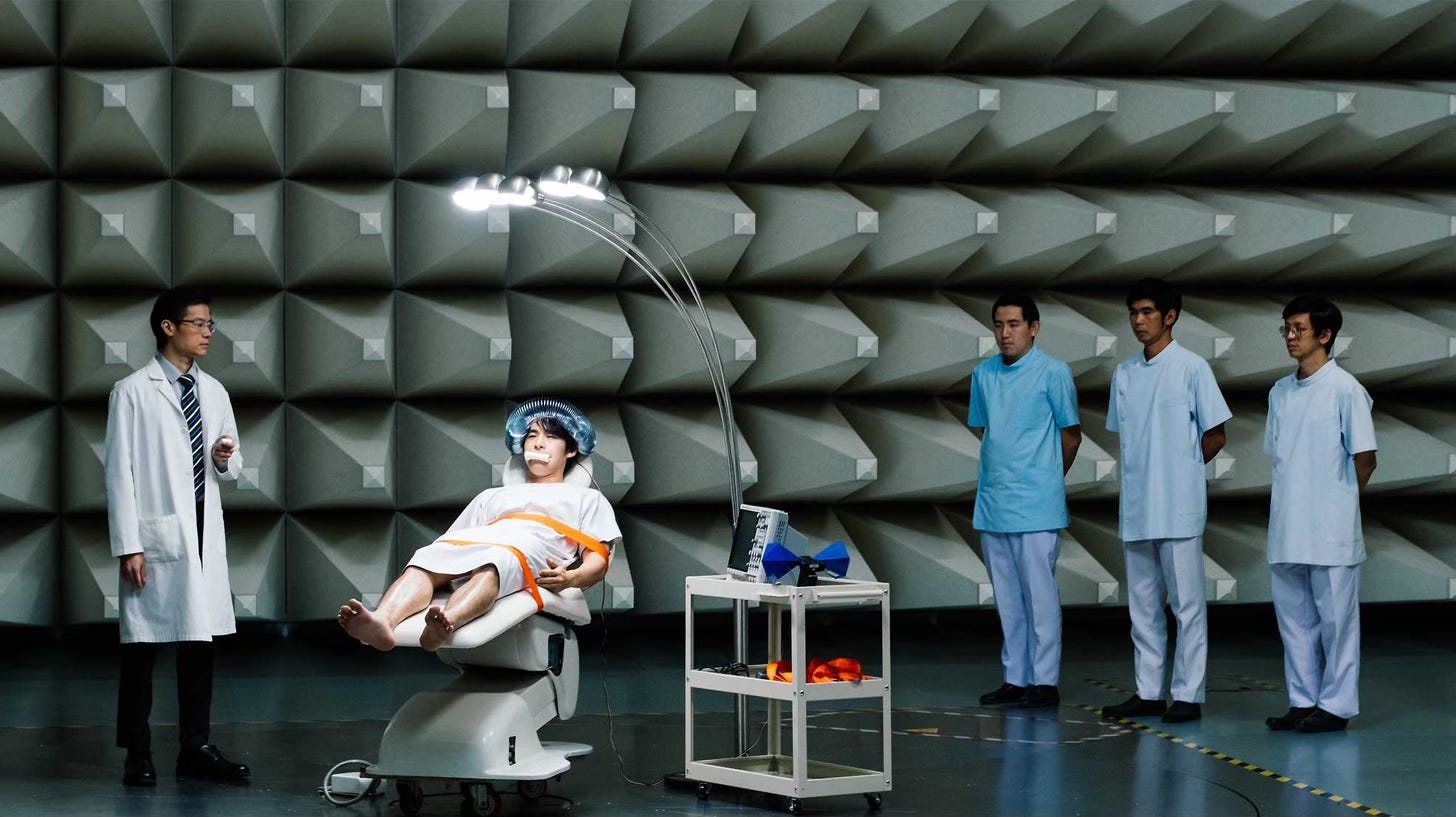
10. A Useful Ghost
Ratchapoom Boonbunchachoke, Thailand
This Thai debut pulls in audiences with the promise of a deadpan comedy about a ghost in a vacuum cleaner, only to tear down the curtains and disclose witty commentary about urban pollution, industrial working conditions and literal queer erasure. It brilliantly centres its early narrative on the intimate nucleus of a bourgeois family drama, in which the individual desires of the self matter the most (“I want to see my dead wife again”). However, that self-centred (albeit genuine) exploration of grief and longing is overtaken by a working-class demand for collective memory, as the ghosts of the poor wish to be remembered too, but their moment of spectral catharsis brings them together over the desire they all share: violent revenge. Hilarious, thoughtful and beautifully radical.
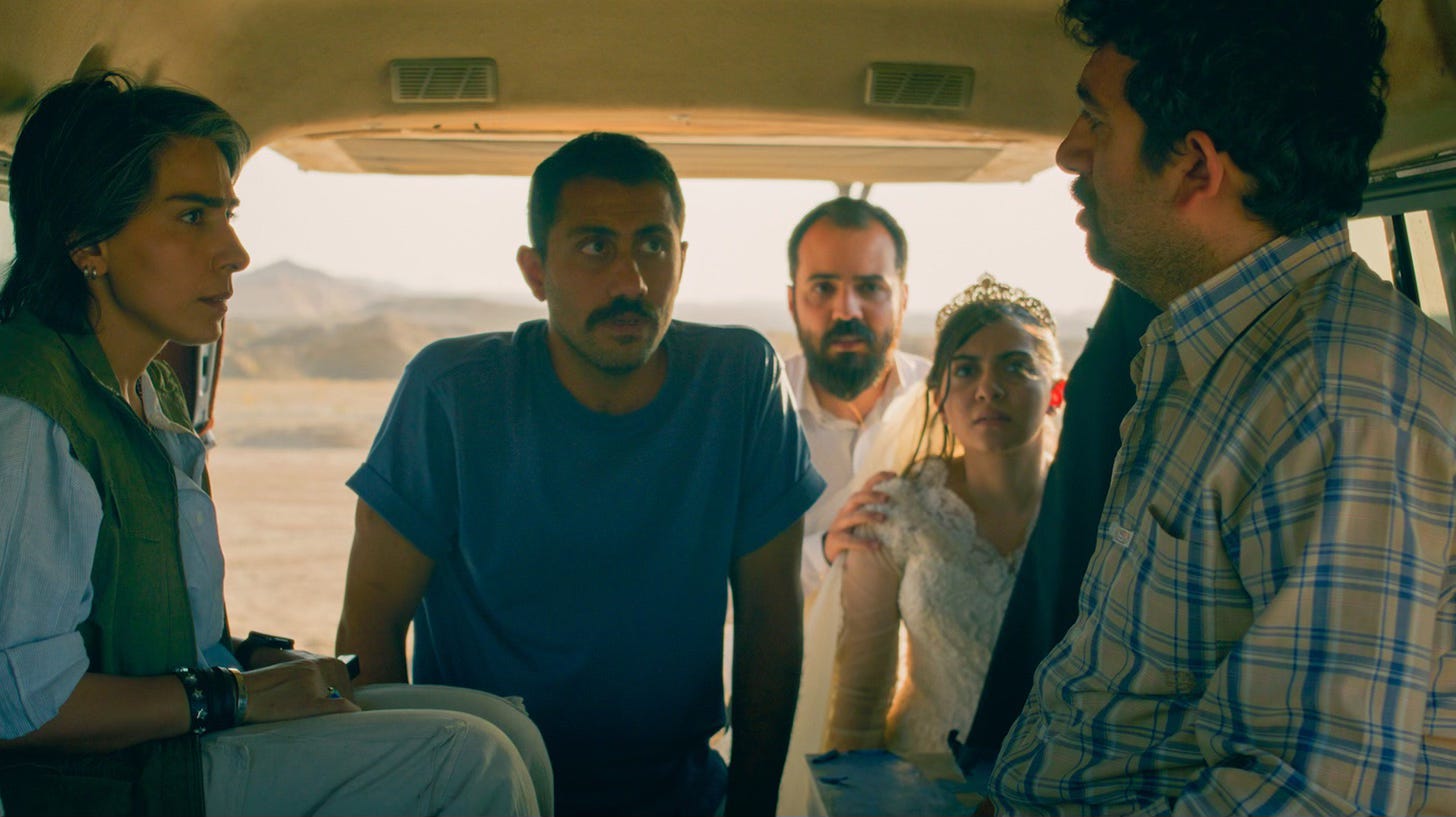
9. It Was Just an Accident
Jafar Panahi, Iran
The author said: “a film about conflicting emotions. Sentiments like rancor and kindness, conviction and uncertainty, loathing and understanding should repel one another like oil and water, but in Jafar Panahi’s Palme d’Or Winner they converge in the messiest ways. Rather than defining themselves by their antagonism to one another, these ideas often find themselves under the same spotlight, where partial truths can become excuses, and mere accidents might mean so much more.”
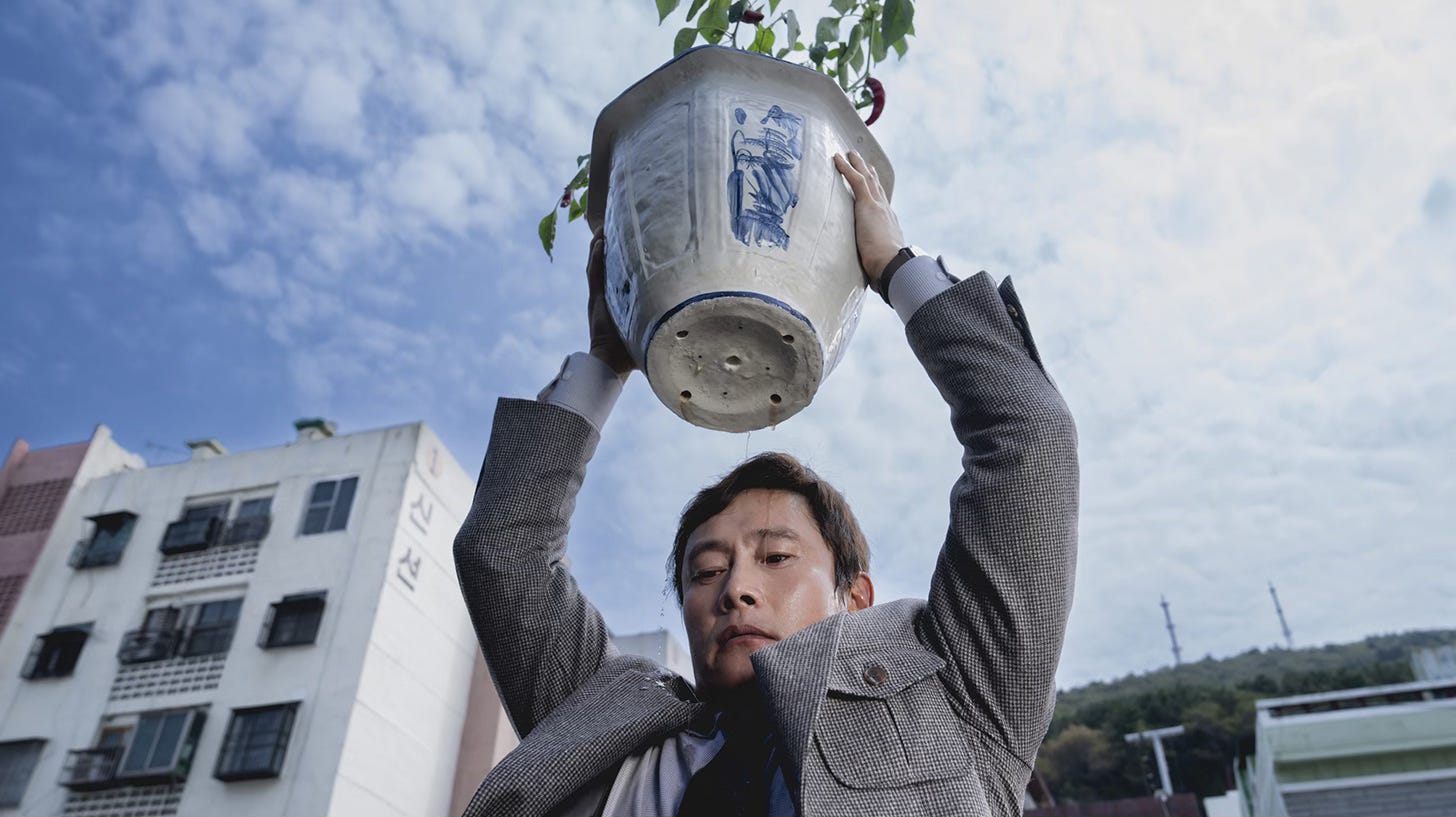
8. No Other Choice
Park Chan-wook, South Korea
A ludicrous comedy thriller that captures the feeling of scrolling through LinkedIn. No Other Choice presents itself as satire, but accurately documents class cannibalism - it just so happens to also be one of the funniest films of the year. The cinematography feels cutting-edge and more partial to experimenting with visual analogies, transitions and gags than in simply creating a formally pleasing package. Park Chan-wook’s latest film is arguably one of the best in his entire filmography.
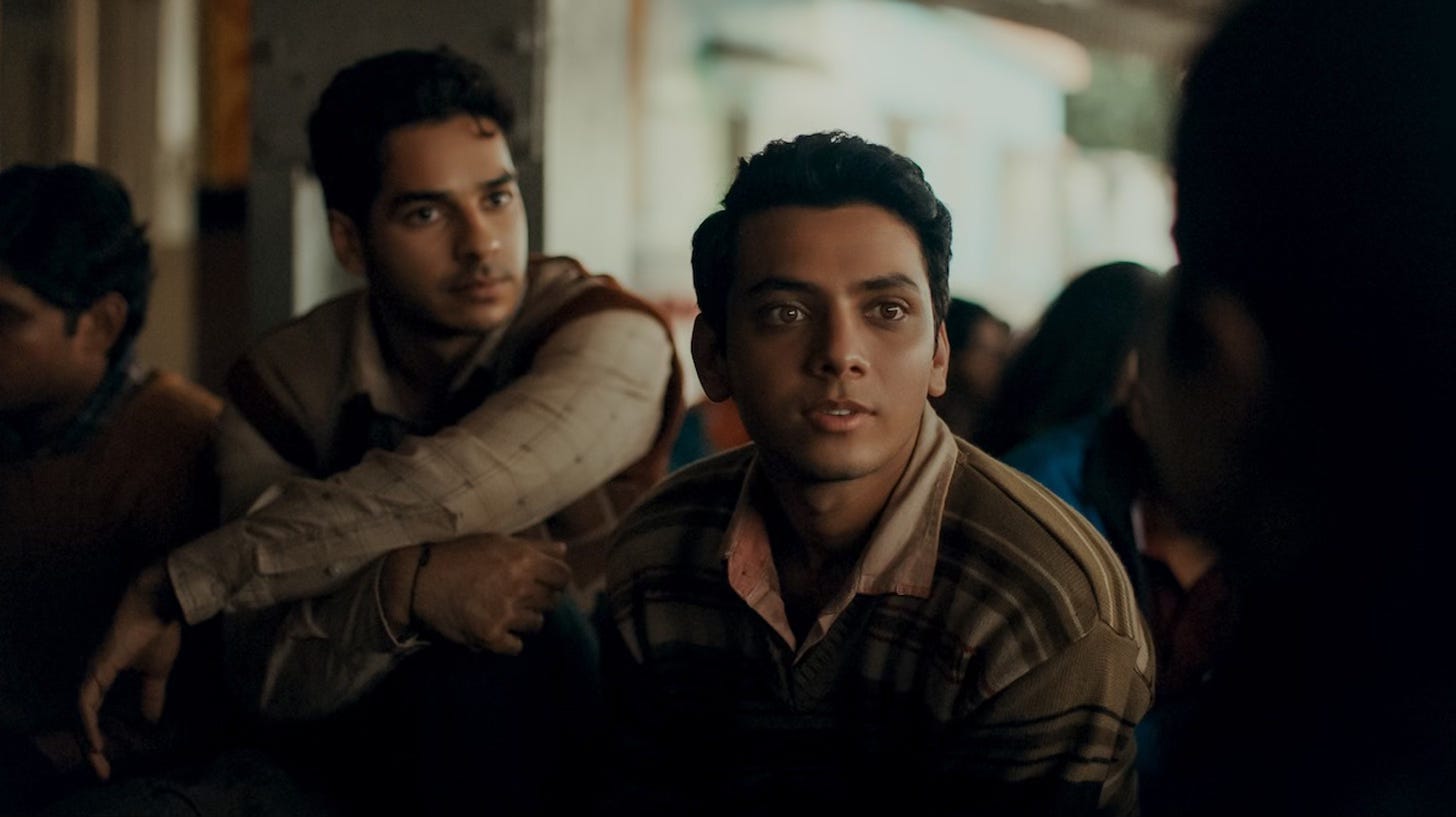
7. Homebound
Neeraj Ghaywan, India
Unquestionably one of the year’s most ambitious films. Homebound raises its hand with confidence and volunteers to discuss a legion of social infirmities: the injustices of India’s caste system, class inequality, religious intolerance, rural poverty, hunger, COVID - all with enviable candour. Expect the inseparable and sweet friendship from last year’s Meiyazhagan with a conclusion as gut-wrenching as Kishkindha Kaandam. Astounding film.
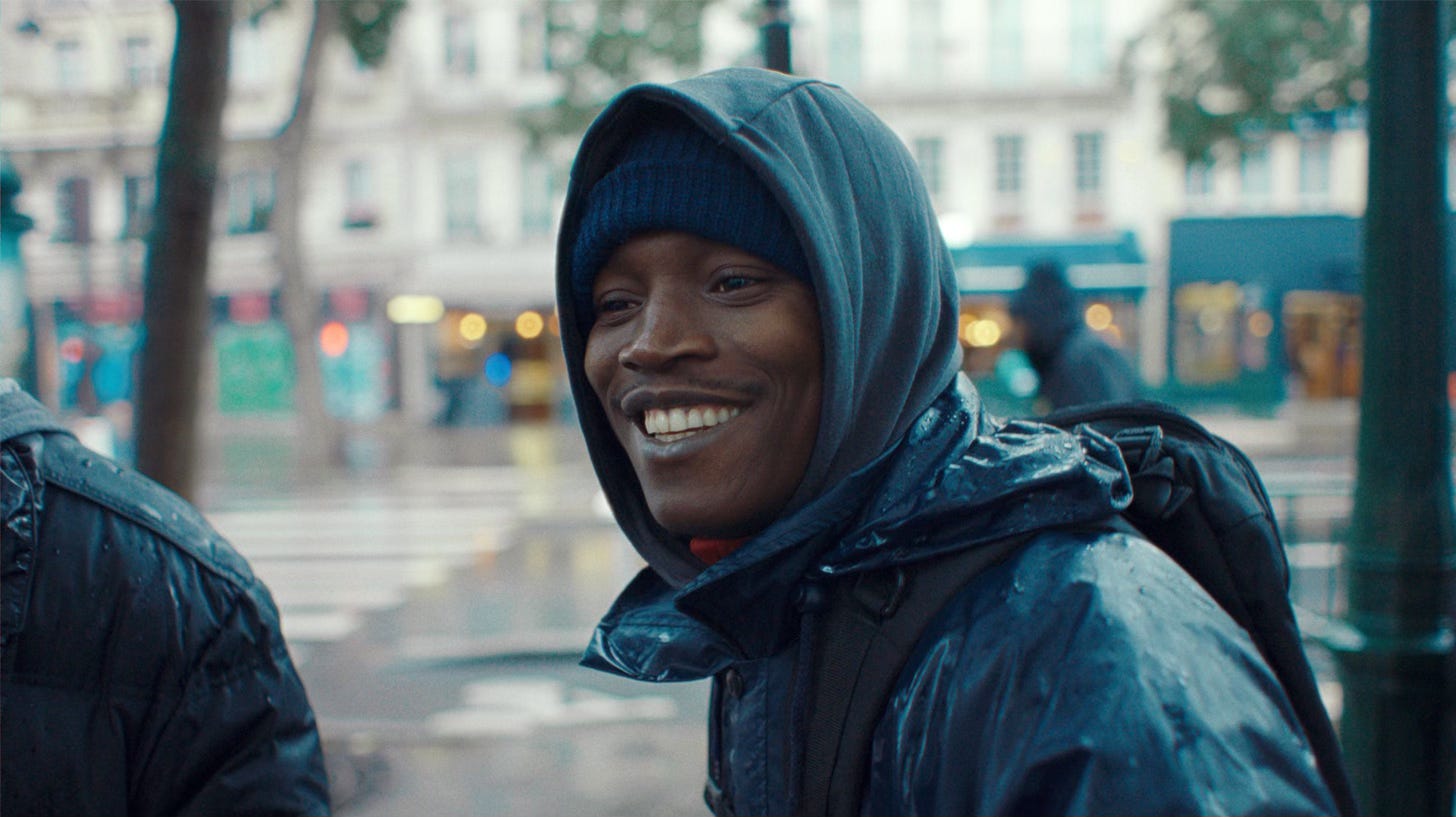
6. Souleymane’s Story
Boris Lojkine, France
Lojkine’s film denounces all of European society for its contempt towards African asylum seekers - including black nationals, who hold no solidarity towards the immigrants, and see in their desperation only a pit from which to extract money and labour. The sweat, blood and tears poured to build a better life aren’t enough to legitimise the titular character’s right to exist inside the borders of the imperial core. No, to appease European formalities, he must memorise a fictitious background filled with political suffering, a tragedy intricate enough to trigger institutional empathy. Souleymane’s perseverance is recurrently met with violence and derision, making this one of the year’s most difficult watches, but also one of its most illuminating.
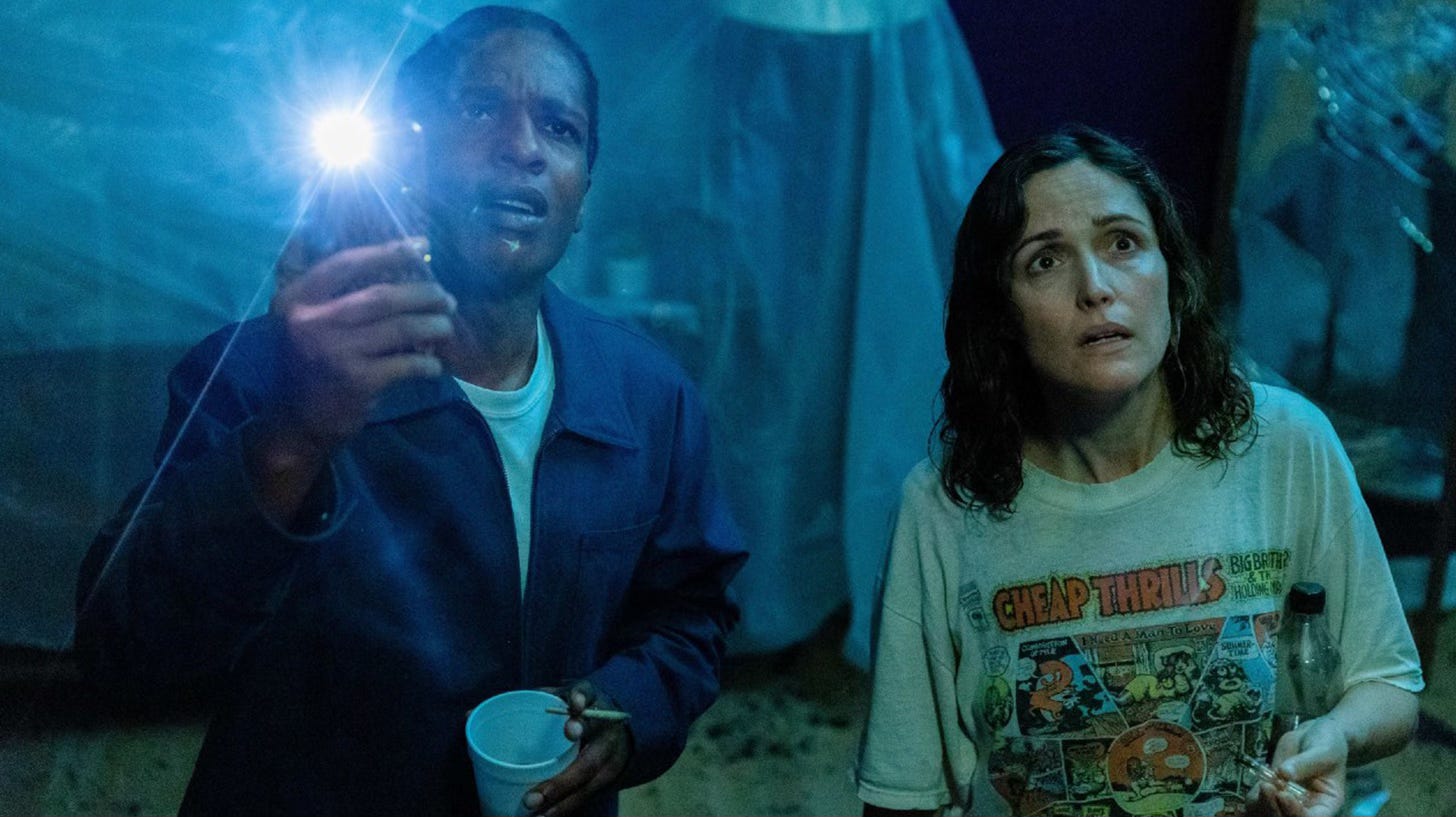
5. If I Had Legs I’d Kick You
Mary Bronstein, USA
A body horror tale in which the body afflicted is offscreen, and the blame for the limitations of their flesh is unfairly transferred to someone else. Bronstein’s incredibly stressful film studies the weight of a body that a mother creates, but isn’t her own, and the frightening loss of autonomy and space that comes with having children. Every scene gives Linda more reasons to scream, but there’s no place she can go to let it all out, and the viewer’s mind and throat slowly begin to look a lot like Linda’s. Spectacular film.
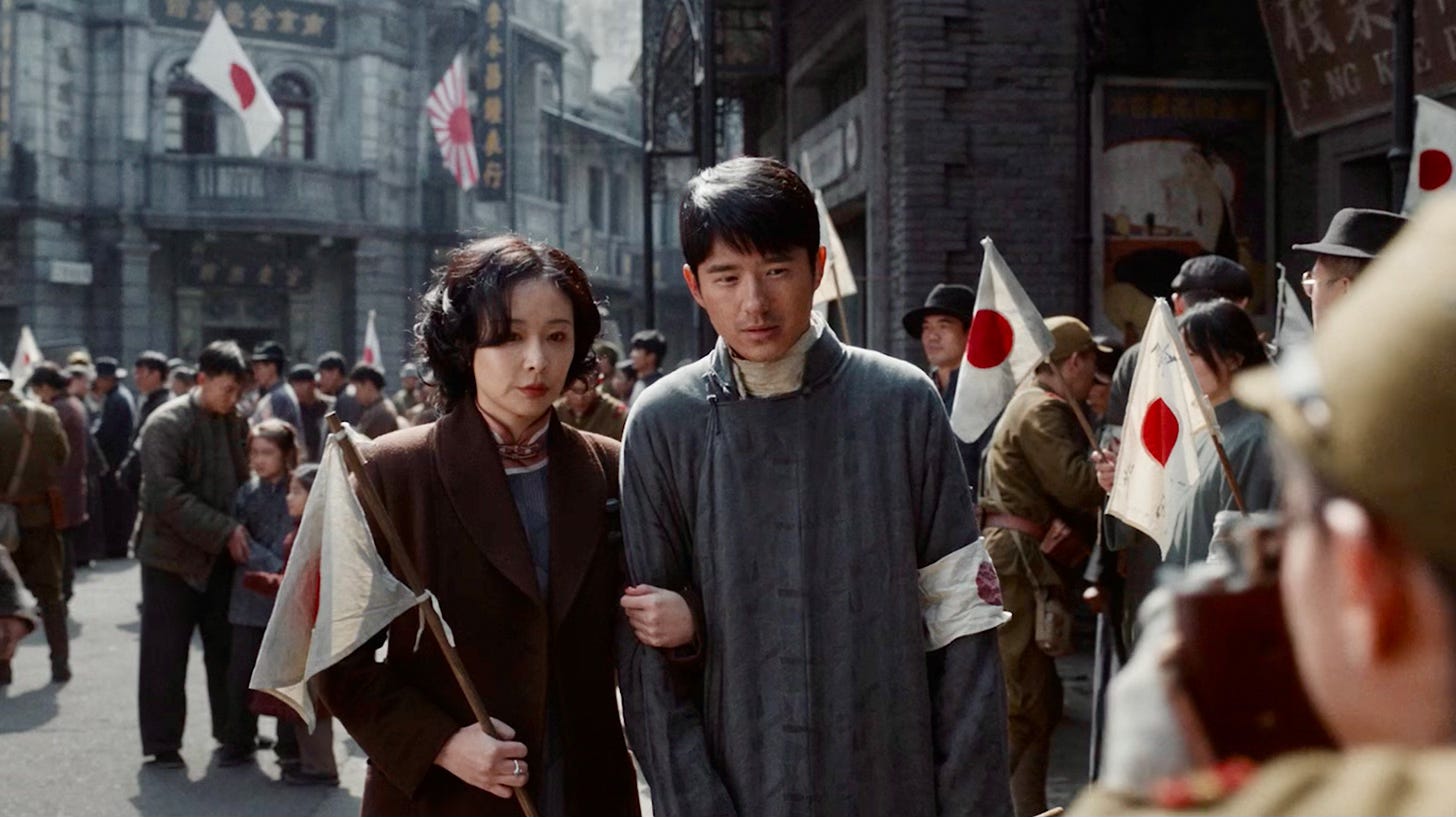
4. Dead to Rights
Shen Ao, China
This harrowing recreation of the 1937 Nanjing Massacre echoes Spielberg’s Schindler’s List - except it’s good. The Chinese film’s degree of brutality could feel exploitative, if not outright sadistic, were it not for its self-imposed restraint; for as cruel as it gets, murdered babies and all, Dead to Rights is still well mannered compared to the historical events. Some have expressed concern over the film’s nationalistic propaganda and anti-Japanese sentiment, which is baffling since the extreme ethnocentrism that inspired Japan’s atrocities is still very much alive. It’s of the utmost importance to never forget (nor forgive) the crimes against humanity committed by the Empire of Japan, and to remember the nation wasn’t always the tranquil birthplace of Pokémon and all things kawaii. Dead to Rights acts as a gentle warning that the Century of Humiliation will never be repeated, and while some read it as a threat, it’s a more polite one than deserved.
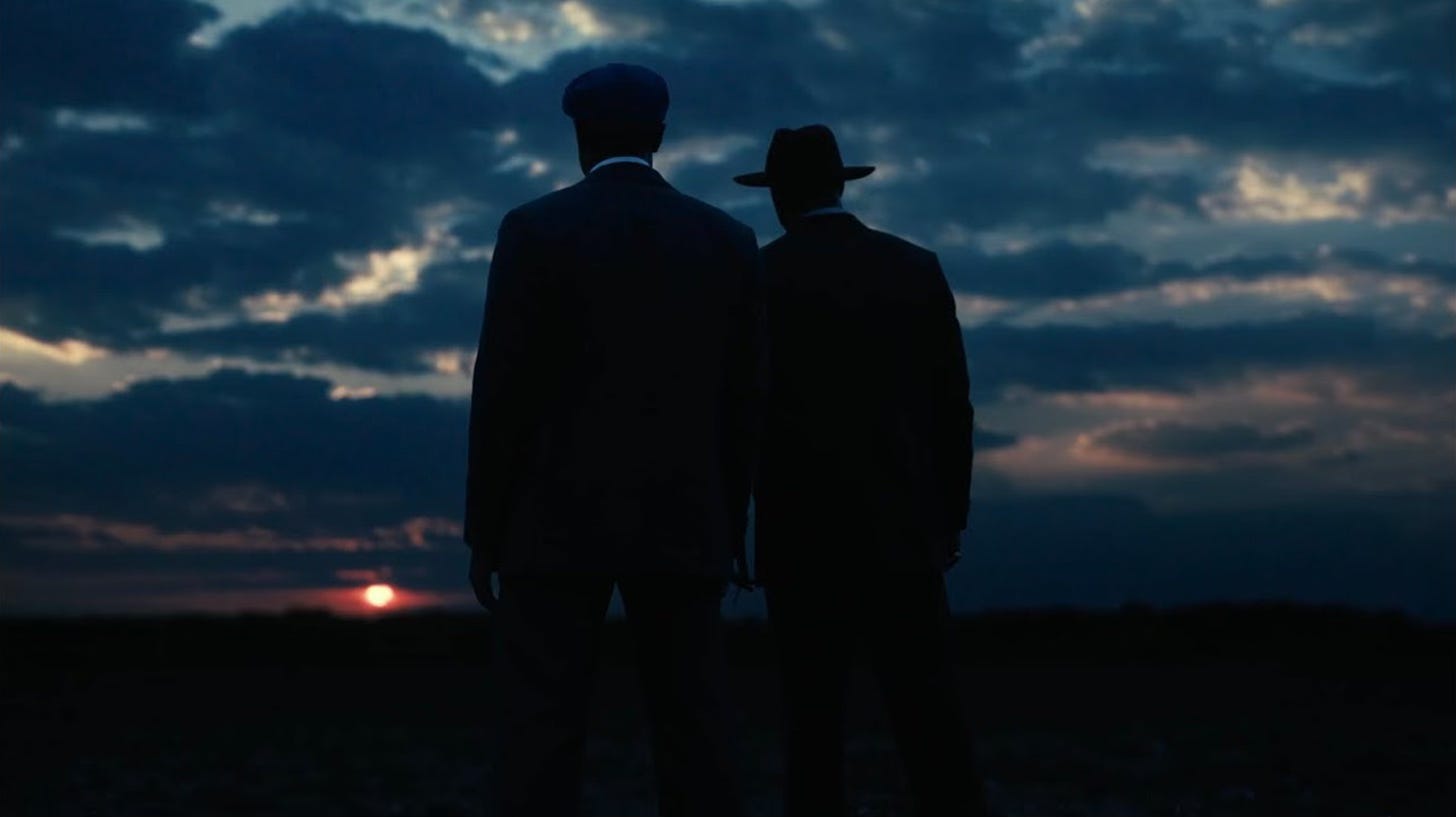
3. Sinners
Ryan Coogler, USA
After Black Panther, a movie that clumsily suppresses the possibility of revolution by the African diaspora, it’s invigorating to see Coogler finally offer interesting political insights. Here, the filmmaker affirms that even well-intentioned assimilation can lead to cultural erasure, and the discussion is embodied by an Irish vampire who himself has suffered subjugation for his identity, but becomes the predator (echoing historic events, as the Irish often worked as plantation overseers, and later as cops). Coogler’s directing is imbued with a blackness that takes effect in practical decisions: casting Wunmi Mosaku as a strong romantic lead instead of motherly figure, for instance. The magnificent cast of characters is built up slowly, and earns the exuberant images that Sinners presents later on. That one scene, which summarises the raw spiritual power of music as it reshapes time-space itself, has stolen much of the attention, of course. But this author is a much simpler man, and seeing Hailee Steinfeld spit in Michael B. Jordan’s mouth was enough to guarantee a high spot in this list. And as if that wasn’t already hot enough, there’s plenty of racists getting gunned down, making Sinners the sexiest film of the year by a good margin.
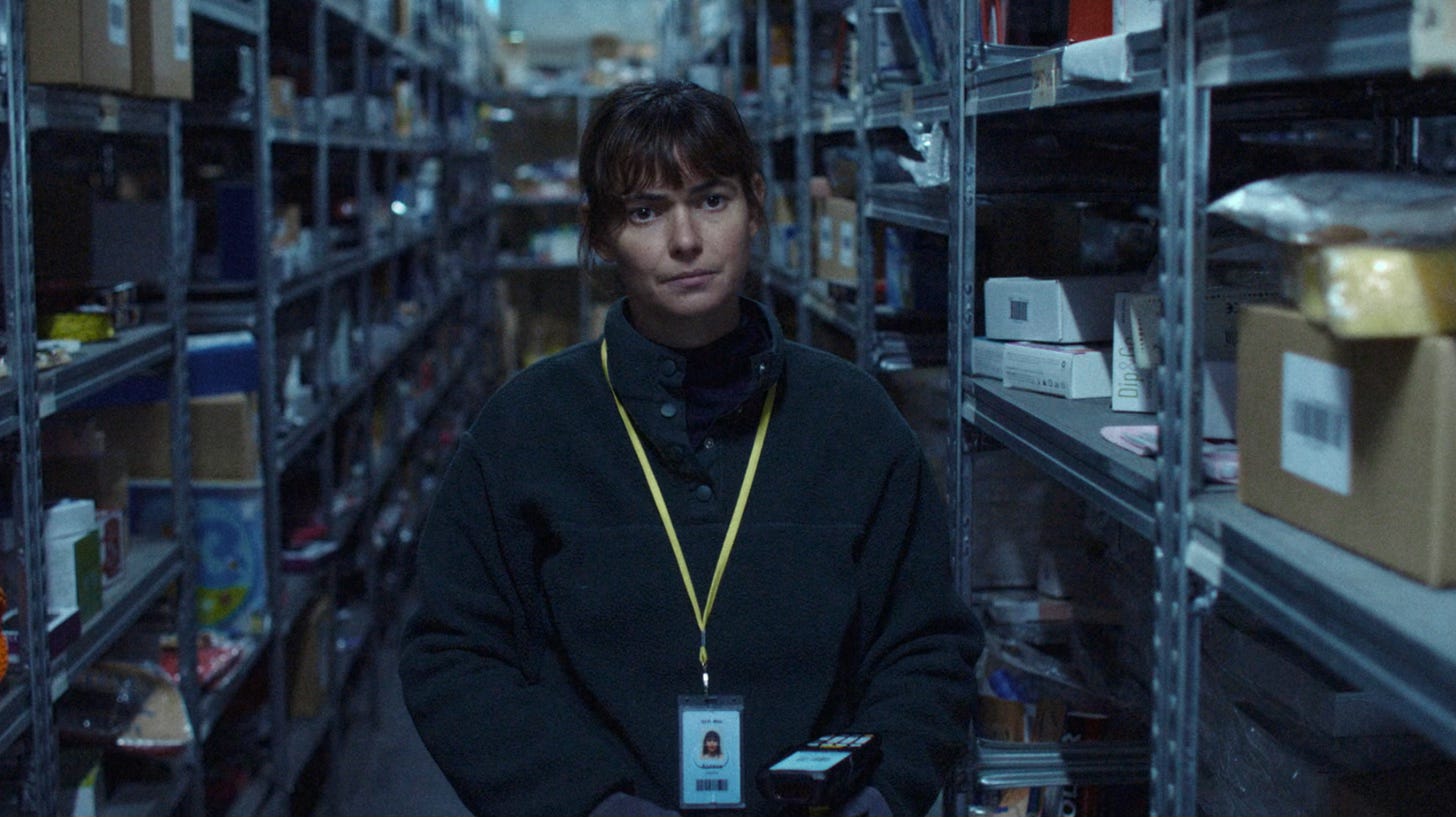
2. On Falling
Laura Carreira, Portugal, United Kingdom
The film’s most powerful statement on wage labour comes at a moment in which Aurora, an immigrant warehouse worker, has to answer the question “what do you do outside of work?” - because for her, as for the majority of workers keeping the global economy alive, the honest answer would be “nothing”. On Falling is a sworn-in testimony to the abominable state of mere survival to which capitalism condemns those who only have their labour power to sell. The dehumanising effect of Aurora’s work turns her into someone overly reserved, who politely denies food offers despite being hungry and having nothing else to eat, performing conversations with the same kind of ‘professionalism’ with which she approaches daily labour. Joana Santos plays Aurora with phenomenal and heart-breaking sensibility, each moment of silence speaking as much as an extensive monologue could. A sadly relatable collage of proletarian déjà vus - empty lunch break chit-chat about the show of the month and gusts of blinding loneliness. Extraordinary.
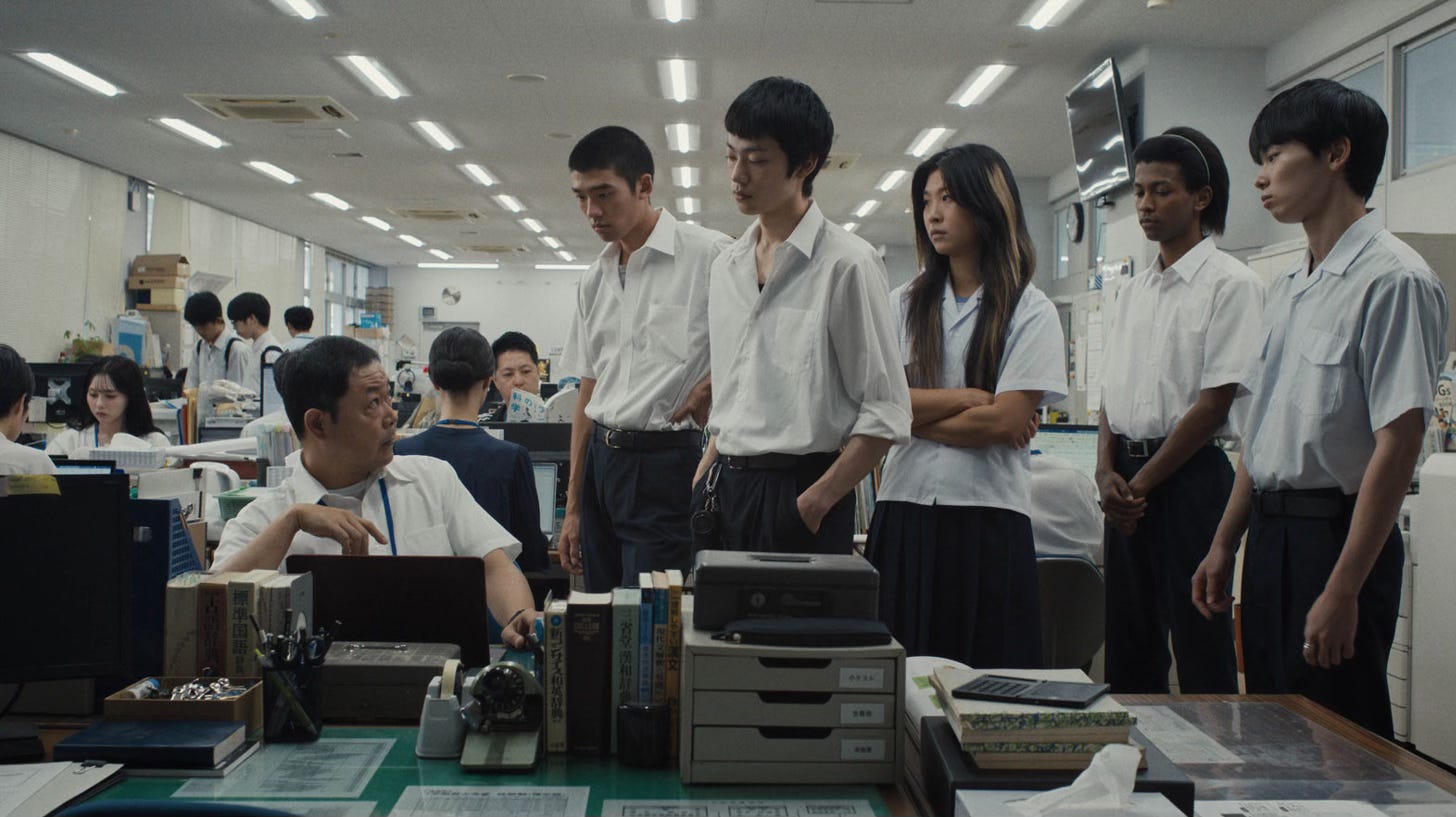
1. Happyend
Neo Sora, Japan, USA
A coming-of-age story set in a rapidly changing world in which its teenage characters are as likely to grow hopeless as they are to grow old. From xenophobic political scapegoating to the rise of mass surveillance, this near future Tokyo is plagued by maladies that sound very little like science fiction. Happyend is a comprehensive inquiry into the very same duality that initiated this list: the taxing courage of believing in a better future versus the seducing comfort of fatalism. When friendship between a group of high schoolers becomes torn by political awakening from some and hedonistic apathy from others, the narrative begins its incessant interrogation. Is it possible to remain friends with the joyfully apolitical, and should one join them as they party amid the flames? Or is there honour in doing what little you can to resist a future that, like a bulldozer, approaches slowly but surely, and crushes relentlessly? The animosity between childhood friends materialises the persisting internal conflict that comes with class consciousness, and there’s a bit of both of them in all of us. The film elucidates the most critical concerns of contemporary politics, framing high school classrooms as the epicentre for either rebellion or inaction - the future is still up for grabs, and it’s up for the young to choose. Happyend is nothing short of extraordinary, and not only the best film of 2025, but one of the most politically insightful and relatable films of the decade yet.
Full List
Happyend, Neo Sora, Japan
On Falling, Laura Carreira, Portugal, United Kingdom
Sinners, Ryan Coogler, USA
Dead to Rights, Shen Ao, China
If I Had Legs I’d Kick You, Mary Bronstein, USA
Souleymane’s Story, Boris Lojkine, France
Homebound, Neeraj Ghaywan, India
No Other Choice, Park Chan-wook, South Korea
It Was Just an Accident, Jafar Panahi, Iran
A Useful Ghost, Ratchapoom Boonbunchachoke, Thailand
Misericordia, Alain Guiraudie, France
Sorry, Baby, Eva Victor, USA
Arco, Ugo Bienvenu, France, USA
The Blue Trail, Gabriel Mascaro, Brasil
Sentimental Value, Joachim Trier, Norway
The Last Blossom, Baku Kinoshita, Japan
Marty Supreme, Josh Safdie, USA
Palestine 36, Annemarie Jacir, Palestine, United Kingdom
Late Shift, Petra Volpe, Switzerland, Germany
Left-Handed Girl, Shih-Ching Tsou, Taiwan, USA
Superman, James Gunn, USA
The Shrouds, David Cronenberg, Canada, France
Wake Up Dead Man, Rian Johnson, USA
Ne Zha 2, Jiao Zi, China
Black Bag, Steven Soderbergh, USA
Cloud, Kiyoshi Kurosawa, Japan
What Does That Nature Say to You, Hong Sang-soo, South Korea
The Shadow’s Edge, Larry Yang, Hong Kong, China
Die My Love, Lynne Ramsay, USA
The Mastermind, Kelly Reichardt, United Kingdom, USA