


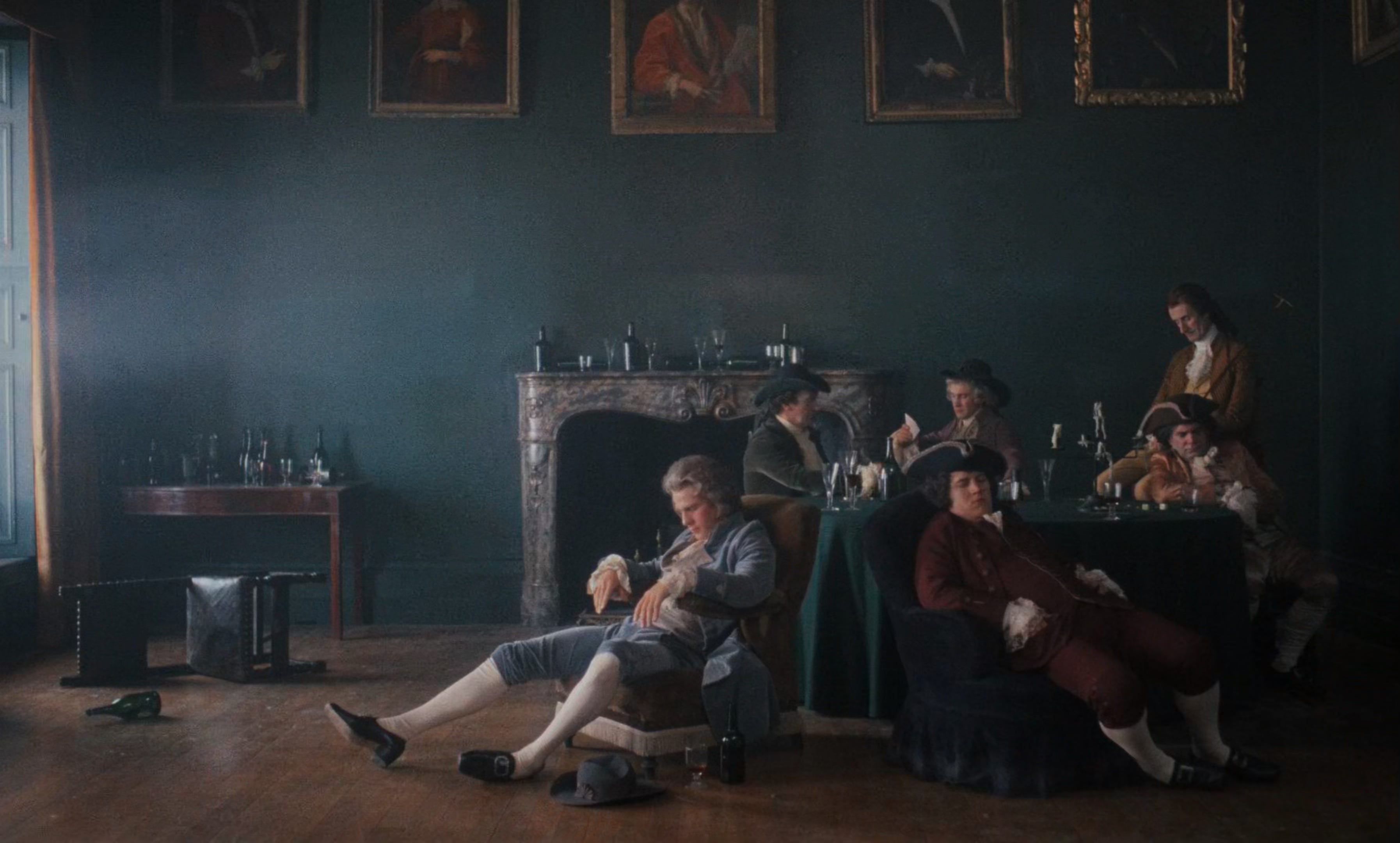
Barry Lyndon is a thorough examination of meritocracy as a myth. The titular protagonist socially climbs to impressive heights, from gentry to aristocracy, but not many of his achievements can be completely attributed to him, if at all. Rather, Barry seems gifted with the ability to repeatedly fail upwards, his shortcomings comically band-aided by a narrative that cares for him like a parent for a wounded child. Much of the joy of Kubrick’s film comes from seeing Barry stumble onto opportunities, and his merits rarely play a part.
In a meritocratic system, political power and economical standing would be strictly proportional to one’s own talents, skills and contributions to wider society. The nigh-mythological picture of the “self-made billionaire” who started a massive enterprise in his parents’ garage is already engraved in the popular collective imagination. However, sociologists have long argued that wealth and class, in addition to innate traits such as race, gender and sexuality, are factors that still greatly determine the opportunities to achieve power in contemporary society. Barry Lyndon shows that sheer luck can be one of these factors, and what requires extraordinary effort isn’t to prosper once you’re set up for success, but to fail.
Stanley Kubrick’s 10th feature chronicles the social ascension of the treacherous Redmond Barry, an Irish man born in an unremarkable family of small landowners in 18th century Europe. While certainly not a peasant, Barry is a stranger to luxury and power, and unintentionally embarks on a quest towards financial success that can’t quite be considered a rags-to-riches story. It’s not so much that Redmond improvises a path towards glory and wealth, but that he never has any clue where he’s going at all.
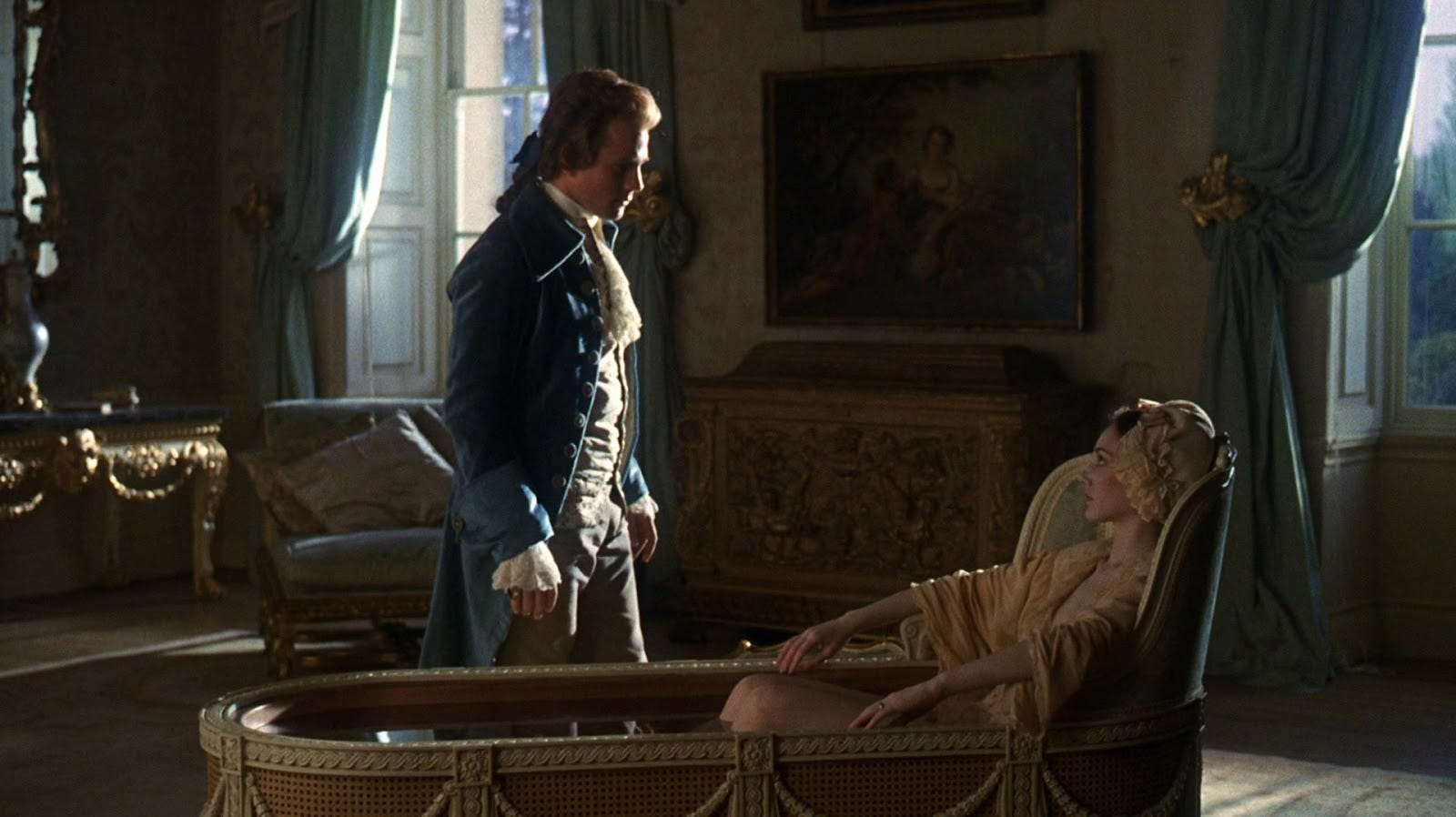
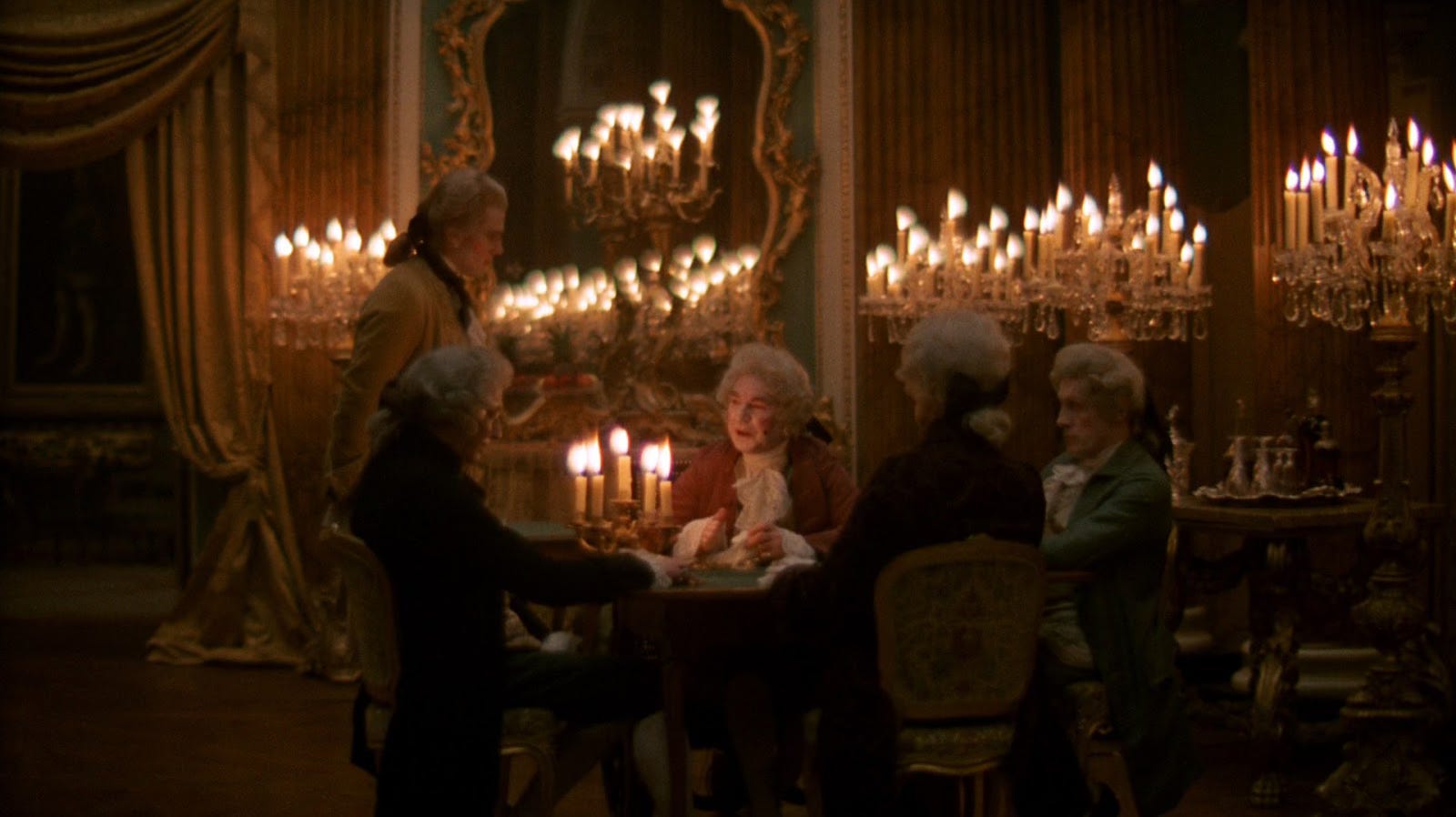
Much is said about the film’s aesthetic substance: the ground-breaking cinematography, its cutting-edge use of natural lighting, the breathtaking compositions inspired by William Hogarth’s paintings, and candlelit scenes that have redefined what is possible to achieve with a camera. But not enough is said about the equally captivating beauty of Barry Lyndon’s social commentary. Perhaps the almost exclusively visual-centric discussions around the film are themselves the symptom of a politically neutered cinephile community, so adept at admiring historical images, and less at translating their subtext to today.
Barry’s lack of talent and general capability are comically explicit from the onset. While not an entirely passive character, his journey is greatly propelled forward by the efforts, decisions and even identity of others. He deserts his regiment in the British Army during the Seven Years’s War by stealing someone else’s identity and horse, only to end up conscripted into the Prussian army by a Captain Potzdorf. When his new circumstances lead him to the chance to accomplish his own triumphs, such as saving Potzdorf’s life, the payoff is eventually tainted by nepotism, as Potzdorf’s uncle recruits Barry into the Prussian Police. If only saving a life was a requirement for today’s nepo babies, whose presence is ubiquitous from Hollywood to Parliament.
The narrative then restarts its cycle of miraculously rewarding Barry’s failures. The Prussians task him with spying on an Austrian diplomat, Chevalier de Balibari, and Barry instead ends up confessing to his target that he is a spy. Fortunately, the Chevalier turns out to be an Irish compatriot, and Barry is yet again saved by the fictional powers-that-be. Here too, Barry Lyndon echoes the ludicrously twisted realities of the 21st century. During the 2008 financial crisis, the UK government deployed £137 billion of public money to bail out banks, saving private companies from an existential threat. Barry Lyndon acts as a testament that, with convenient alliances in places of power, such terminal failures can be waved away.
Reappropriating identities is a recurring aesthetic tool in Barry’s arsenal, and one which is still favoured by the economical predators today. When Barry does succeed at escaping the Prussians, it’s by enacting a scheme that isn’t his own, and by pretending to be the Chevalier, yet again escaping consequences through the identity of another. For an impoverished nobody in the 1750s, the attire of a high-ranking officer meant travelling unnoticed. Today, the opposite allows Big Tech plutocrats to blend in: wearing cynical cosplays of the dispossessed. Mark Zuckerberg’s understated outfits and hoodies once signalled “I’m too focused on success to dress fancy”, but in light of Donald Trump’s return to office, a semiotics rebrand was due, and Zuckerberg’s new gold chains and boxy t-shirts manifest a newly-regained masculinity of the dullest kind. Credit where credit is due, Barry’s simulated identities are of significantly better taste at least.
Many, the film’s narrator included, argue that Barry’s social ascension and fall are the fruits of fate. However, Kubrick’s satirical depiction of the events often suggest a more intentional critique of the systems that safeguard Barry from failure. Much like the paintings commissioned by the wealthy and distinguished then, Kubrick’s mise-en-scene, with its royal courts and opulent costumes, is picturesque and glamorous, but the brushstrokes hide a certain level of acidity.
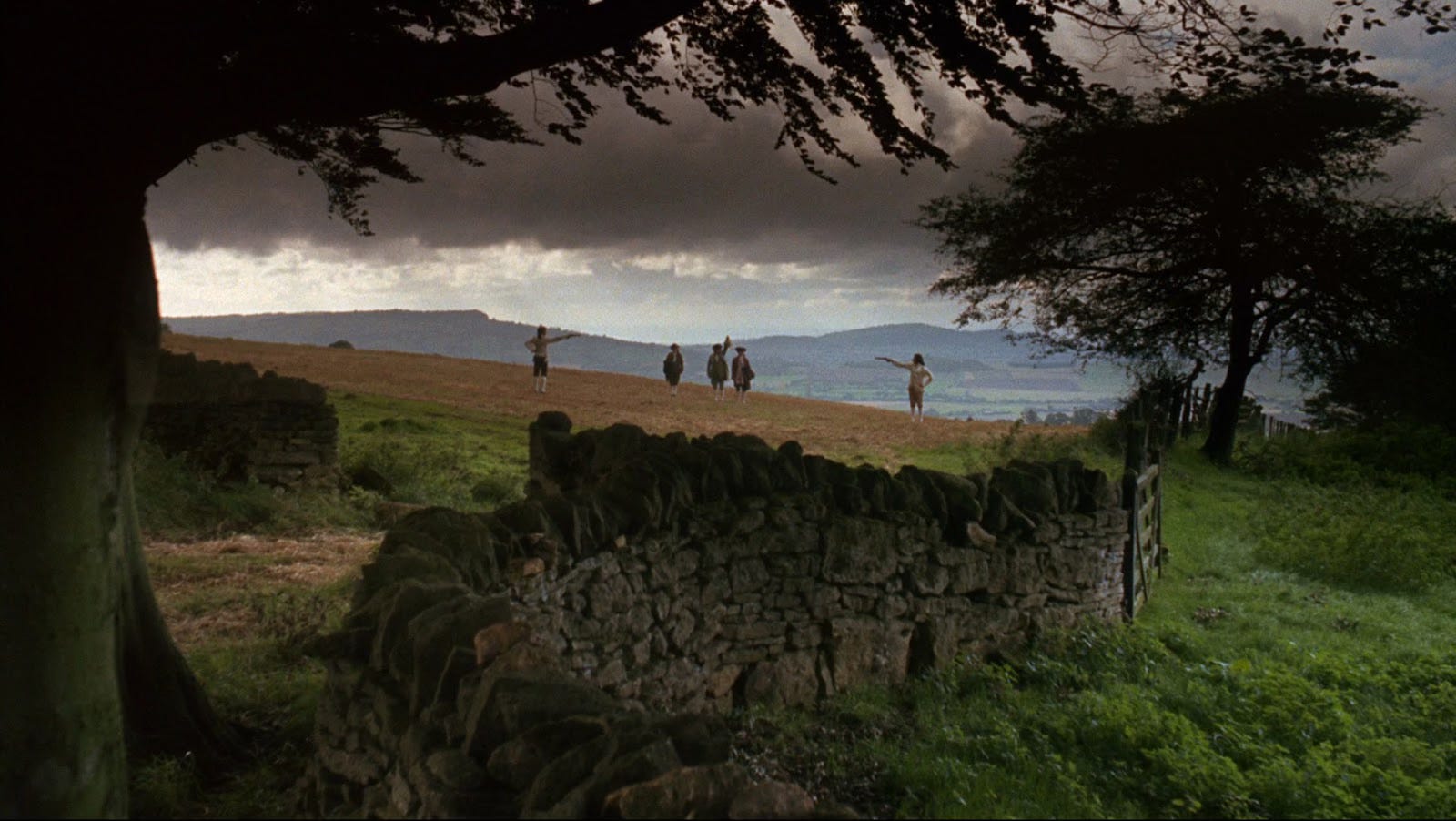
The film seems to hold a certain contempt for the people and spaces it portrays, as well as the practices that are deemed elegant within the halls of aristocratic palaces. Take duels between men, for example. Although they are frequent, the film never seems to validate their value as a social ritual. The film instead aims to pinpoint their inefficacy, as they never lead to better outcomes for the titular character, who jumps into duels so wholeheartedly. Kubrick unveils the utterly absurd essence behind the curtain of aristocratic civility.
That is not to say that Barry is a concise placeholder for any one class, standing in as an obvious punchbag in an easily-digestible piece of political commentary. After all, Kubrick’s own political views are, to this day, not conclusively clear. The filmmaker disagreed with Jean-Jacques Rousseau’s assertion that humans are born naturally good and later corrupted by society, and was suspicious of any social institution based upon that cherishable belief. This informed some of his right-libertarian perspectives, which indicated a primary distrust of the State and of man’s overall ability to rationally configure societies due to a natural inclination towards self-interest and stupidity.
Therefore, it’d be naive to suggest that Barry Lyndon can be uncritically reclaimed by the left today, since Kubrick himself was allegedly against any tax-the-rich policies that could harm him, for instance. A helpful comparison can be drawn with the Italian 1963 classic The Leopard, which similarly depicts the lives of those of high birth and status, but is directed by Luchino Visconti, a known Marxist. The Italian director’s open political stance invites left-leaning interpretations, even though The Leopard portrays high society with considerably more empathy than Barry Lyndon. In Visconti’s film, the aberrating agent within the upper class is a prince insightful enough to realise his influence is about to dissipate, and that the future lies in the hands of the nouveau riche. Barry, on other hand, is an outlier among the gentlefolk not due to wisdom or political awareness, but his own exceptional ineptitude.
This prevents Redmond Barry from becoming the picture-perfect caricature that some would prefer him to be. Despite becoming an aristocrat by marriage, Barry doesn’t quite fit in, as he lacks their properly-trained manners and simple joie de vivre. If anything, Barry’s brutality shocks them, showing the moral sensibilities of aristocratic societies in ways that a straight-forward caricature wouldn’t. Barry most likely wouldn’t even belong in social groups that gained hegemony later, such as the bourgeoisie, as he lacks their instinct to hoard money, and squanders it rather unthoughtfully. Barry is so uniquely inadequate that he nearly leads an aristocratic family into bankruptcy, but lacks the likeability that narratives often grant to their impoverished underdogs. 50 years later, a political investigation of this period drama remains as nuanced as ever.
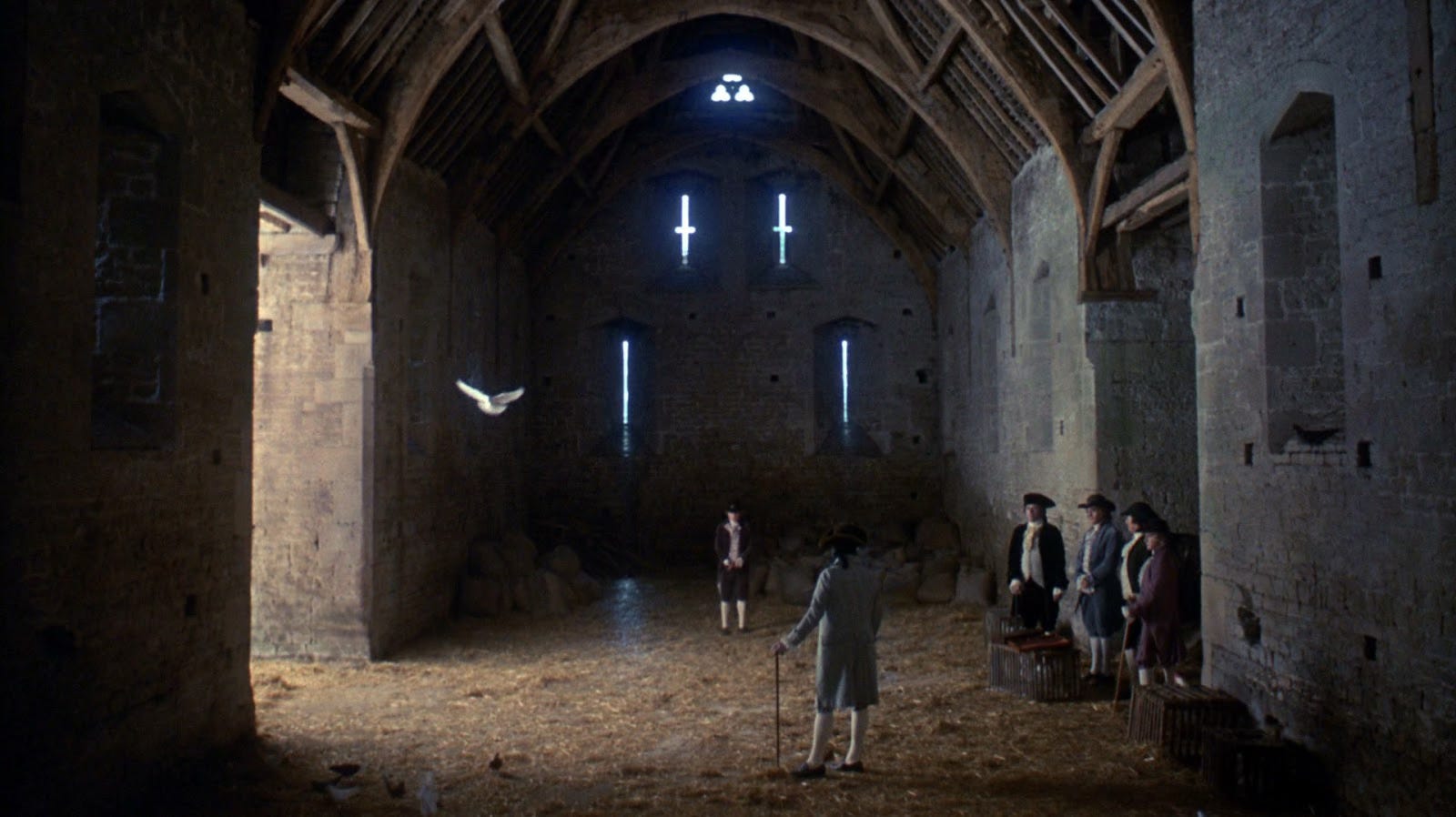
At the time of release, many criticised the film’s emotionally lethargic nature. Thankfully, that reading has been revised, and Kubrick’s subdued, albeit candid approach to sentimentality has become more celebrated. While Ryan O’Neal’s performance isn’t as saturated in emotion as some would like, Barry Lyndon contains some of the most sincere moments of humanity in Kubrick’s filmography, such as the death of the young Bryan. Although Barry serves as a vessel to ridicule a class, he is capable of caring for others. Say what you will about Redmond Barry, but he truly loved his son. Meanwhile, the financial opportunists of today (like a certain South African entrepreneur), often reduce their children to props for exhibiting some semblance of humanity.
Had it not been for his unfaithfulness to Lady Lyndon and his physical abuse of Lord Bullington, Barry could have thrived indefinitely, even after the loss of his son. He could have mourned having all his needs met, and all his pleasures made possible. Barry’s downfall isn’t the promised return of some kind of karmic boomerang, but the result of his extraordinary excesses. The protagonist’s few moments of active participation in his own destiny lead him to ruin, in spite of a narrative that shelters him in thick layers of bubblewrap. By the time Barry does a good deed, and unexpectedly spares lord Bullington’s life in their duel, it’s too late. Ultimately, neither the narrative or society deprive Barry of a life of exemplary comfort after realisation of his lack of merit. Barry deprives himself of it.
In the age of mindset coaches and the gig economy, Barry Lyndon is a refreshing accusation against the promise of social mobility through merit alone. Redmond Barry has few, if any, practical skills or moral principles, but is consistently rewarded by social structures that require neither of those qualities. Although set in the 18th century, Barry Lyndon feels more relevant than ever, and the concept of meritocracy remains a piece of fiction as comical as Stanley Kubrick’s 50 year-old film.