


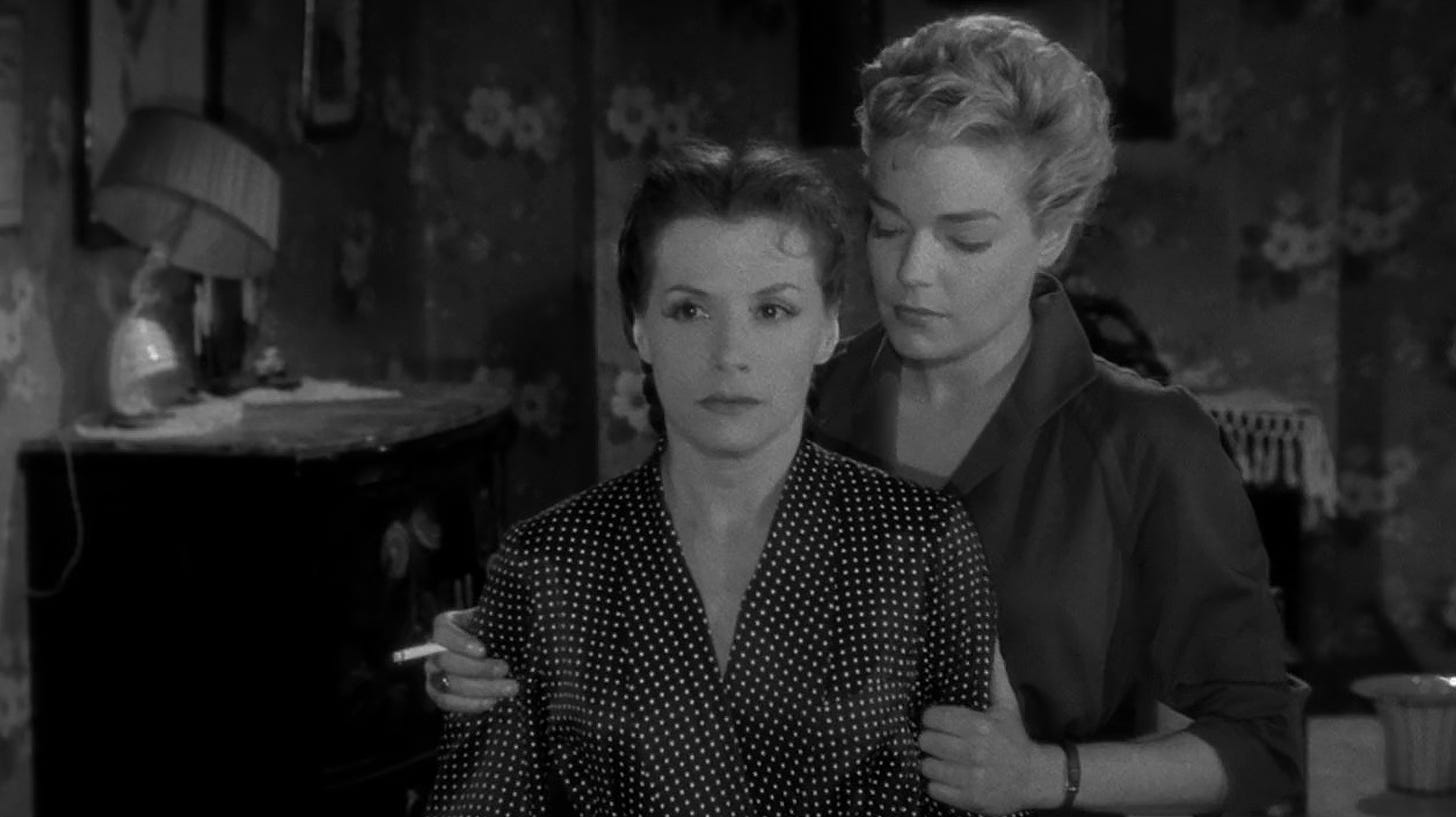
In 1955, a queer-coded thriller pierced the French cinema landscape, appearing in the horizon as a tower of layered anxieties and deceit. Tensions of different kinds vertically stack up like bricks: conspiratorial, romantic, psychosexual. Some anxieties boil over a dead body that can’t be found, and others burn between living bodies that never leave each other or the screen. Through many of its layers of paranoia, the film misleads the audience, and the truth can be either shocking, or shockingly disappointing. Discussion surrounding this French classic can be equally tense, as 70 years later, audiences still disagree on whether the film is merely a result of historical sexual repression or a legitimate portrayal of it.
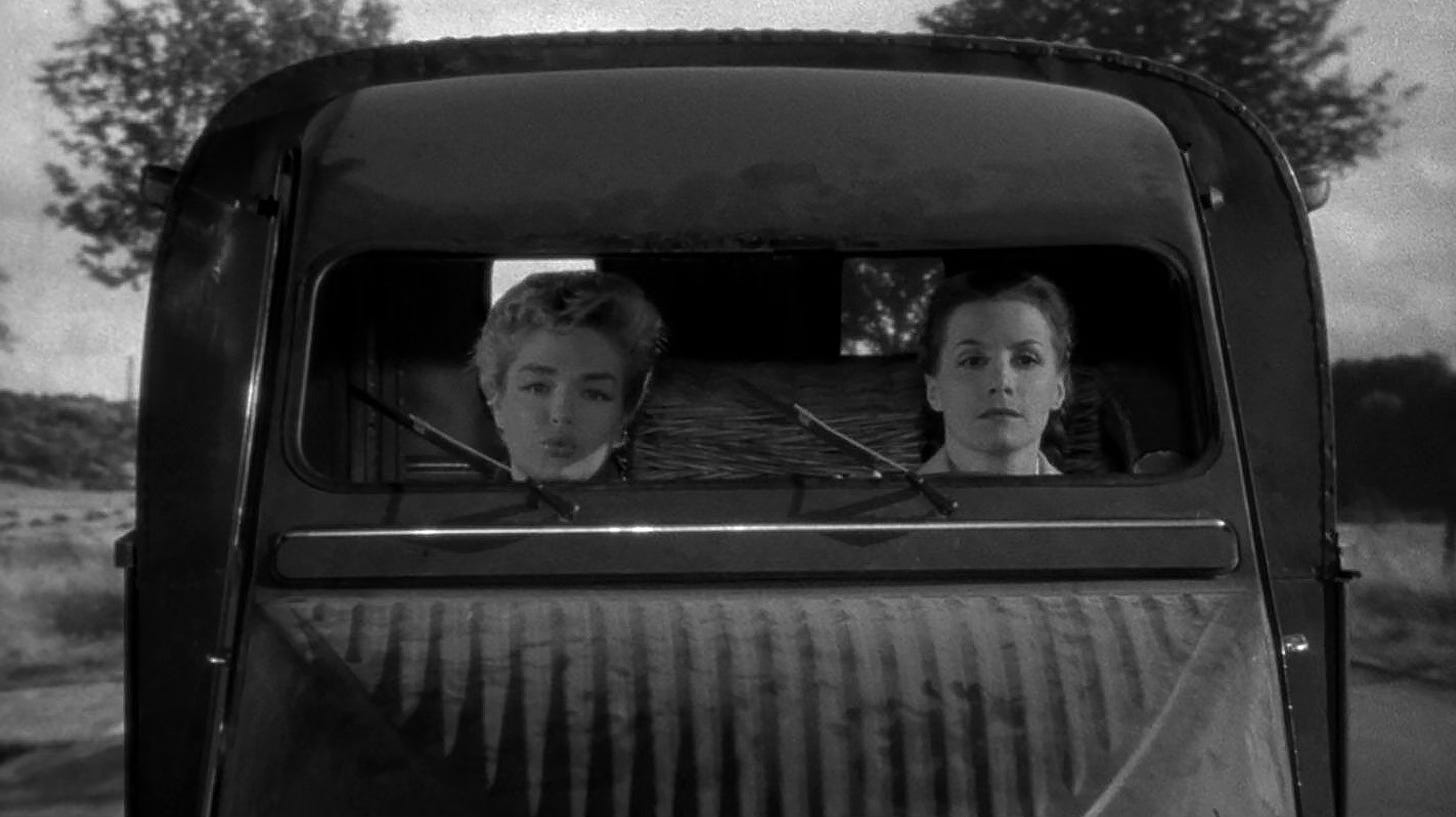
Henri-Georges Clouzot’s horror masterpiece follows Christina and Nicole, two women who teach at a boys boarding school. Both are romantically involved with the same barbaric man, Michel. Christina is his feeble wife, the primary victim of his violence, and Nicole is his mistress, who has decided that the time has come to end his abuse for good. Despite their odd relationship, the duo is introduced as inseparable, and the story appears fixated on stress-testing the resilience of their bond, which is strongly suggested to be mutual queer affection. Together, they decide to murder Michel by drowning him in a bathtub. The aforementioned stress-test begins when the corpse disappears.
Three forms of anxiety are thrust into the audience’s lap. The first, and most obvious, is the conspiratorial-criminal tension, as both women are at risk of being arrested depending on how the dead body is found. The second is psychosexual in nature, since throughout the story, Michel’s living body acts as an obstacle between the two could-be-lovers and their repressed desire. The third is the audience’s anxiety for romantic fulfilment, and is the most difficult to decode, as in spite of incredibly strong clues, there is no explicit acknowledgement that the two women are gay and/or romantically interested in each other. Addressing the conspiratorial-criminal anxieties is a requirement to alleviate the psychosexual and romantic ones.
Fiction has all too often…
Culture Film Publication is the UK’s new home for cult and genre film.