


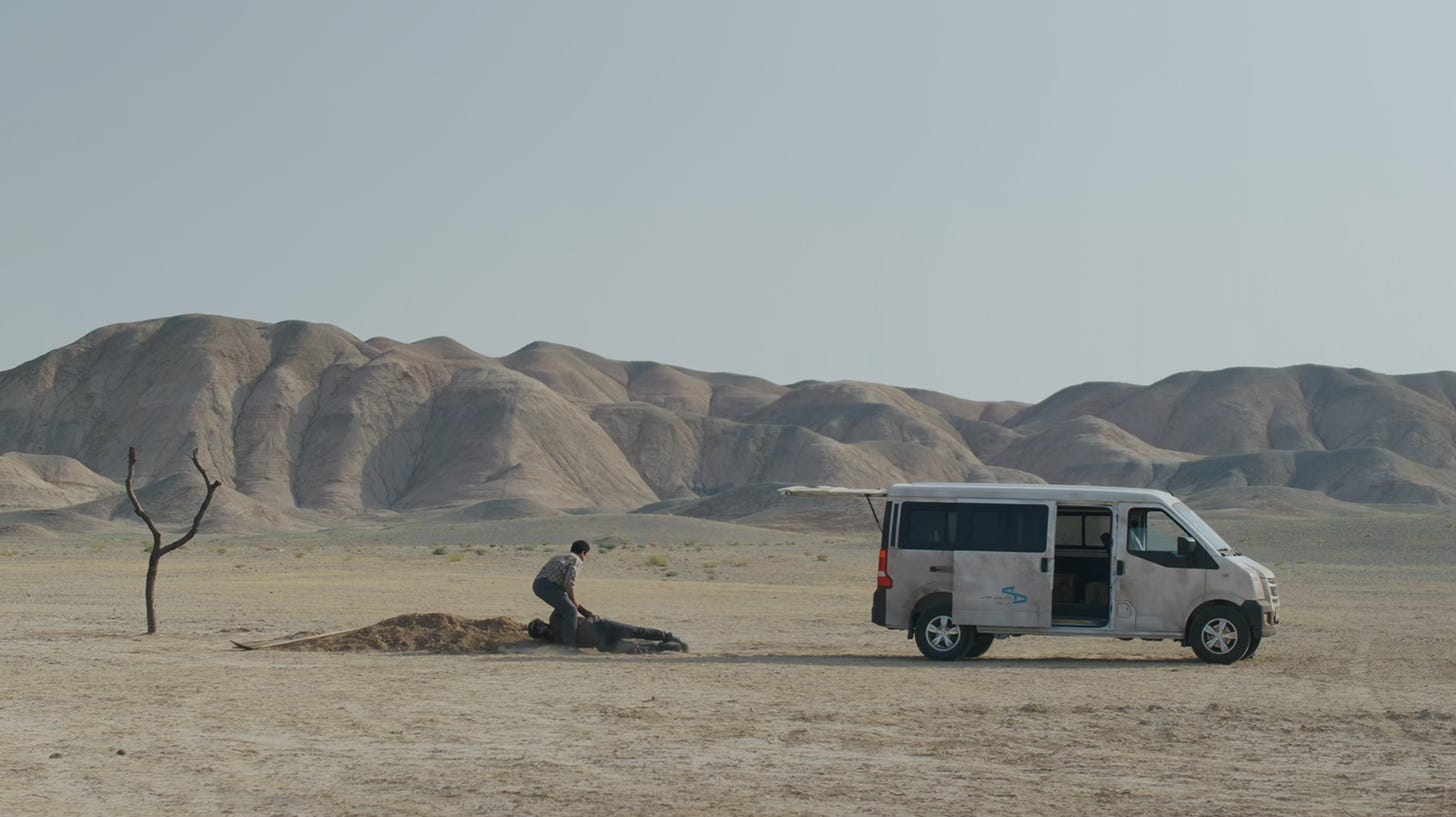
It Was Just an Accident is a film about conflicting emotions. Sentiments like rancor and kindness, conviction and uncertainty, loathing and understanding should repel one another like oil and water, but in Jafar Panahi’s Palme d’Or Winner they converge in the messiest ways. Rather than defining themselves by their antagonism to one another, these ideas often find themselves under the same spotlight, where partial truths can become excuses, and mere accidents might mean so much more.
The Iranian film follows a group of people with little in common, except for their shared traumatic past as political prisoners all tortured by the same intelligence officer, whose identity they must confirm, and whose fate they must decide together. Only able to identify their torturer, known as Eghbal (“Peg Leg”), by the sound of his squeaky prosthetic leg, the man they captured could be innocent, setting the stage for a political revenge tale full of doubt and contradiction.
The writer-director Panahi is no stranger to art as political resistance. The Iranian government has imprisoned him and attempted to censor his art countless times. Clearly, that hasn’t stopped him, and that punk ethos is present here, as the film was produced without official government permission. The women here don’t always wear a hijab, which is punishable with prison time in Iran. Panahi’s film is a clandestine exercise on protest in more ways than one, but his delicate political commentary is beautifully rendered.
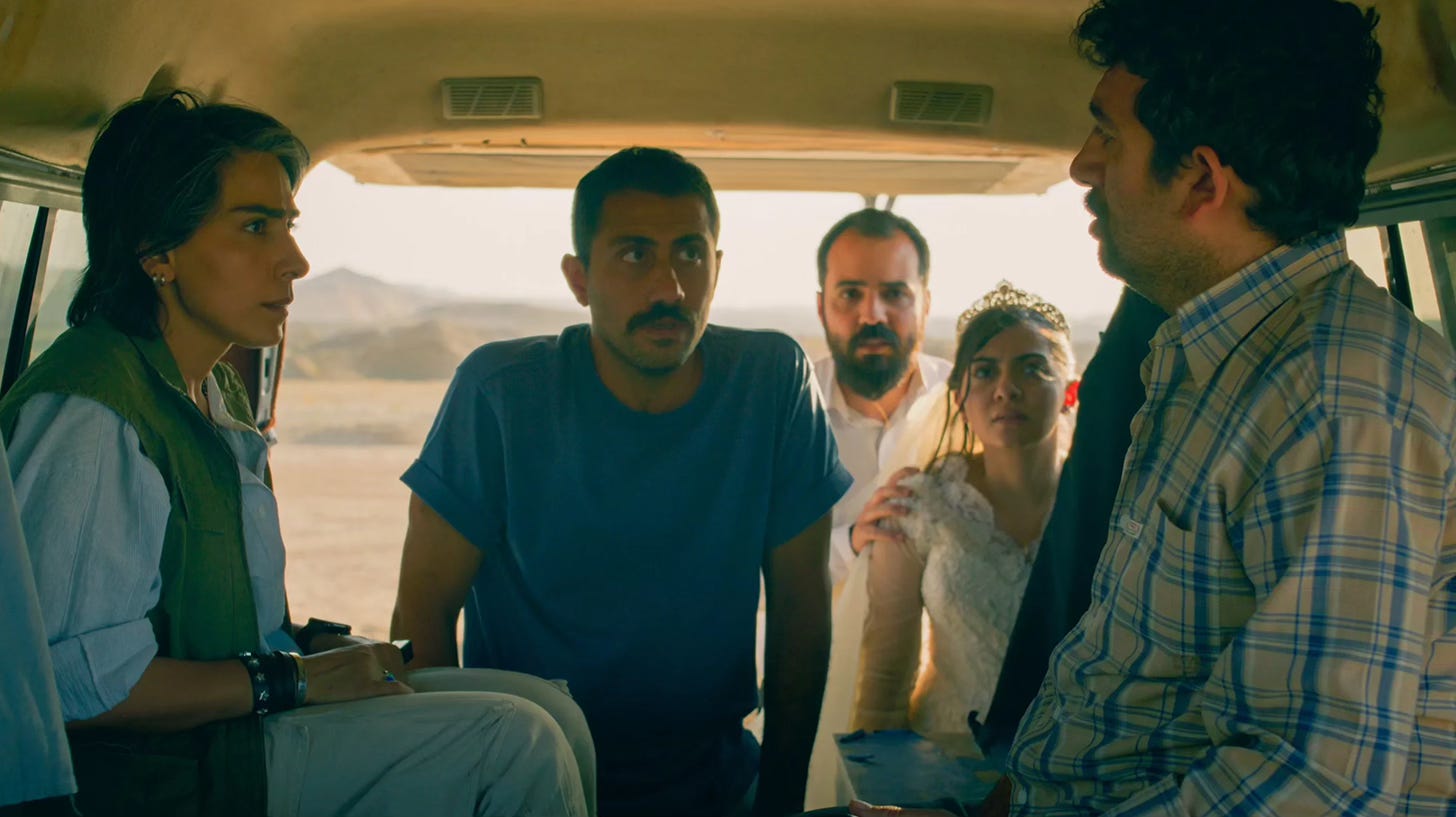
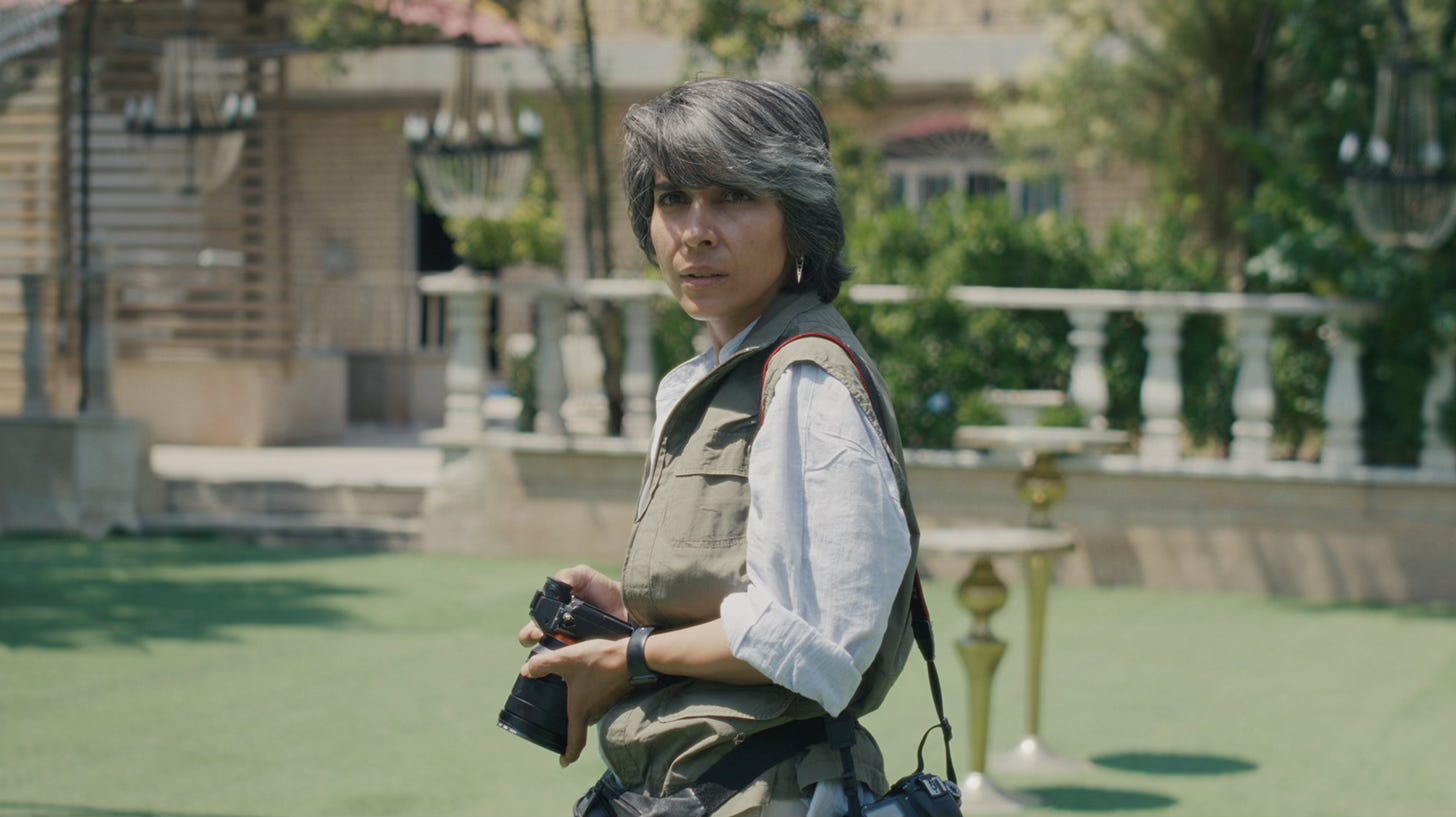
Similar to 2024’s The Seed of the Sacred Fig, directed by Iranian filmmaker Mohammad Rasoulof, who’s also been arrested several times, Panahi’s story studies the consequences of individual acts by agents of a repressive state as parables for wider conflicts. Mariam Afshari’s phenomenal character, Shiva, wonders whether retaliating against individual agents of the State is enough to substantially fracture the broader socio-political structure in which they’re merely cogs. It most likely isn’t enough - but can that partial truth disarm the victims’ immediate need for justice and resolution? It doesn’t even seem to work for Shiva, whose own stance on violence changes later on.
In the opening scene, the man that is suggested to be Eghbal drives a car, accompanied by his pregnant wife and young daughter. It’s a pitch-black night outside. They run over something - the audience hears a whimpering dog, then silence. “It was just an accident”, the mother says. “Whatever will be, will be. God didn’t place him in our path for no reason.” But the child doesn’t buy it. Her father killed a dog. God had nothing to do with it.
Who is to blame: the flawed driver or the path devoid of light? Can someone surrounded by blinding darkness be exonerated from the harm they bring to others? Who accounts for what is done in God’s name, but outside His light? Panahi’s film asks all of these questions, and in a display of maturity, answers none of them.
It Was Just an Accident is refreshingly uninterested in pedestrian statements on religion, and merely critiques the misuse of faith as a tool for political repression and dehumanisation. The film illustrates the dialectical relationship between forces like faith and suspicion, and how atrocities can happen in between. The intelligence agent believes that if the prisoners he tortured were guilty, their punishment was justified - but if innocent, they will receive justice in heaven. Almost as if, like the dog killed earlier, they couldn’t have been placed on his path “for no reason”. In this belief, he’s comforted by a sense of righteous certainty - while the victims now deciding his fate must grapple with doubt.
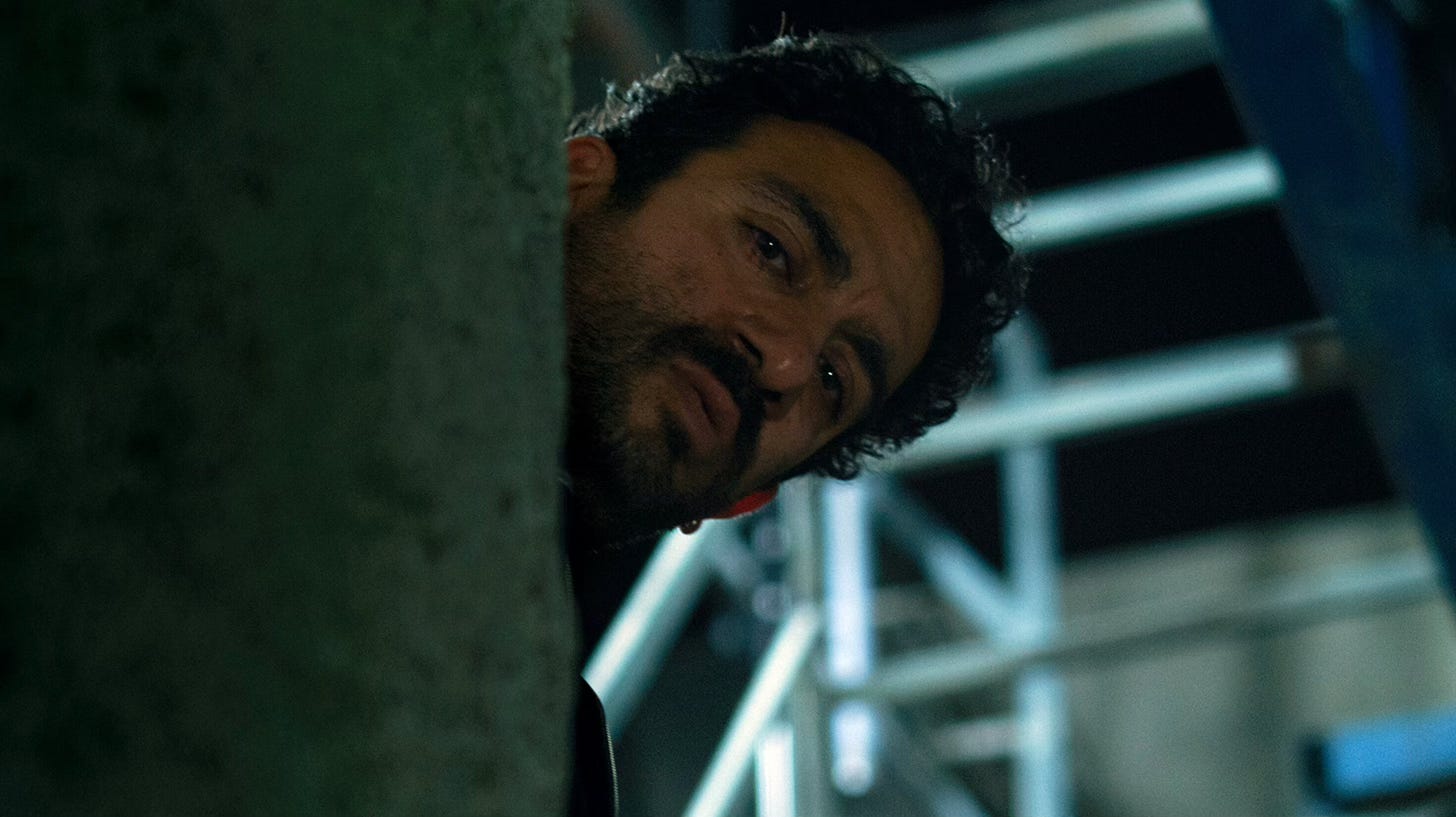
The narrative exposes the irony of the contradictions intrinsic to being human. Vahid, the car mechanic who serves as the closest thing to a protagonist in this near-ensemble cast, materialises the concurrent movements of opposing sentiments. The faceless torturer ruined Vahid’s life, permanently injuring his back and leading his wife to suicide. Eghbal scarred him in ways he can never heal. Vahid begins the day nearly burying alive this man he suspects to be Eghbal. Cut to nightfall, and he’s desperately driving his suspected torturer’s pregnant wife to the hospital. Vahid Mobasseri brings to the screen one of the strongest performances of the year, imbuing so much life to this fascinating character. He might kill you, but would also buy cake to celebrate the birth of your child because it’s the considerate thing to do.
That’s not the film’s only instance of accidental humour cemented by that disconnect between words and actions. Throughout the film, Shiva’s ex-lover Hamid is the most vocal about enacting the violent revenge the presumed torturer deserves. Haunted by nightmares, he’s desperate for resolution. Mohammad Ali Elyasmehr’s fantastic acting injects every scene with tension, a human stick of dynamite that ironically fizzles out the moment his feelings are hurt.
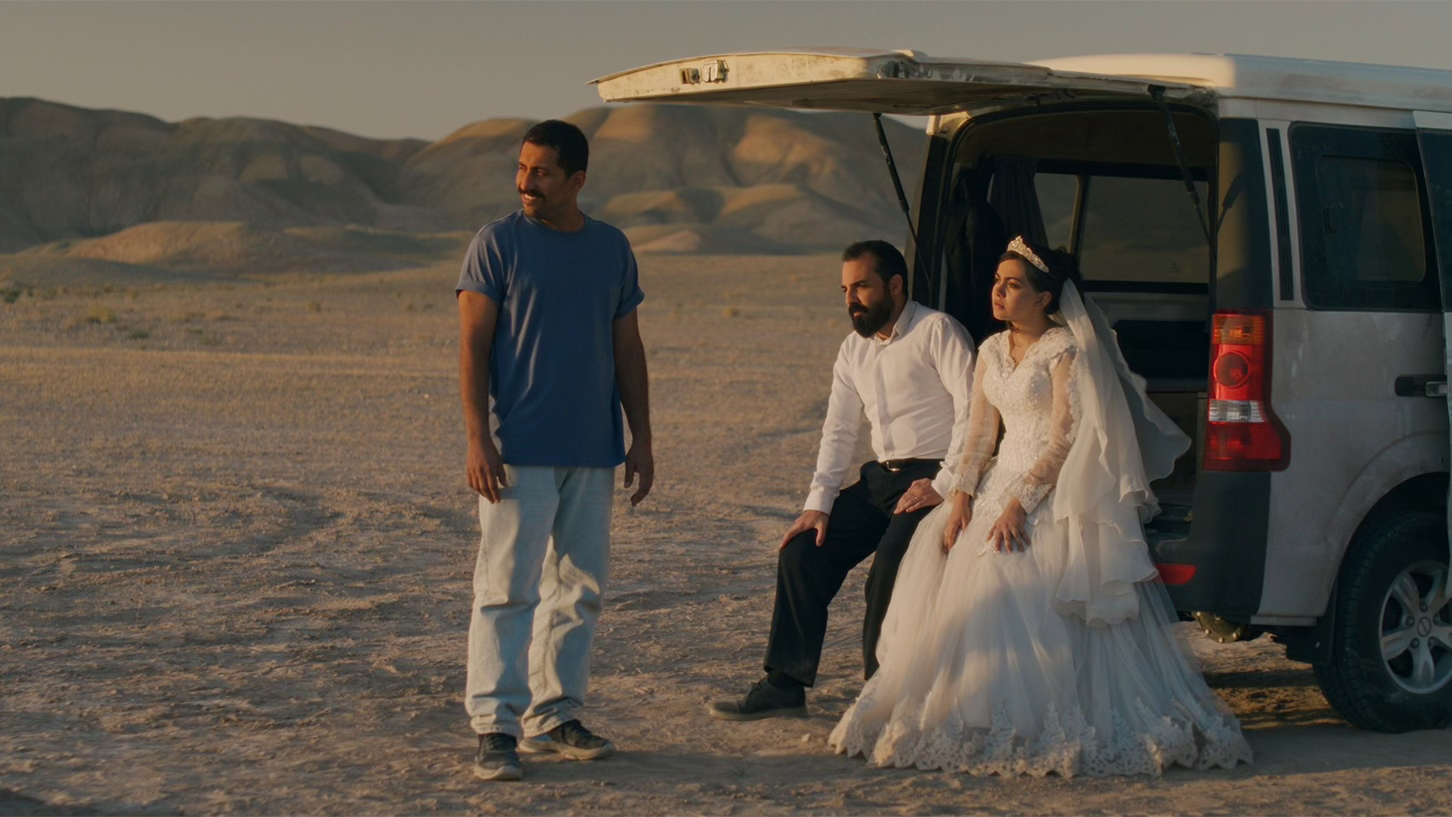
Much of the cast’s most pivotal moments expand on this fundamental dichotomy between their need for revenge and their mundane preoccupations. Goli, exquisitely played by Hadis Pakbaten, is a bride-to-be running around in a wedding dress discussing murder. A brilliant visual gag that also advances the film’s powerful moral provocations.
She makes it clear to her fiancé just how much revenge means to her, even if it costs them their wedding. She demands closure before starting a new life because, for the characters in It Was Just an Accident, revenge can mean several things. For Vahid, it’s about payment for what was lost - a ruined life begets the end of another. For others in the group, it can mean new beginnings, though the viewer can’t be certain they believe it themselves.
The killing of the dog echoes through the final sequence of the film, as the alleged torturer awaits judgement, blindfolded and tied to a tree. “I swear I’m just like you”, he claims, sobbing. “I have to make a living.” The confrontation is lit by a car’s red lights, mirroring the moment the man examined the dog’s offscreen corpse - a visual synonym that links the lives of the two and ties the film together.
The partial truths raised after the dog’s death return. It is true, after all, that the path was dark - much like Iran’s political climate. It’s also true that the man couldn’t see what was ahead - similar to the individual agents that side with a theocratic status quo for which there are no alternatives in sight. But ultimately, the little girl’s words ring equally true: God had nothing to do with it. A man killed a dog. A man tortured people. All of these partial truths intertwine, and only one question is left: Is the truth enough to illuminate the dark road ahead?
Note: Punished for Sincerity condemns all US interventionism. While the author respects the Iranian people’s right to celebrate the downfall of their despots, only national resistance is legitimate. The US-Israeli airstrike against Iran on the 28th of February killed over a hundred elementary school children. Regime change has never led to prosperity anywhere, and should never be applauded. This should be obvious.