



Claude Chabrol jokingly called La Cérémonie “the last Marxist film.” This 1996 French thriller stages the boiling tensions between Sophie, an illiterate domestic worker, and her employers, the bourgeois Lelièvre family. Though not a Marxist, Chabrol described the hostility between these characters as “deep enough to become final.” Karl Marx sometimes used theatrical metaphors to explain how social roles mask underlying economic structures rife with contradictions. Here, bourgeois civility attempts to mask class warfare - but this is a play that can only end in blood.
Under capitalist society, antagonistic roles within the economic structure appear as mere theatrical scenography. In the proletariat’s day-to-day, class is reduced to the perceptible signifiers of bourgeois excess and moral shortcomings. Sports cars, exuberant watches, and edible-gold dishes are props that symbolize vanity and hedonism. The bourgeoisie has achieved such a degree of functional invisibility that it’s only through caricature that the lower classes can imagine them. But the Lelièvre patriarch, George, who owns a factory, doesn’t wear a villainous outfit conveniently identifying his class. Mustache-twirling villains with monocles, though satirically used to identify capitalists, better serve to illustrate their anonymity.
La Cérémonie demonstrates how opposite classes recognise each other through their flaws and how their diverging rituals can repel one another. Sophie (Sandrine Bonnaire) and her friend Jeanne (Isabelle Huppert), a postal worker, connect through their shared criminal pasts. Their flaws bring them together. On the other hand, Jeanne recognises Madame Lelièvre (Jacqueline Bisset) as the child model that supposedly stole her own chance at being successful when young, and Monsieur Lelièvre (Jean-Pierre Cassel) recognises Jeanne as an alleged child murderer from the newspaper. Flaws attract characters within the same class group, but repel antagonistic agents. Rituals of etiquette are of great significance to the Lelièvres, who even dress up to watch Mozart operas on TV. But when Sophie extends the practices of upper-class civility to other workers, they respond with “Don’t bother”; the servants are happy washing their hands with detergent instead of ‘proper’ soap and drinking beer straight out of the can. For the Lelièvres, these are worthwhile customs; for the workers, they are frivolous indulgences.
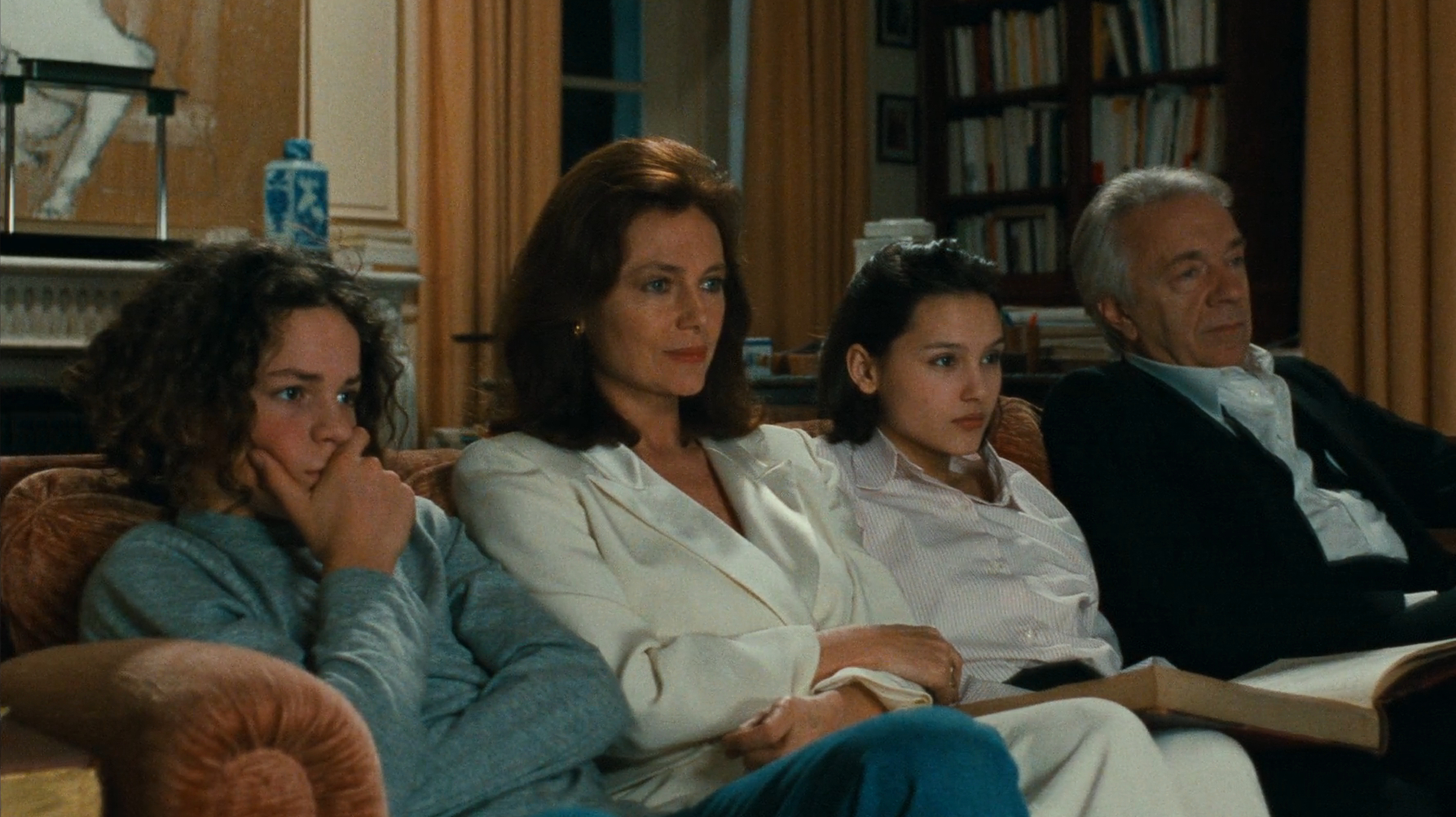
Sophie’s illiteracy excludes her from the linguistic symbols needed to navigate the world around her - she doesn’t know how to drive or even operate a TV remote. Here, La Cérémonie nods to the part that political education, even if informal, plays in class consciousness. It’s no coincidence that the illiterate Sophie starts out fairly agreeable and compliant with the Lelièvres’ demands, only to turn rebellious once she befriends Jeanne, an avid reader who spitefully claims she’d be happy if she “had a tenth of what” the Lelièvres have. While Sophie never learns to read, nor seems interested to, Jeanne’s recurring remarks about the arrogance of the wealthy act as the only manifesto Sophie needs to be further radicalised. When the maid destroys the Lelièvres’ library, she renounces their erudition and decorum.
But as a bourgeois family, work ethic and efficiency are even more valuable than etiquette for the Lelièvres. While George would prefer that Sophie knew how to serve food properly, Catherine, the matriarch, finds her work satisfying enough to compensate for her lack of manners. That said, both agree that her spatial-interpersonal awareness deserves praise - Sophie knows her place, and when to disappear. “My life is easier, I don’t even have to talk to her”, says Catherine, while George is delighted that the maid doesn’t receive any visits, letters or calls from friends or family. The couple commemorates the housekeeper’s invisibility while enjoying the dinner she cooked, as Sophie eats in a secluded room. Like a theatre stagehand, Sophie’s job is at its most successful when utterly invisible.
In Parasite, Bong Joon-Ho portrays the wealthy Park family with a naive, cordial decency that traces back to La Cérémonie, an inspiration for the Oscar-winning Korean drama. The Parks fall easily for the scams of the working class Kim family, but their gullibility suggests child-like innocence, as if they’re too pure of heart to know evil. This ‘kindness’ is present from the opening scene of Chabrol’s film, in which Sophie meets her potential employer. Catherine insists, friendly but incessantly, that Sophie order tea during the job interview, yet she forgets to address the maid’s compensation. Amiable gestures come first, ugly technicalities second (or not at all).
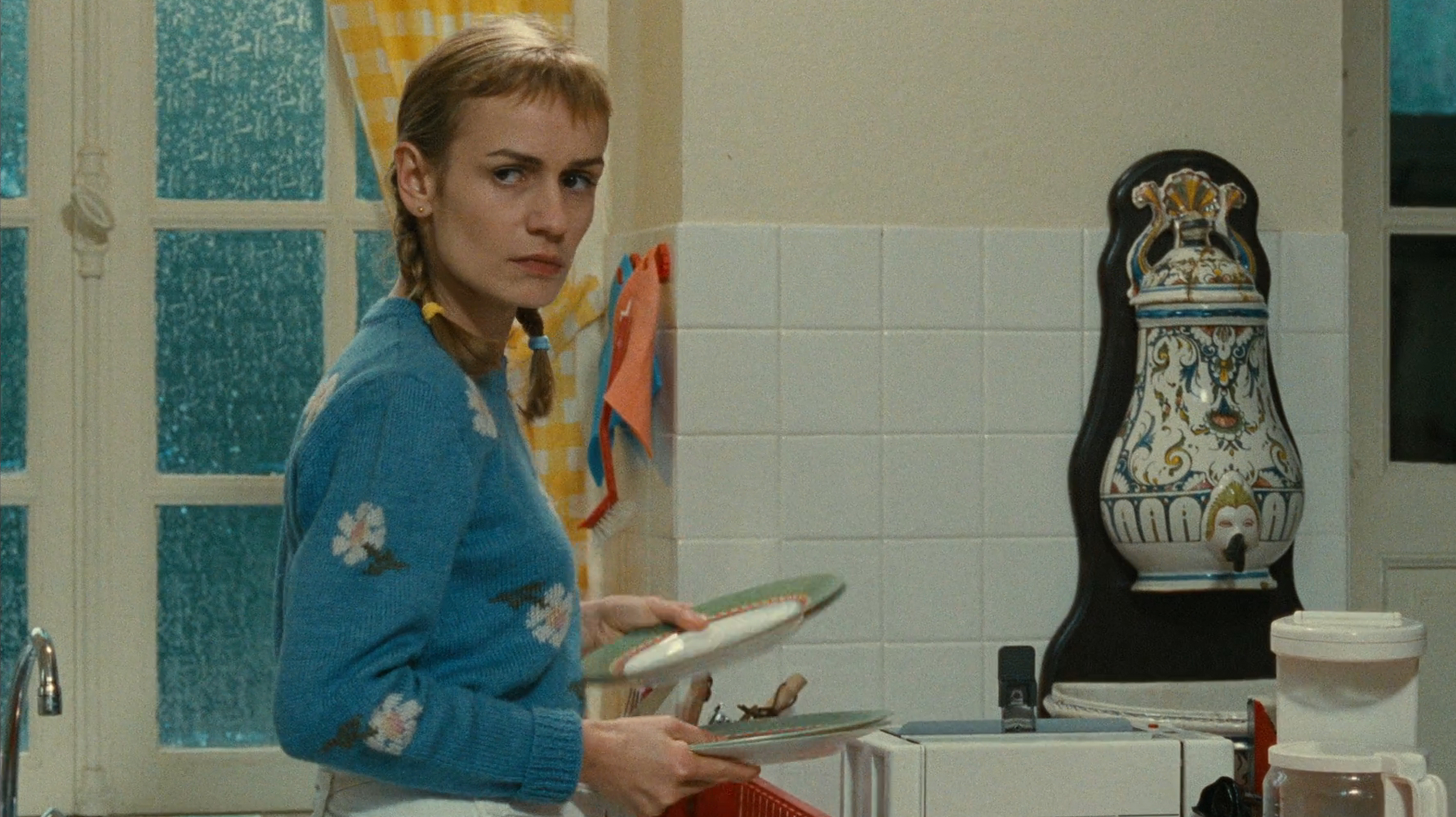
Much like the Lelièvres, the Parks surround themselves with domestic workers to replicate the carefree family life promised by advertising. By outsourcing domestic labour, both the Lelièvres and the Parks get to become better parents - attentive and caring. The Parks go on camping trips, reveling in the love from children with no needs, only wants. For the Lelièvres too, the only parental responsibility that remains is the entertainment of their offspring. Catherine watches movies with her teenage son on the couch while eating meals prepared by the maid, while George and his daughter Melinda discuss the possibility of finally going hunting again. But the hunting guns meant to signal a rekindling father-daughter bond take on a darker role in the film’s sinister finale. Every moment between bourgeois parent and child becomes a perfect cereal box ad, until La Cérémonie covers it in blood.
The young and ‘progressive’ Melinda (Virginie Ledoyen) is proud of her self-imposed semantic sensibilities, as if they’re an act of contrition for the family’s exploitation of Sophie. She dislikes the term ‘maid’, and considers it degrading - ‘housekeeper’ or ‘domestic’ are acceptable lexicon, however. Melinda’s words are purposefully chosen to always distance her from the rest of the bourgeois family, to whom she refers as ‘they’. She doesn’t assign tasks to Sophie, and instead comments in passing how she’d be thankful if the maid could ‘find the time’ to help her. Like it isn’t labour, but a favour from a friend. For Melinda, this is a license to benefit from labour without any inconvenient guilt.
But time after time, the laconic Sophie disregards her bosses’ civility. The interactions between the maid and her employers are frequently punctuated by brief pauses in which the bourgeois couple awkwardly awaits applause for their ‘kindness’. When Madame Lelièvre introduces Sophie to her small room, she visibly expects a vocal confirmation that Sophie likes it, and can’t resist but to ask directly after being met with silence. Meanwhile, Monsieur Lelièvre acts like a standing ovation is due for not throwing Sophie out of the house immediately after dismissing her, as he’d be legally entitled to, since Sophie has no contract (something he points out with a smug smile). The curtains of civility are drawn aside to remind workers that what little empathy they receive is an optional part of the production design. The set could be so much more bare, if the bourgeoise so wished.
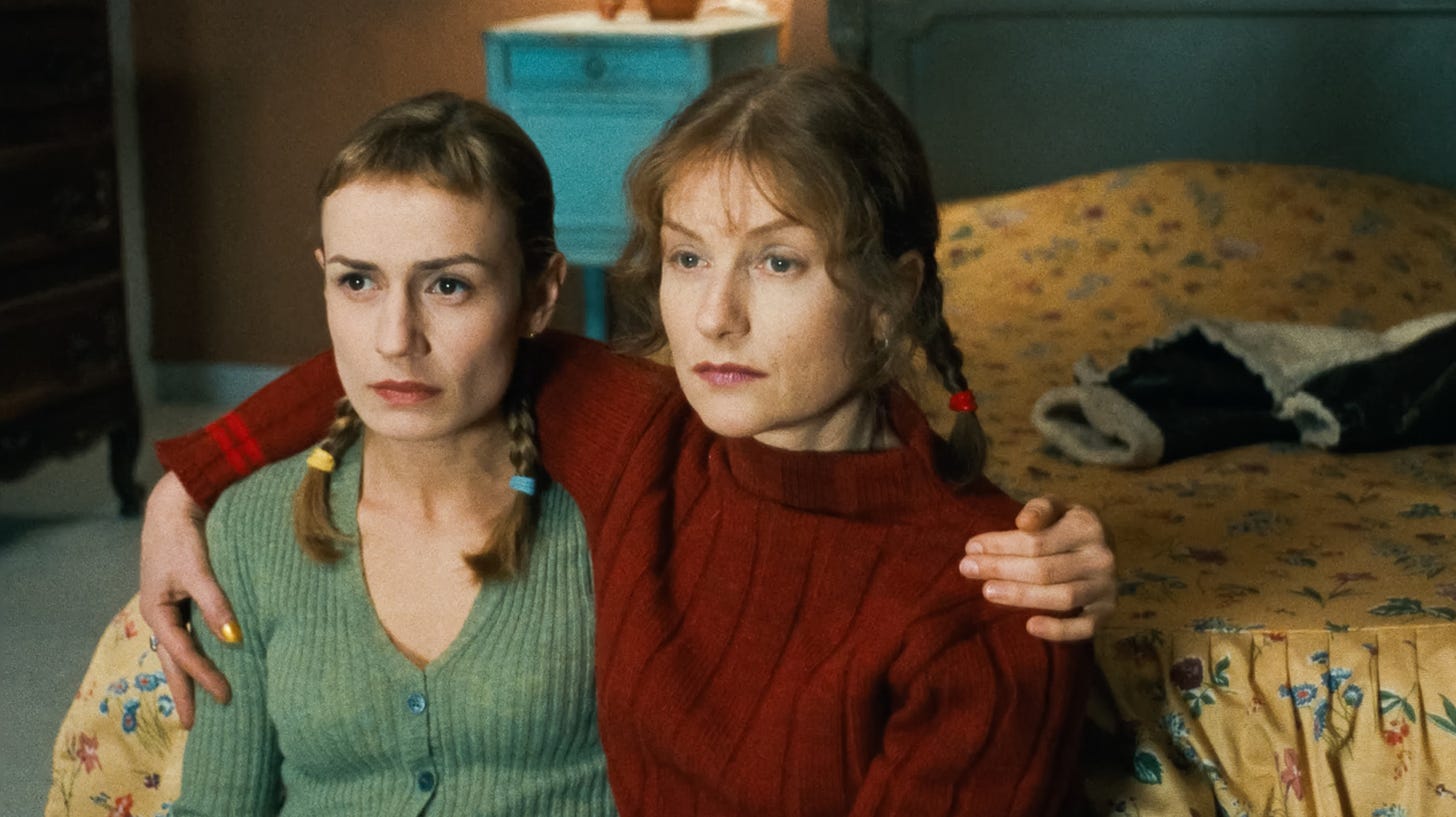
Ultimately, there’s a profound disparity in how the Lelièvres want to be perceived - kind -, and how they want to be treated - left alone. But there’s also a discernible schism between how the audience wishes to see the workers - as distressed victims (or ‘heroines,’ in Chabrol’s words) - and how they occasionally behave - as sadists. This duality provokes everlasting tension, and makes for interactions that are much denser than ‘poor people good, rich people bad’. Take, for instance, the scene where Melinda helps Jeanne with her malfunctioning car. A wealthy girl gets her hands dirty in oil, while a resentful wage labourer asserts herself as an aspiring poet. Roles are briefly reversed, and it’s the worker being assisted that visibly expresses contempt for the helpful rich volunteer, challenging the audience’s compassion. Given how unsympathetic these workers can be, and how vicious the consummation of their hostility is, it’s understandable why this could be playfully called “the last Marxist film”.
La Cérémonie is a thought-provoking rendition of bourgeois civility as a form of social theatrics concealing underlying class antagonisms. None of its characters are unequivocally deserving of either sympathy or disdain, which prevents the final bloodbath from being morally sanitised by easy justifications. In this play, the catharsis of class violence is tainted by doubt, as each spectator leaves the theatre with a taste of iron in their mouth and their favourite tuxedo stained with blood.